
Commercial Spray Polyurethane Foam Roofing in Cedar Rapids, IA
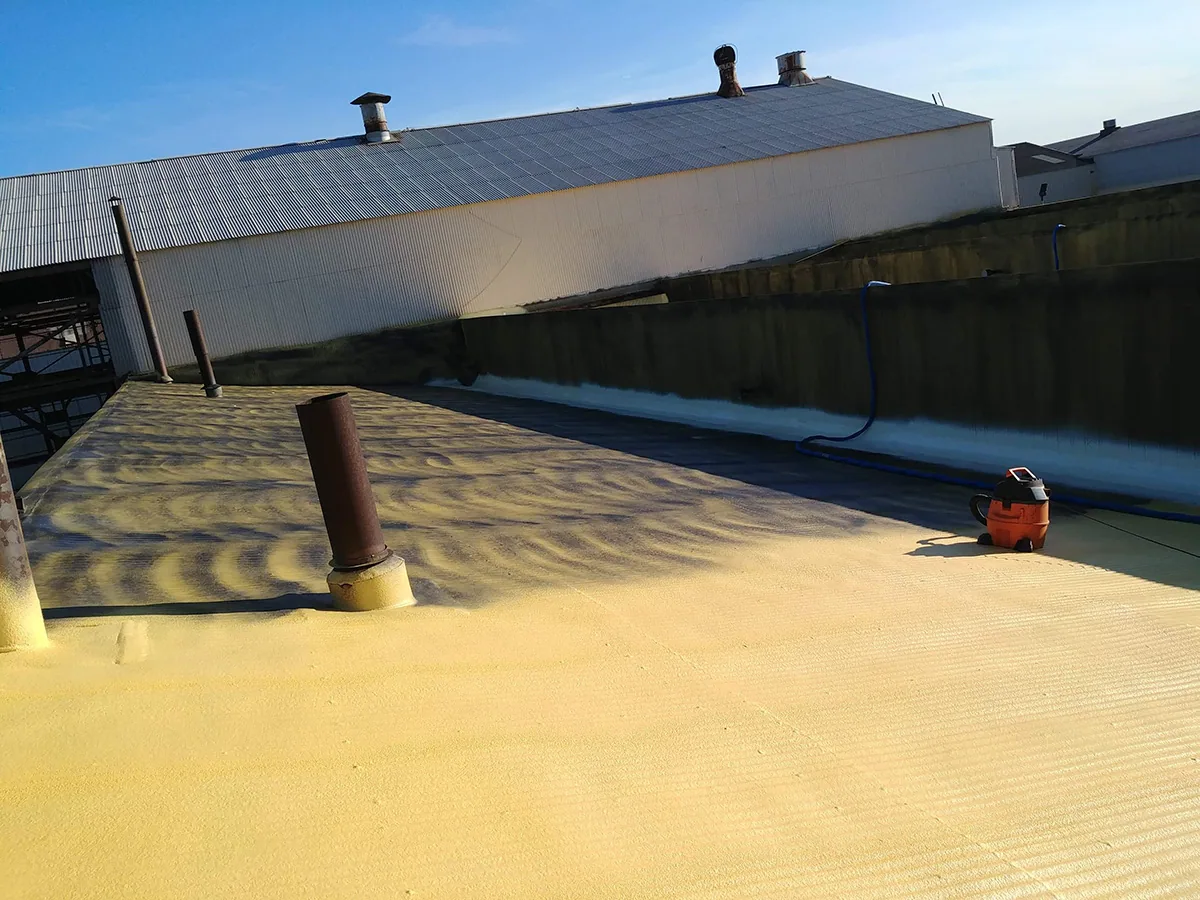
Water entering beside an equipment penetration can reach spray polyurethane foam beneath its protective coating, changing the removal needed around the opening. Closing the visible gap does not restore foam that has become unsuitable for retention. Commercial Roofing Cedar Rapids examines SPF roofing in Cedar Rapids, IA, by tracing the penetration's connection into the adjoining foam and receiving construction. The repair needs a suitable rebuilding boundary and a protective surface joined to the repaired detail.
Spray polyurethane foam forms part of a roof assembly whose coating, attachment and transitions require coordinated installation and maintenance. We identify the existing foam and surface materials before defining local restoration or broader work. The condition can call for a compatible silicone coating system or another suitable finish, while acrylic roof coating is considered according to the selected assembly and service conditions. Product suitability must follow the roof being assessed.
Penetration path: Examining the component and surrounding foam
A pipe, curb or other component creates a transition that needs a continuous weathering connection to the SPF roof. We examine the component's condition, movement and attachment alongside the damaged coating or foam. Water can travel beyond the visible opening, so the removal boundary needs investigation where adjoining material condition affects repair. We avoid closing a defect into a surrounding area that cannot accept a suitable reconstruction.
Assessment of penetration flashing helps establish whether the component itself requires alteration or another trade's work. A damaged support or unsuitable detail should be corrected before new foam and coating complete the junction. We plan the opening and temporary protection around that sequence. The rebuilt transition must fit the actual component and remain accessible where future servicing could affect its weathering connection.
Foam boundary: Separating suitable material from the affected area
The exposed coating gives only part of the condition visible at an SPF roof. We assess suspect foam through appropriate investigation, examining moisture, deterioration and the connection to its receiving construction where they influence retention. A discolored or damaged surface does not alone define how much underlying material needs removal. The repair extent follows the findings in the affected area and the ability to reconnect new work suitably.
Removal continues to material that is appropriate for the selected repair method rather than ending at a convenient line around the original gap. We establish the receiving surface and any further layer repairs before rebuilding foam. Evaluation of affected insulating and supporting layers can be relevant where the original assembly includes other materials below it. Each retained part needs to remain suitable for its role after the repair is closed.
Protective layer: Restoring the coating over the repaired foam
The protective coating shields the foam surface and forms part of the roof's weathering arrangement. We inspect worn areas, damage and previous products before specifying preparation or a new application. Exposed foam and damaged coating require an appropriate response rather than application over material whose condition is unresolved. Surface preparation and product compatibility follow the existing construction and the selected system's requirements.
A repaired foam area needs a coating connection that covers the new work and joins suitably to retained material. Application thickness, preparation and finishing requirements need to follow the relevant product instructions and project specification. Coating restoration of a suitable roof may extend beyond the local repair when the broader protective surface requires work. The coating decision follows the foam condition rather than concealing damage that should first be removed.
Finished geometry: Preserving the roof's drain approach
A foam repair changes the surface in the area rebuilt, making its relationship to runoff important. We examine the surrounding slope and outlet approach before shaping the repaired construction. Material added beside a drain or curb should not create a new pocket that retains water. The selected system and design need to establish the finished geometry rather than allowing the repair edge to dictate an unintended water path.
Existing ponding can involve roof shape, obstructed outlets or another drainage problem that requires separate correction. We identify that cause and coordinate design input where an alteration is needed. Foam and coating work should connect into the intended discharge route, with outlet details and adjoining surfaces assessed together. A new protective finish does not correct an underlying low area solely by covering it.
Application conditions: Planning preparation and protection together
SPF and its protective coating require appropriate surface and environmental conditions for their application. We plan preparation, moisture control and work timing according to the selected products and project requirements. Wind and nearby operations can also affect containment and the protection needed around the work. The daily section should allow the prepared surface and applied materials to be completed in a suitable sequence.
Building air intakes, neighboring property and equipment access need consideration before application begins. We coordinate relevant operating restrictions with the facility director and identify areas requiring protection. Suitable application depends on the actual roof condition and the controls established for that project. The work should not proceed into an arrangement where contamination, moisture or incomplete protection compromises the newly formed assembly.
Facility sequence: Coordinating the repaired junction with service use
Vinton serves as Benton County's seat and has a public library among its community facilities. At a requested roof in Vinton, penetration repair may require coordination with equipment operation and the rooms beneath the opening. We establish those constraints before removing foam around the component. The rebuilding sequence should protect the occupied area while allowing the investigation needed to define a suitable permanent connection.
Shueyville offers a rentable community center with meeting, kitchen and gym space, and its permit information directs building inspection through Johnson County. For a requested project there, we confirm the relevant property review and operating arrangements before altering the roof. A kitchen or mechanical component, when present at that building, needs assessment as part of the actual roof junction. We connect the repair to its service requirements without assuming the component can be disconnected during normal use.
After restoration, we explain which foam and coating areas were rebuilt and how maintenance should approach the completed detail. Equipment technicians need to preserve the protective surface and report new damage beside the component. That connection between roof care and servicing helps the facility director recognize a changing junction before additional foam becomes affected.
Commercial Roofing Questions
What decides the removal limit around a damaged SPF penetration?
The condition of the foam and adjoining construction decides where a suitable rebuild can begin. We investigate suspect material beyond the visible gap when its condition affects retention. The repaired junction needs to connect to appropriate retained foam and receiving layers, not merely surround the original opening.
Can a coating repair restore foam that has deteriorated underneath?
Unsuitable underlying foam needs removal or another appropriate correction before the protective surface is rebuilt. A coating can form part of the completed repair, but its application does not establish that damaged material below is suitable to keep. We assess those layers before defining the finish.
How can local foam work affect drainage?
The finished repair profile can interrupt runoff when its height or shape conflicts with the adjoining drain approach. We examine the surrounding surface and outlet before rebuilding. The repair should connect into the intended water route without introducing another low pocket beside the new material.
Why does equipment operation matter during SPF restoration?
Servicing, air movement and access can affect preparation, application and temporary protection around the penetration. We establish relevant restrictions before opening the roof connection. The work section needs to support a suitable installation sequence while protecting the operating building and nearby property.
Related Pages
Request a roof assessment or call 555-555-5555.

Questions? Call Us
Free roof assessment