
Skylight and Penetration Flashing Repair in Cedar Rapids, IA
Closely spaced pipes can leave too little room between their flashings to prepare and complete a suitable field connection, especially where overlapping old repairs conceal the remaining sheet. Rebuilding that cluster requires examination of the available spacing and detail arrangement before another patch narrows the junction further. Commercial Roofing Cedar Rapids repairs skylight and penetration flashing in Cedar Rapids, IA, by examining the connection from the field membrane to the component passing through it. The restored arrangement must accommodate the actual junction and join sound adjoining material.
Skylights, curbs, pipes and equipment interfaces present different water paths. We identify which connection has failed and whether movement, unsuitable support or a damaged component is contributing to the defect. Where the interior symptom is unresolved, tracing the leak through the adjoining assembly helps establish the entry before removal. Roofing work then follows the part that needs rebuilding, with equipment or skylight-component work coordinated where it belongs to another connection.
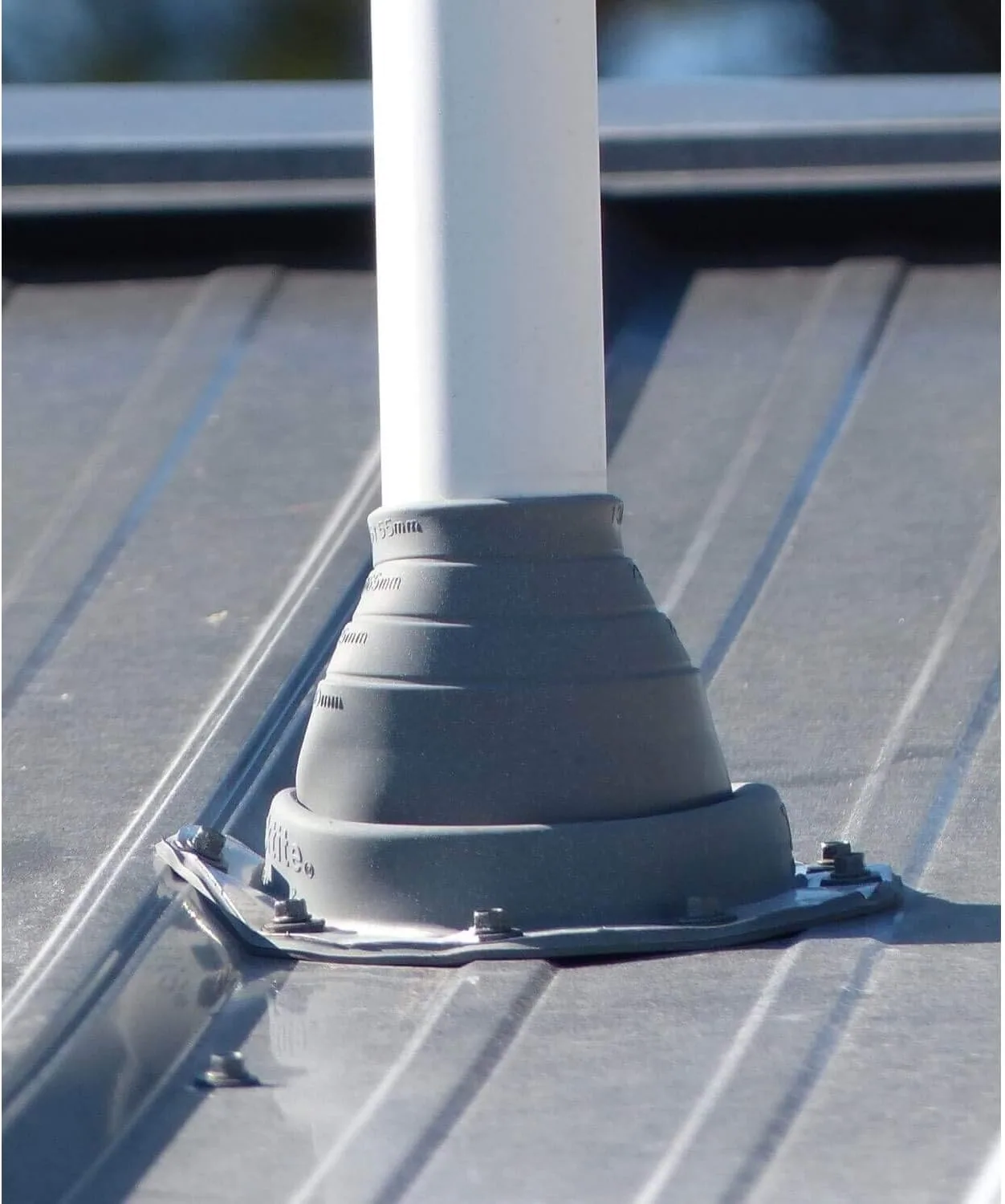
Pipe interface: Preserving a flexible water barrier
A penetration detail joins a fixed roof assembly to a pipe or similar component that may move with temperature or operation. We examine the flashing shape, upper closure and field connection, checking for distortion, incompatible repair materials or inadequate clearance. A split can reflect stress in one part while another connection remains serviceable, so the examination establishes how much of the detail needs replacement. The new material must be suitable for the pipe, roof system and expected exposure.
Adding rigid material around a moving junction can transfer stress into the flashing or restrict the component's intended clearance. We assess the existing arrangement and coordinate equipment review where movement or support is uncertain. The roofing repair should preserve a workable seal without forcing the pipe into a position its installation cannot accept. Rebuilding the flexible transition may require a different detail from the one that failed rather than another layer over the stressed connection.
Skylight assembly: Separating the curb from the glazing connection
A skylight includes roof flashing around its curb and additional connections within the unit above that curb. Water entering through a damaged glazing seal or frame junction may reach an interior in a way that resembles a roof-flashing leak. We examine the accessible relationships and discuss component service where appropriate. Roofing repair follows a demonstrated defect in the weathering transition rather than treating every symptom below a skylight as a failure of the field membrane.
The curb's height, condition and surrounding drainage also affect the roof-side connection. A recover or insulation change can raise the field and reduce the vertical relationship needed for suitable flashing. We measure the relevant arrangement and assess whether the curb or adjoining component requires modification before the weather barrier is reconstructed. An overlay near existing skylights therefore needs coordinated detail planning, with the finished transition leaving sufficient functional height and access for future examination.
Curb corners: Reconnecting vertical and horizontal material
A corner can concentrate stress where the field sheet turns into vertical flashing, particularly if the backing has loosened or an old repair leaves the material poorly supported. We examine the lower lap, corner arrangement and top termination, then identify the material that can remain. Reconstructing only the exposed face may leave water entering behind it at the upper connection. The restoring sequence should close the complete junction from suitable field roofing through the corner to its intended termination.
On a TPO roof, welded flashing and field connections require preparation and material suitable for the system. Other roof materials use different methods, so identification precedes the repair arrangement. Wet or detached backing may need removal before the corner can be rebuilt, and equipment that obstructs access may require coordination before the lower lap can be examined. A sound new detail depends on those adjoining conditions rather than the visual neatness of its outer surface.
Water beside the detail: Correcting prolonged exposure
A low area at a penetration can keep water against the lower flashing connection after other roof sections have drained. We examine the approach, nearby outlet and supporting material where retention affects the failed detail. Clearing debris is different from correcting compressed insulation or an unsuitable field elevation. Rebuilding the drainage approach may accompany flashing work where the condition requires both, with the revised shape preserving adequate connection height at the penetration.
The Cedar Rapids airport station's 1991-2020 normals include 144.1 annual days with minimum temperatures at or below freezing. At a requested roof with freeze-related leakage or movement, we examine the material junction after safe access becomes available, looking for separated seals, changed clearance and damage exposed by thawing. Water retained beside flashing can add repeated exposure at an already vulnerable connection. The correction needs both a suitable weathering transition and a functional route for discharge away from it.
Concealed support: Finding the boundary for new flashing
A small opening at a penetration can admit water into insulation or backing beyond the visible split. We check the adjoining support and investigate concealed moisture where it affects the proposed removal. Targeted moisture examination can help define suspect areas in a suitable assembly, followed by confirmation at locations that change the work. The new flashing should connect to sound receiving material rather than rest on a wet or detached layer left below the repaired junction.
The rebuilding boundary may therefore include part of the field or curb face in addition to the visibly failed component. We explain those connections before removal and identify the condition that would require extending the boundary during work. Temporary protection is arranged where the opening cannot be reconstructed immediately. The completed repair then reinstates the supporting layers, compatible flashing and adjoining weathering connection in sequence, with unresolved equipment or component defects kept distinct from finished roofing.
Occupied interiors: Scheduling the opening above useful space
Mount Vernon includes Cornell College and a local district with elementary, middle and high schools. At a requested educational building in Mount Vernon, skylight or penetration repair may affect classrooms, occupied rooms or service access directly beneath the opening. We coordinate the actual activity and protection requirements before dismantling the detail, then limit removal to work that can be closed in appropriately. The interior's sensitivity helps determine the suitable working window and temporary measures.
Lisbon's public library occupies a historic storefront, with Heritage Hall on its second floor used for cultural programs. Buildings containing active rooms close beneath the roof illustrate why flashing removal needs a clear account of the room and access constraints. For a requested repair, we discuss the opening, equipment coordination and protection with the facility contact. The aim is to reconstruct the failed junction while retaining a workable building operation and an accessible detail for later maintenance.
Commercial Roofing Questions
Can you tell whether our skylight leak comes from its frame or roof flashing?
The entry route and component condition decide which work is required. We examine accessible curb, roof and unit connections, coordinating the appropriate skylight service when the frame or glazing is involved. The roofing repair is then defined around the weathering junction that needs correction.
Why would a pipe boot split again after being replaced?
Movement, unsuitable fit or a restricted connection can continue stressing the flashing. We examine the pipe and surrounding assembly before choosing another detail. Where an equipment issue affects movement or support, it needs attention alongside the roofing so that the replacement can accommodate the intended relationship.
Should flashing be raised during a roof recover?
The finished field height must be compared with the curb and termination arrangement. Added insulation or covering can reduce usable vertical flashing height and may require modification. We measure the relevant junctions before selecting the recover assembly so the new surface can meet a suitable detail.
What changes the amount of roofing removed around a penetration?
Adjoining support and concealed moisture can extend the work beyond a visible split. A compatible repair needs sound material at its connection to retained roofing. We investigate those layers where findings affect the scope, then define the removal needed to rebuild both the flashing and its receiving boundary.
Related Pages
Request a roof assessment or call 555-555-5555.

Questions? Call Us
Free roof assessment