
Emergency Commercial Roof Repair in Cedar Rapids, IA
A torn field sheet that remains attached on one side can keep pulling against its next connection while rain reaches insulation through the exposed area. The urgent task is to limit that continuing exposure without placing people on an unsafe roof. Commercial Roofing Cedar Rapids responds to commercial roof emergencies in Cedar Rapids, IA, at any hour, including weekends and holidays. We assess access, weather and the damaged assembly, then choose the protection that can be installed safely under the conditions present.
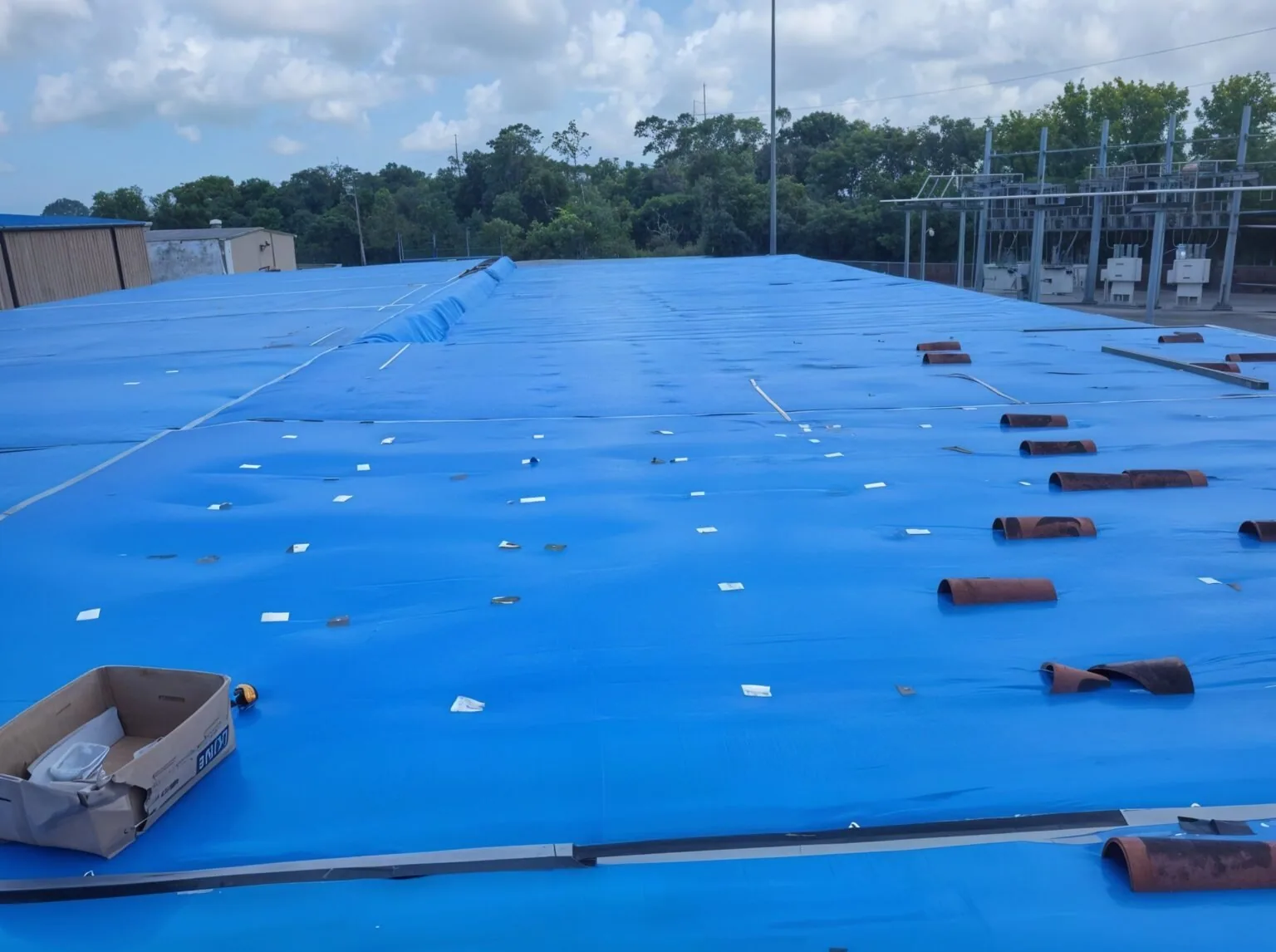
Emergency work may include a temporary repair, a secured covering or a dry-in detail until the roof can be examined and rebuilt more fully. It begins with the building's immediate risk: water above electrical equipment, a loose roof component or an opening over occupied space. Give us the observed damage and interior conditions so that the response follows the actual problem. A temporary measure must connect to material capable of holding it, with the remaining exposure identified.
Immediate hazards: Protecting people beneath the damage
Water entering near energized equipment requires the building's electrical safety response before anyone attempts to handle wet fixtures or reach concealed components. Loose ceiling materials, slippery floors and restricted exits can also make an occupied area unsuitable until it is secured. We ask the facility contact to describe those hazards and coordinate the appropriate qualified personnel. Interior protection is useful only where it can be carried out without exposing staff to falling material, electricity or a compromised building element.
Roof access has its own limits. Lightning, strong winds, ice, darkness without adequate lighting and suspected structural damage can prevent immediate work at the opening. We examine the information available and establish a safe approach, explaining what can be protected from the interior or another accessible position while exterior conditions improve. Investigation of the active entry route follows the urgent safeguards when access permits, particularly where the roof opening has not yet been located.
Temporary connection: Holding the weather barrier in place
A loose covering placed over damaged roofing can move under wind or collect water without closing the failed connection. Temporary protection needs a suitable securement arrangement and a drainage path, with its edges positioned so that water is directed away from the opening. We choose the method from the exposed roof material, available support and conditions at the damaged area. A torn membrane beside a parapet needs different treatment from an isolated puncture in an otherwise stable field.
Loose components may need stabilization before a temporary water barrier can be installed. We assess edge metal, adjoining sheets and equipment interfaces that could continue to move or detach. Where wind damage has disrupted attachment, the receiving connection deserves examination beyond the visible tear. The temporary work should reduce further damage while preserving a practicable route for permanent rebuilding, rather than adding material that later makes the failed detail harder to inspect.
Storm extent: Checking beyond the first opening
The August 10, 2020 derecho caused business and apartment damage in southwest Cedar Rapids. On a requested roof with reported storm exposure, a visible opening can be one part of a wider attachment or flashing failure. Once safe access is available, we examine nearby seams, perimeter details and equipment connections, then identify any other areas needing protection. The urgent response follows the current observations, while the permanent investigation considers how the damage has affected adjoining parts of the assembly.
Atkins had an unofficial measured gust of 126 mph during that same historical derecho. At a requested building in Atkins, we inspect displaced components and the adjoining fasteners before securing the damaged detail. A loose metal section may be stressing the membrane beside it, while a torn sheet may expose insulation that needs temporary coverage. We stabilize those connected parts in order, photographing the accessible condition before protection changes it and retaining a clear route for permanent rebuilding.
Blocked discharge: An emergency without a torn sheet
Water accumulating against a blocked drain can reach details that were not exposed under normal runoff, and a roof may leak without an obvious torn membrane. We inspect accessible discharge points and overflow routes where conditions allow, while considering whether the accumulation presents a loading concern that requires further assessment. Releasing trapped water needs care because drain connections, discharge piping and the area receiving the flow may have their own limitations. The response should resolve the blockage without introducing another uncontrolled hazard.
The Cedar Rapids airport station averages many days with minimum temperatures at or below freezing under its 1991-2020 normals. During an actual freezing event, ice can conceal drain approaches or make roof travel unsafe. We assess the requested roof's condition before attempting drainage intervention, avoiding methods that could puncture the membrane or damage the outlet. Snow or ice removal near a roof detail may need a separate controlled approach, with the visible material and safe access determining how far work can proceed.
Restoring sequence: Moving from protection to repair
A dry-in can stop immediate rainfall exposure while leaving wet insulation or damaged support beneath the covered area. After stabilization, we investigate those layers and define the permanent removal boundary. The work may involve a limited compatible repair, rebuilding a failed perimeter or replacement where damage is extensive. That choice needs the full condition of the affected assembly, not merely confirmation that dripping slowed during the emergency visit.
Czech Village and New Bohemia contain storefronts, entertainment venues and multifamily housing. Emergency protection above mixed occupancies may need to preserve an access route for one tenant while keeping another room closed beneath the damaged area. We establish the facility contact, affected spaces and restrictions that will carry into permanent work. Any lifting, material removal or equipment shutdown is then coordinated with those occupants, rather than treating the end of rainfall as the end of the building's disruption.
The owner receives the location and purpose of temporary measures, the remaining conditions and the recommended next intervention. Where the event may involve an insurance claim, photographs and repair documentation can preserve the difference between observed storm damage and later protection work. Coverage and claim decisions remain with the relevant parties. We explain the physical roof findings and repair sequence so the building can move from urgent containment to a clearly defined restoration.
Commercial Roofing Questions
Can you work on the roof while the storm is still passing?
Safe access and the current weather decide what exterior work can proceed. Lightning, wind, ice or structural concerns may require waiting before roof-level intervention. We discuss immediate interior safeguards and any accessible protection, then return to the exposed detail when conditions allow a suitable exterior approach.
Will the emergency covering be the finished roof repair?
Temporary protection is installed to limit immediate exposure under the available conditions. A final repair may require removal of wet layers, rebuilding of attachment or compatible membrane work that cannot be completed during the urgent response. We identify the temporary boundary and the work needed to replace it with a permanent detail.
What information helps with a night-time roof emergency?
A reachable facility contact, the affected room and any electrical or access hazards help establish a safe response. Send photographs of damage taken from a safe position, the approximate timing and any known roof material. Avoid climbing onto damaged roofing to obtain a closer image; the exterior examination belongs within the response plan.
Should an insurer see the damage before protection is installed?
Immediate safety and reasonable protection of the building remain urgent concerns. Photographs and descriptions can preserve the observed condition before temporary work where doing so is safe. We document our intervention, while the owner coordinates claim requirements with the insurer rather than leaving an opening exposed solely to wait for an inspection.
Related Pages
Request a roof assessment or call 555-555-5555.
Questions? Call Us
Free roof assessment