
Commercial Modified-Bitumen Roofing in Cedar Rapids, IA
A detached modified-bitumen ply can reveal an unsuitable bond at its underside, with the exposed receiving layer showing whether separation occurred within the roofing or below it. Closing the lifted edge does not restore adhesion across an area that remains detached. Commercial Roofing Cedar Rapids examines modified-bitumen roofs in Cedar Rapids, IA, through those connected layers before defining repair. The restoration needs a suitable receiving surface and an asphaltic weathering arrangement that remains continuous at its laps and details.
Modified-bitumen roofing uses polymer-modified asphalt sheets within system-specific assemblies. SBS and APP materials have different formulations and intended installation methods, so we identify the existing construction before selecting repair or replacement. A proposal may also compare the roof with a built-up asphaltic system or rubber single-ply roofing. That comparison should follow the building's exposure and available support, with each material's joining and detail requirements understood.
Detached layer: Finding which interface has failed
A lifted area may reflect separation between plies, inadequate connection to the receiving construction or deterioration within a supporting layer. We examine the exposed material and adjoining roof where those findings change the scope. A local edge defect can sometimes be bounded within sound roofing, while a wider detached area needs another rebuilding limit. The repair must reconnect the failed interface rather than apply more material only at the part visible from the field.
Moisture and surface condition can also affect the retained arrangement. We investigate suspect wet layers and identify what can provide an appropriate base for the selected repair. Rebuilding an isolated asphaltic defect may require removing unsuitable plies or support before new material is joined. A detached covering over softened insulation needs the lower layer corrected as well, because an apparently complete outer patch can still rest on an assembly that no longer functions.
Ply continuity: Restoring the layered water barrier
The repair method needs to suit the existing sheet and system, including the number and arrangement of layers involved at the opening. We identify base and weathering plies where present, then assess how new material can tie into retained roofing. The receiving laps require suitable preparation and the selected installation method. A cap-layer repair should not leave a deeper interrupted connection unresolved where water or separation has affected lower material.
Granulated surfaces and prior repairs can change the preparation needed at the connection. We examine the available receiving area and use compatible methods appropriate to the selected system, with application conditions respected. Correction of a failed lap follows the material and form of the separation rather than using a generic seal across an asphaltic edge. The new joint must connect its weathering and supporting layers through the intended assembly.
Application method: Fitting the material and occupied building
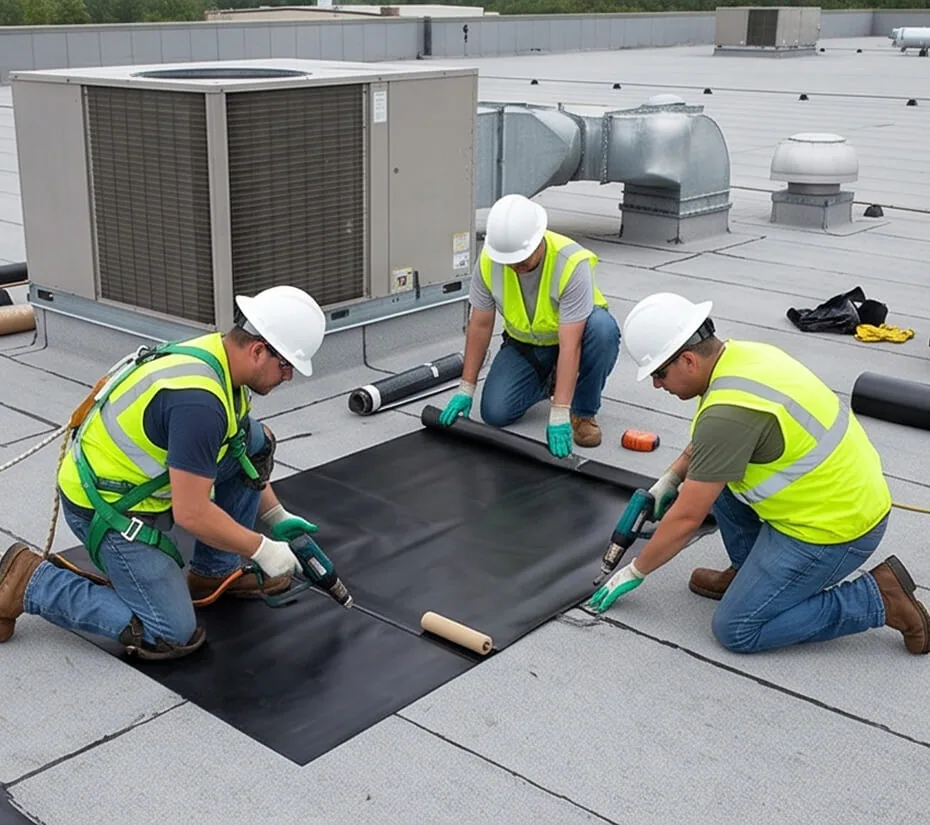
Modified-bitumen systems may use methods such as self-adhered, cold-applied or heat-applied installation, depending on the selected product and assembly. Those methods are not interchangeable. We assess the receiving construction, application requirements and work environment before choosing the arrangement, including the precautions and trade coordination relevant to the intended method. A roof over sensitive occupied space may impose constraints that change how suitable material can be installed.
We establish protection of intakes, access and interiors for the actual application method, with removal and close-in planned together. Equipment or concealed conditions can limit a detail's preparation or require a separate work window. Installation beside continuing occupancy should provide a workable sequence for the selected assembly rather than assume that the field method can be carried unchanged into every curb or wall transition. The junction needs adequate preparation space and suitable conditions to be completed.
Vertical connection: Joining asphaltic flashing to the field
A curb corner or wall termination can allow water behind flashing that remains intact across its broad face. We examine the top connection, corners and lower laps, checking where support or movement affects the asphaltic material. Rebuilding needs to restore the complete weathering route and a suitable transition to the field. Merely adding a visible outer layer may leave a defective termination or detached backing operating behind it.
Available height changes where new insulation or retained roofing raises the field. We consider those relationships before a recover or replacement is specified, including the route to drains and scuppers. Receiving-layer and slope work is coordinated with flashing heights so that an improved field does not create an unsuitable vertical detail. The selected system then connects appropriate plies to the component above them, with intended movement and service access retained.
Concealed extent: Deciding between local repair and wider removal
A layered asphaltic roof can conceal moisture beyond an exposed split or detached lap. We assess the construction and choose suitable investigation where concealed condition changes the intervention. Thermal observations with layer confirmation may help establish suspect areas when the roof and weather permit, while openings provide the material condition needed for the removal decision. The image or surface mark alone does not define a suitable rebuilding boundary.
Broad wet extent, repeated detachment or unreliable support may make scattered repairs unsuitable. We explain the connection available for local work and compare it with replacement of affected roofing where necessary. The useful distinction is the material that can remain as a functioning assembly, not simply the visible number of defects. Removal follows the lower layers that need correction, then the new roof is joined to appropriate support and weathering details.
Reused buildings: Investigating the assembly before closing it
Lisbon's library occupies a downtown storefront dating from earlier commercial use, with cultural activity in the second-floor Heritage Hall. On a requested roof in Lisbon, reuse history makes construction information and direct examination useful where the current room arrangement does not explain the layers above it. We identify the actual asphaltic assembly and interior constraints, then select removal and close-in suited to the operating space beneath the work.
Ely has repurposed a former school building for municipal offices, meeting functions and history archives. For a requested civic or reused commercial property, material removal may need protection above sensitive rooms and coordination around public activity. We discuss those restrictions before selecting an application method or opening a detail. The restored roof should join suitable layers and discharge water through accessible outlets, leaving future maintenance able to reach the junctions that have been rebuilt.
At completion, we identify the repaired ply arrangement and retained areas, including any separate defects needing attention. Later equipment work or incompatible repair products can alter an asphaltic connection, so the director benefits from knowing its location and suitable maintenance approach. The handback explains the physical intervention and its boundary, keeping a finished local detail distinguishable from unresolved condition elsewhere in the assembly.
Mount Vernon contains Cornell College and local public schools. At a requested educational roof, room use and equipment access similarly guide the available preparation and close-in window.
Commercial Roofing Questions
Can a lifted cap-sheet edge be bonded down without opening farther?
The condition of the interface decides how far investigation and repair must extend. A bounded edge separation differs from detachment across a larger area or wet support below it. We examine adjoining material before selecting a compatible connection that restores the failed layer rather than only the visible edge.
Are SBS and APP repairs interchangeable?
The sheet formulation and system requirements need to be identified before a method is chosen. Different products can require different preparation, application and detail materials. We establish the actual roof arrangement and suitable repair method instead of applying another asphaltic product solely because it looks similar.
Why might a local repair require work in several plies?
The opening or moisture can affect more than the outer weathering sheet. A repair needs suitable continuity through the layers involved and a compatible tie to retained roofing. We examine the exposed construction and rebuild the affected interfaces before the outer connection is completed.
What affects the application method above occupied rooms?
Receiving construction, product requirements and the building's operating restrictions all influence the method. Intakes, sensitive interiors and access may need coordination or a different suitable arrangement. We establish those conditions before work so that preparation and close-in can be completed at the actual detail.
Related Pages
Request a roof assessment or call 555-555-5555.

Questions? Call Us
Free roof assessment