
Commercial Roofing in Czech Village and New Bohemia, Cedar Rapids, IA
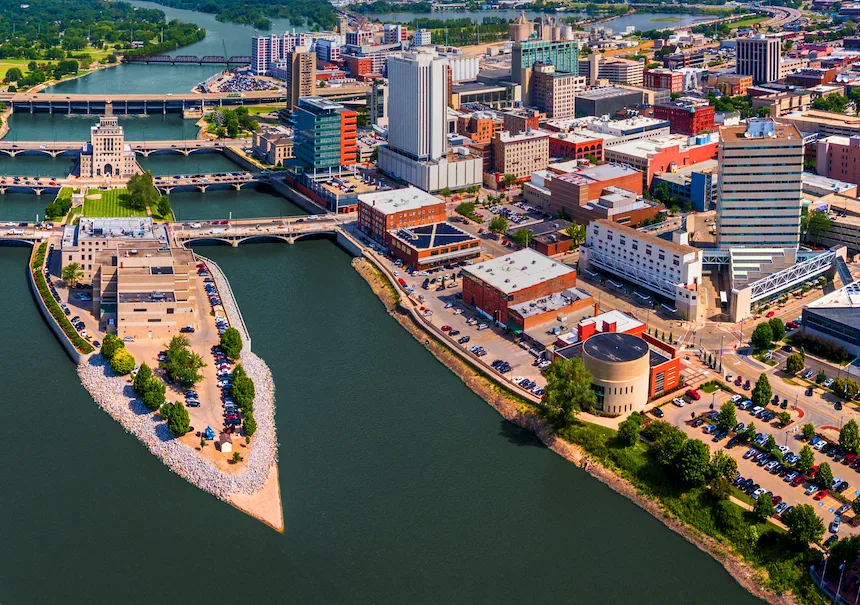
A historic storefront joined to housing can need a different roof sequence from the neighboring commercial space, even when both share the same block. Czech Village and New Bohemia form a 40-block district on the south side of Cedar Rapids' city center, straddling the Cedar River. The district combines small businesses, arts and entertainment venues, and multifamily housing. That mix is why a roof visit starts with the specific property, its occupied areas and the route crews can use, rather than a district-wide assumption. We identify whether the reported water follows a wall, seam, curb or drain, then confirm which assembly is present before recommending a repair. If an older addition meets a later roof plane, the joint can matter more than the broad field. We trace that transition, photograph what is exposed and set a measured boundary so the owner can approve the work without buying an undefined tear-off.
Block by block: Separate roof assemblies
A mixed-use building may contain several roof elevations, additions and tenant areas. Our first walk connects the interior report to an elevation and roof zone, then records changes in membrane, deck height, parapet, drain pattern and equipment. A commercial roof inspection notes which transitions appear continuous and which may conceal a break between systems. We do not infer the material from the neighborhood's age or use. A small shop, upper residence and rear service area can have different access controls and different consequences if a temporary opening remains exposed. We agree with the owner on which areas must stay clear, how residents or staff move below and when loud or dusty work can occur.
At a shared parapet, we check the field membrane turn, termination, coping and wall-side counterflashing as one assembly. At a storefront canopy, the roof-to-wall seal may be separate from the main roof. A bounded leak repair should identify which connection failed and what adjacent materials will remain. We check for a compatible patch material, enough dry surface to bond or weld, and a termination that can resist movement. If the failed area extends under a wall cap or tenant finish, the owner needs that boundary described before a crew opens additional work.
Water route: Follow the low point to an outlet
In a district with multiple building forms, one universal drain detail is not a safe assumption. We locate each roof's outlets, inspect the bowl and clamping ring, and follow the slope from the suspected entry point. An outlet-side leak can follow a depressed deck channel or an earlier repair before surfacing indoors. We map the drainage direction first, then use a controlled opening to decide whether the wet boundary extends beyond the failed detail. The drain and scupper service can correct a failed outlet connection, but standing water caused by a low deck needs a different scope. We protect the opening during removal and confirm the new lap remains serviceable.
The Cedar Village and New Bohemia district experienced building damage in the 2008 flood, and many buildings were subsequently rehabilitated. That history does not establish the current condition of a roof or any current flood exposure at a specific property. We use it only as a reminder to inspect interfaces and records carefully. Prior repair layers, raised curbs or wall transitions may be visible on a given building, but each must be confirmed. When an opening reveals moisture, we test the material boundary and explain whether insulation removal, drying, or a larger replacement area is necessary. A photo condition report preserves what the opening actually showed before it was concealed.
Occupied work: Coordinate the opening and close-in
With businesses, arts spaces and housing in the district, access and protection are part of scope. We identify the entry point for the crew, set a safe route to the roof and note which rooms or storefronts sit beneath the work zone. The property contact supplies quiet hours, delivery windows and tenant notifications; we build the sequence around those requirements where conditions allow. A temporary cut is not left open while crews move to another elevation. We stage membrane, insulation and protection so the opening can be rebuilt and closed in the approved work period. If a concealed layer changes the expected time or area, work pauses at a weather-secure boundary until the owner approves the added scope.
Where roof equipment shares a narrow access path or flashing line, sequence coordination prevents one trade from undoing another's closure. A curb and support review checks the roof-side transition while the responsible equipment contractor manages its system. We confirm who disconnects or lifts equipment, who provides temporary protection and who signs off on restored service. No one should assume a roof repair authorizes work on a tenant's machinery or building systems.
Options: Price a repair against the next scope
A limited repair fits when firm material surrounds the failure and a compatible connection can be made. Restoration may suit a stable existing roof that can be prepared without hiding moisture or weak edges. Replacement is considered when wet layers, failed attachment or widespread deterioration makes isolated work unlikely to restore a continuous assembly. We list prerequisites and limits for each choice. A roof coating restoration requires sound substrate and compatible preparation; a replacement plan includes removal, protection below, disposal, insulation and details at the walls and outlets. We do not assume the broader option is necessary because a building has multiple uses or a long repair history.
The district lies south of Cedar Rapids' city center and across the river; this is a broad geographic description, not a promise that a crew can stage at a particular point. The site contact confirms parking, loading, resident access and any limits on equipment placement. If an adjacent parcel shares a wall, roof access is still arranged with the owner of the property under review. A separate Cedar Rapids service-area visit or a separate Marion roof inspection begins with that building's records, drainage and assembly instead of importing observations from this district.
Record the condition beneath the finish
Before covering a repair, we photograph the failed lap or wall transition, material removed, prepared receiving surface and completed closure. We identify the roof zone and note whether any moisture or deck issue remains outside the approved boundary. For a property with multiple occupancies, the closeout also records the work window, access route restored and any interior protection removed. The record does not imply one repaired detail resolved unrelated conditions elsewhere on the roof.
Send the address, reported interior location, roof plan if available, previous repair notes and building access requirements when requesting a visit in Czech Village and New Bohemia. We will confirm the inspection path, document what the assembly supports and price a repair with a clear stop point. If the roof contains multiple elevations or a shared wall, we explain how each connection affects the work before material is ordered. The final scope should be understandable to both the property decision-maker and the person coordinating access to residents, staff or business operators.
Commercial Roofing Questions
Does the district's flood history show that my roof is damaged?
No. The historical record says buildings were damaged in 2008 and many were later rehabilitated; it does not establish a current roof condition. We inspect the specific assembly and document what is present today.
How do you plan work above occupied storefronts or housing?
We coordinate the access route, work window, interior protection and close-in sequence with the property contact. Each opening is planned so the roof can be secured before the crew leaves that area.
Why can a ceiling stain be far from the roof opening?
A ceiling spot does not locate a failed membrane lap. We use its timing and roof layout to narrow the search, then verify a suspect transition before drawing the permanent removal line.
Can you inspect several roof elevations in one visit?
Yes, when safe access and the owner's schedule allow. We map each elevation separately, record material and drainage differences, and avoid combining unrelated repair boundaries into one assumed scope.
What is documented after work is complete?
The closeout should show the failed connection, removal limit, prepared surface, finished repair and any separate condition left for later. We also note the access area returned to service and the next observation to make.
Related Pages
Request a roof assessment or call 555-555-5555.
Questions? Call Us
Free roof assessment