
Drone Imaging for Commercial Roof Inspection in Cedar Rapids, IA
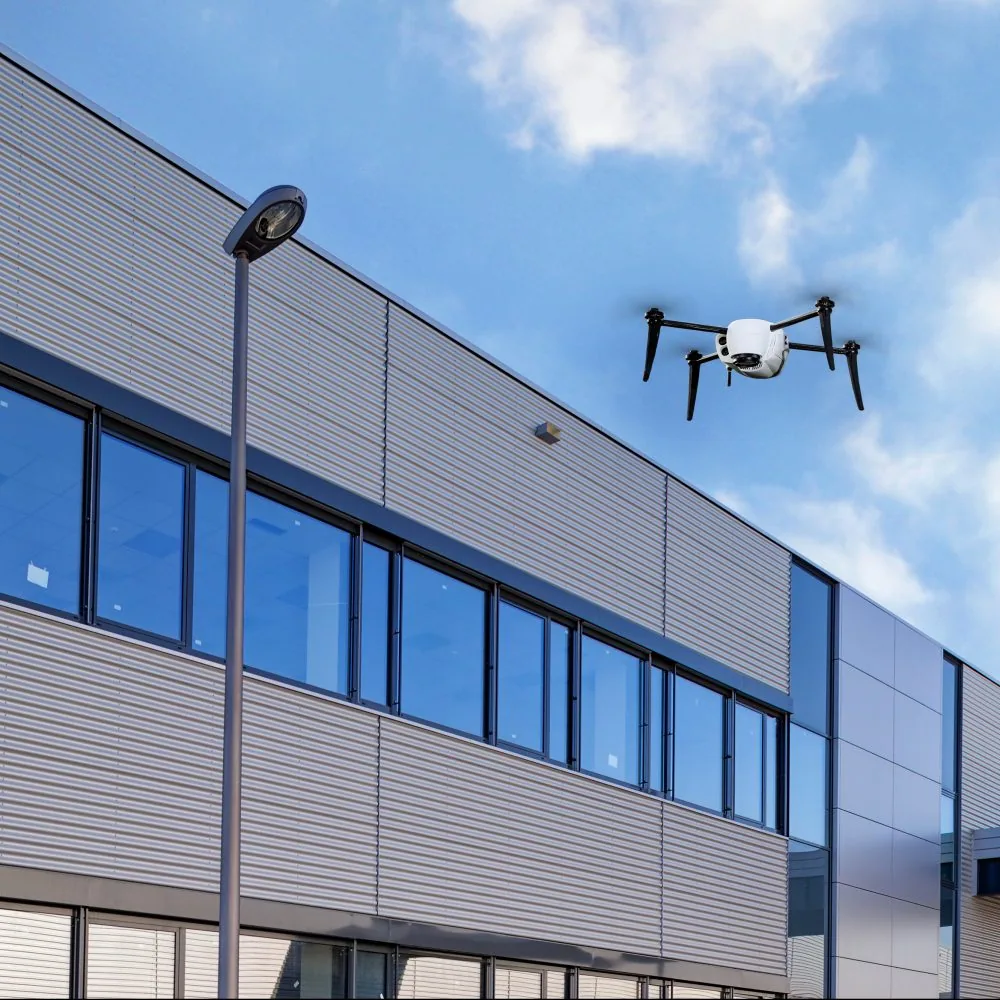
A lifted coping section beside a crowded equipment area may be visible from above before a safe walking approach can be established to examine its fastening. Drone imaging can locate that displacement, show its relationship to adjoining details and help plan the closer investigation. Commercial Roofing Cedar Rapids uses aerial imaging for commercial roof inspection in Cedar Rapids, IA, where an overhead view answers a useful physical question. The camera provides a record of visible condition; the repair decision may still need measurements or hands-on examination at the junction.
The method is especially useful for orienting broad roof areas, restricted travel routes and damage whose location is difficult to communicate from ground level. We discuss the building decision first, then choose the images needed to support it. A picture taken at the wrong angle can hide the lower flashing connection or make a wrinkle appear like an open seam. Useful imaging therefore connects the observed feature to a location and a practical next examination.
Roof orientation: Relating an observation to its surroundings
A broad overhead view can show equipment groupings, drain locations, changes in roof construction and the route between suspect details. Those relationships help a facility director understand why an inspection needs to reach a particular area. We combine wider views with closer images where a feature needs explanation, keeping its position clear enough for a subsequent roof visit. The image sequence should retain the connection between a close detail and the roof area around it.
Marion Enterprise Center is a multi-lot industrial park beside U.S. 151 and Iowa 13. For an owner requesting imaging of an industrial building in that park, the property's boundaries and active loading areas influence the access and flight plan. We identify the requested building, its roof sections and suitable observation positions before arranging the imaging. The resulting views connect the suspected details to that property's access routes and current operating conditions.
Visible defects: What the image can show clearly
Displaced metal, torn sheet material, debris accumulation and obvious changes in the field can be useful aerial observations where the image resolution and angle show them adequately. A photograph may also reveal a location requiring closer investigation without resolving the defect's form. We describe those distinctions in the findings. A shadow beside a seam, for example, may help locate the lap but does not demonstrate its bond strength or establish whether water has entered below it.
We use hands-on roof examination where touch, probing, measurement or a controlled opening is necessary. That follow-up can assess a suspected broken connection identified in the aerial view, including whether the surrounding material is suitable for repair. Imaging and direct examination work in sequence: the view establishes orientation and visible concern, while the closer check resolves the condition that changes the repair limit. A convincing-looking photograph should not substitute for that missing physical evidence.
Drain pattern: Choosing a useful observation time
Water visible during or after rainfall can help locate areas that retain runoff, while dry-weather images may show debris or staining associated with the same route. The timing affects what can reasonably be inferred. We relate the photograph to the observed weather and, where available, the time since rain ended. A dark field area could be water, shadow, surface staining or a material difference, so the follow-up question needs to fit what the image actually reveals.
Where the roof's drain approach appears obstructed, we consider inspection of the outlet and adjoining membrane rather than recommending a slope change from an overhead image alone. Drain elevation, internal piping and concealed compressed insulation need information unavailable in a routine photograph. The aerial record can show where those checks belong and how an apparent low area relates to equipment, but the correction follows measurements and findings at the requested building.
Flight conditions: Working beside an occupied property
Wind, precipitation, visibility and available safe separation influence whether useful imaging can proceed. We assess the site and any applicable flight restrictions before operating, with access and authorization coordinated for the requested property. Nearby activity, people and equipment can limit a suitable launch position or the available viewing angle. A delayed flight or a different examination method may be necessary when the conditions prevent a safe operation or useful detail images.
Czech Village and New Bohemia contain storefronts, arts and entertainment venues and multifamily housing. At a requested property among those mixed uses, pedestrian activity, adjoining occupancy and restricted access can change the imaging arrangement. We discuss those actual conditions with the facility contact and keep the examination focused on the roof issue. The mixed district provides a reason to consider surrounding activity, rather than an assumption that aerial access is simpler than a direct visit to the roof.
Interstate 380 and the nearby Interstate 80 corridor support regional business movement around Cedar Rapids. For commercial properties with active truck routes, a safe observation position needs to preserve circulation and avoid distraction or interference beside loading operations. We establish the operating constraint together with the detail to be imaged, then choose whether a drone view or a different access method is more useful. The method follows the building's practical conditions, not the availability of a camera.
Concealed damage: When another method is needed
A normal visible-light image cannot establish insulation moisture beneath an intact membrane. Suspect surface patterns or recurring leak reports may justify a thermal moisture investigation, with the roof assembly, weather and confirmatory checks considered before drawing conclusions. A thermal camera also measures surface temperature patterns rather than directly seeing water inside a roof. We select the investigation that can resolve the concealed condition instead of treating overhead imagery as a complete survey of every layer.
Similarly, an aerial image of a standing-seam metal roof can locate displaced panels or an apparent junction defect without revealing hidden clip condition. Fastening and movement arrangements may need direct access and appropriate examination. We explain what additional evidence the observed concern requires, then relate it to the repair choice. The appropriate next method is the one that can answer the specific unresolved question about the connection.
Located images: Making the record usable for work
A repair proposal needs more than a folder of photographs. We identify the roof area, describe the visible feature and distinguish an observed defect from a concern requiring closer investigation. Those images can support a written condition record or help plan access for targeted roof repairs. Locations and viewing conditions remain attached to the findings so that another person can return to the detail without guessing which equipment group or roof section was photographed.
Comparable repeat views can show displacement or debris changes that warrant closer examination, while differences in lighting may explain an apparent seam change. We explain the physical observation and the next appropriate check rather than using images to imply a remaining service life. The record should help the director choose work, investigation or maintenance at the detail shown.
Commercial Roofing Questions
Can a drone image confirm that a seam is watertight?
A seam's actual connection requires examination appropriate to the material and suspected defect. An image can locate an obvious opening or a feature needing closer attention, but it cannot establish bond strength below the visible surface. We use the photograph to direct the hands-on check that will affect the repair.
Could aerial imaging replace roof access for our first assessment?
The decision you need to make controls whether an overhead view is sufficient initially. Locating displaced metal may be possible from images, while checking a drain elevation or wet insulation requires additional examination. We explain which questions can be answered from above and arrange direct access for the remaining ones.
Why might the imaging visit be rescheduled despite dry weather?
Wind, visibility, surrounding activity or applicable flight restrictions can make a safe and useful operation unavailable even without rain. A close detail also needs a viewing angle that can show the suspected connection. We assess those conditions and select a different time or method where necessary.
Will we know which photographed details need repair?
Located findings distinguish clear visible damage from observations requiring follow-up. We explain the consequence of the feature shown and identify the examination needed before a repair is specified. That separation lets the facility director use the images for a practical work decision rather than interpret every unusual surface mark as a confirmed failure.
Related Pages
Request a roof assessment or call 555-555-5555.

Questions? Call Us
Free roof assessment