
Commercial TPO Roofing in Cedar Rapids, IA
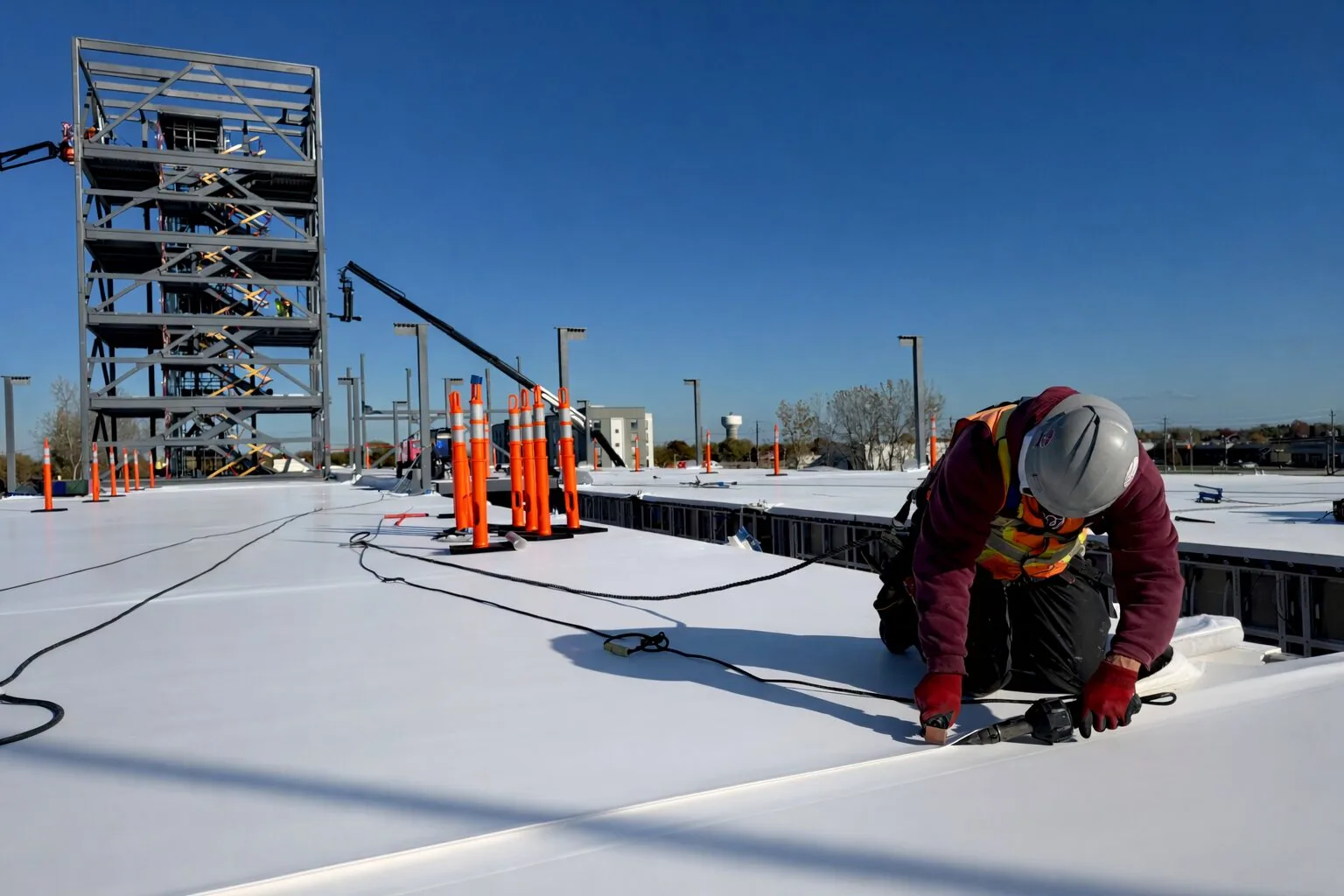
A weld interrupted where several TPO sheet layers meet can leave a small water route at the crossing even when the straight lap beside it is intact. The repair needs examination of that change in thickness and the adjoining connection, not only another pass along the visible seam edge. Commercial Roofing Cedar Rapids installs and repairs TPO roofs in Cedar Rapids, IA, through the sheet, welded details and support beneath them. We identify the junction that failed and establish how new material can connect to the existing assembly.
TPO is a thermoplastic single-ply roofing material whose suitable lap connections are formed through heat welding. Its usefulness depends on preparation, welding, attachment and the receiving construction, with corners and transitions receiving attention beyond the broad field. A roof needing targeted seam or detail repair is assessed differently from one needing complete replacement. The extent follows the condition of the sheet and lower layers, then the installation method follows the selected assembly.
Welded crossing: Checking the connection where thickness changes
A lap crossing or detail transition can require preparation and treatment appropriate to the particular system. We examine the existing sheet, the weld and the adjoining material before selecting a compatible repair. Contamination, damage or aging can affect the ability of retained TPO to accept new work, so preparation and appropriate checks are part of the decision. An apparently neat edge does not establish that the entire welded connection is suitable underneath.
New installation requires the welding arrangement and conditions appropriate to the selected membrane, with seam examination performed without damaging the sheet. We pay attention to corners, changes in material thickness and the tie between field roofing and preformed or fabricated details. A defective connection needs correction within material capable of receiving a sound weld. Rebuilding a failed lap therefore follows the identified form of the defect rather than adding sealant that cannot replace the intended fusion.
We compare thermoplastic alternatives or rubber membrane alternatives where the building exposure or intended intervention calls for another system, keeping their different joining and preparation requirements distinct.
Membrane base: Providing support beneath the weathering layer
TPO sheet needs receiving layers appropriate to its attachment and expected exposure. Insulation, cover board and deck condition are assessed together because a defect below the membrane can change the performance of the connection above it. Softened insulation or an unsupported joint can create movement that stresses a seam or detail. We examine suspect layers and restore a suitable base before new roofing closes over them, whether the work is localized or part of a full replacement.
Rebuilding insulation and cover board may also change field thickness, drainage and curb height. Those relationships are resolved during assembly selection rather than after the sheet is installed. We coordinate relevant support or design review where deck deterioration, loading or a changed arrangement requires it. The completed system should place its membrane on suitable material and connect through the assembly to the intended deck, with the lower layers considered as part of that path.
Vertical transition: Joining corners and terminations to the field
A raised curb presents a change from horizontal membrane to vertical flashing and another connection at the top of the detail. We examine lower laps, corner geometry and termination condition so that water does not pass behind an apparently intact flashing face. TPO detail materials and welding methods need to suit the selected system and the component being flashed. The work should restore the complete water-exposed junction rather than only its most accessible edge.
Equipment or closely spaced penetrations can restrict preparation and welding access. We establish the working room and coordinate any component movement required before opening roofing. Penetration-flashing reconstruction then connects to suitable field sheet with the intended movement clearance retained. A repair's boundary may widen where retained material is damaged or cannot accept the new connection, making the condition around the detail central to the removal decision.
Attachment route: Connecting the sheet through the assembly
A mechanically attached roof and an adhered roof transfer forces through their layers in different ways. We select the arrangement using the deck, receiving materials and applicable project requirements, then address perimeter and equipment details within that same design. Suitability of the substrate and any necessary testing must be established where the connection is uncertain. A new TPO surface does not resolve unreliable fastening or adhesion lower in the existing assembly.
Where TPO is proposed over retained roofing, moisture, covering count, compatibility and detail height require investigation before retention is accepted. A separation or receiving layer may be needed for the selected arrangement, with unsuitable material removed first. Where those conditions cannot support a sound recover, replacement becomes a different rebuilding route. We explain the alternatives through the layers that can remain and the connection available for the proposed sheet.
Water exposure: Keeping the field and outlets working together
A welded membrane still needs functional drainage and appropriately formed outlet connections. We examine water retention at drains, scuppers and equipment, checking whether debris, compressed insulation or field geometry affects the route. Correcting the approach can require insulation or detail work alongside the sheet. The membrane should not be expected to compensate indefinitely for a discharge path that remains obstructed or incorrectly positioned after installation.
Surface traffic and equipment discharge also deserve attention. We identify the requested roof's actual exposure and suitable protection around service routes, with material compatibility considered where deposits or chemicals are present. A recurring leak can need investigation of an intermittent water path before repair is specified. The observed condition then controls whether the work addresses one seam, a flashing junction or affected layers beyond the first entry location.
Regional buildings: Matching the assembly to the requested use
Solon's municipal information identifies service-oriented activity and Iowa 1 with Main Street as principal local routes, while its school district lists elementary through high-school facilities. At a requested roof in Solon, building use and equipment access determine how TPO installation or repair is staged. We examine the actual roof assembly and interior sensitivity, then identify the suitable receiving layers and working section rather than assign a membrane arrangement from the surrounding town's character.
Springville provides municipal administrative and library services, and Linn County handles the city's building-permit services. For a requested project there, we establish the relevant review and occupied-space restrictions before an alteration is finalized. The roof system needs its appropriate design and installation requirements, with local jurisdiction kept tied to the property location. A serviceable completed assembly should retain drainage, accessible equipment routes and repairable material junctions after the new sheet is installed.
Commercial Roofing Questions
Can a TPO seam be repaired if the old sheet is weathered?
The retained material's ability to accept the proposed connection decides the repair method and boundary. We identify the sheet and prepare the area appropriately, using checks where needed to assess suitability. Damaged or unsuitable surrounding material may require removal before the replacement can join a sound receiving surface.
Why does a seam crossing need different attention from a straight lap?
The change in material thickness can affect how the connection is formed at the intersection. We examine that geometry and use the detail method appropriate to the selected system. Repair should restore continuity across the transition rather than assume that work along the straight edge resolves the crossing.
Will a new TPO membrane correct wet insulation?
Wet material beneath the covering needs its own examination and suitable intervention. Installing a new sheet can leave the damaged support concealed and retain moisture within the assembly. We establish affected areas and rebuild the necessary lower layers before the weathering material is closed over them.
What changes a TPO installation beside operating equipment?
Access, discharge exposure and the ability to reach each flashing connection influence the work sequence. Some junctions may require coordinated equipment movement or a restricted operating window. We identify those conditions before removal so that preparation, welding and close-in can be completed at the actual detail.
Related Pages
Request a roof assessment or call 555-555-5555.
Questions? Call Us
Free roof assessment