
Commercial Roof Repair in Cedar Rapids, IA
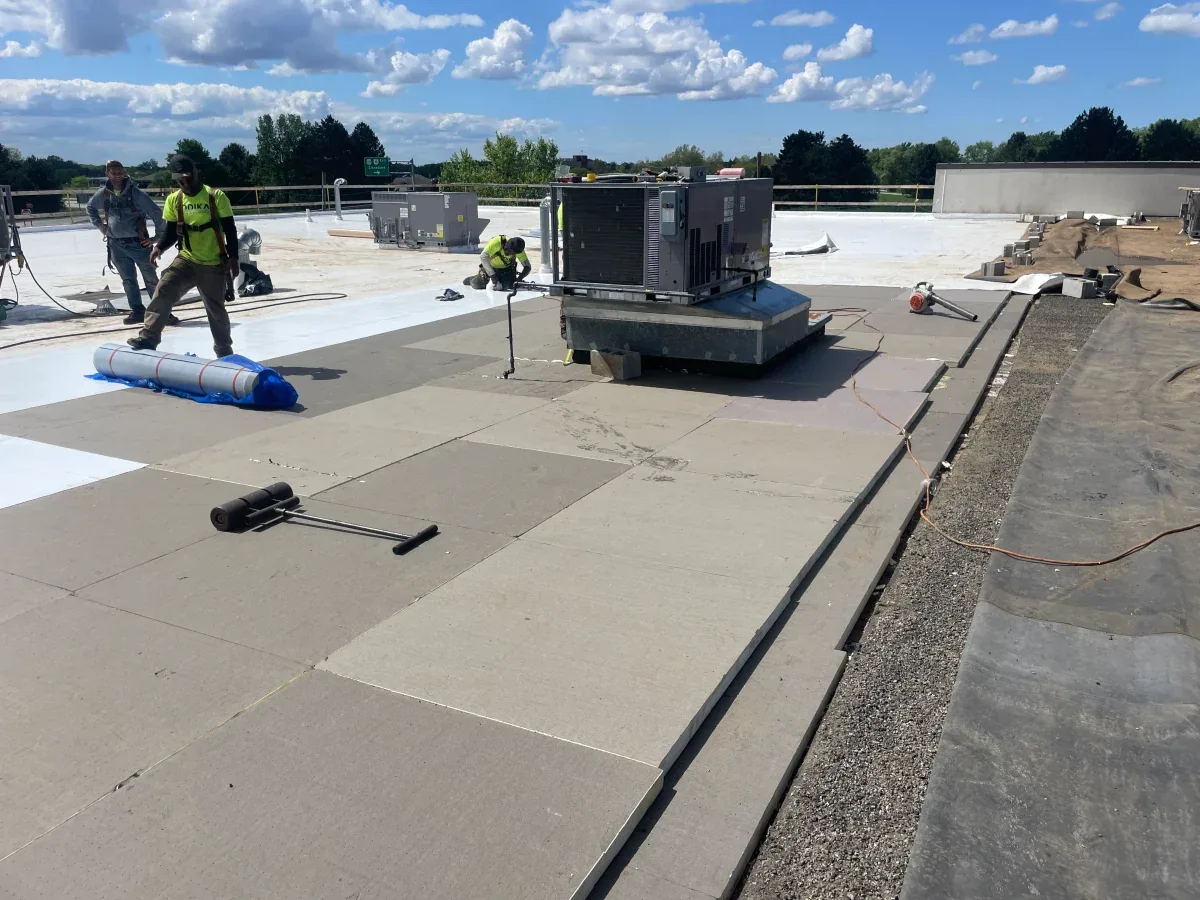
A distorted drain clamping ring can leave uneven pressure around the membrane connection to its bowl, allowing water through a junction that needs more than surface sealant. Where inspection finds that condition, Commercial Roofing Cedar Rapids examines the ring, fastening, membrane and adjoining drain approach before choosing the repair limit. Planned commercial roof repair in Cedar Rapids, IA, may therefore require hardware correction together with rebuilding the weathering connection. Closing the visible gap alone can leave the faulty compression beneath the new covering.
Our work includes damaged drain connections as well as membrane openings, separated seams and flashing defects. An active interior leak may need a separate investigation of the water path before a drain is identified as its cause. Once the defective junction is established, we examine the surrounding material and the drain component's suitability for reinstatement. The repair boundary follows the parts that must be corrected together, with discharge access retained after the membrane connection is restored.
Compatible lap: Rebuilding a separated connection
A seam can separate because its connection was inadequate, because the receiving material has become contaminated or because movement is stressing the detail. Those possibilities call for different work. We examine the existing lap, identify the roof material and assess the surrounding surface before selecting a compatible method. Heat-welded thermoplastic seams, adhesive-based rubber details and asphaltic roof repairs each need their own preparation and materials. A product that covers the opening visually may still fail to bond to the roof beneath it.
We remove loose or unsuitable repair material where necessary and establish enough sound receiving surface for the new connection. On a PVC membrane assembly, a repair may need testing of the existing sheet's ability to accept the proposed weld and preparation. On other systems, adhesion and reinforcement may govern the detail instead. The choice follows material identification and the condition at the lap, with movement or support problems corrected before a new connection is closed.
Receiving layers: Where a small opening becomes wider work
A puncture over firm insulation can permit a limited membrane repair, while the same opening over softened layers may require removal beneath the sheet. We examine the support around the defect and use openings where concealed moisture would alter the scope. Wet material can extend beyond the visible damage, so the removal line needs to follow findings rather than the size of a stain or the shape of a proposed patch. Dry, stable adjoining layers provide the receiving boundary.
Where several defects suggest concealed spread, mapping suspect moisture areas can help direct further checks. We relate each finding to the roof's construction and drainage arrangement, then distinguish isolated repairs from deterioration that would remain outside the repaired area. A repair proposal should identify what the work will restore and which separate roof conditions remain. That distinction lets a facility director decide whether limited intervention is sufficient for the building's immediate need.
Broken junction: Repairing more than the visible seal
A vertical flashing can remain attached to a curb while its lower connection to the field membrane has split. Replacing a bead of sealant above that split may leave the failed water barrier untouched. We follow the detail from its top termination through corners and down to the field lap, checking for loose backing, inadequate support or material that has pulled under stress. Rebuilding the flashing connection requires a continuous weathering path through those adjoining parts.
Pipe penetrations, edge metal and equipment supports introduce similar material junctions, with their own movement and service requirements. A repair should retain clearance where equipment moves or a pipe expands rather than locking the assembly into an unsuitable position. At a perimeter, loose metal may require examination of the supporting attachment as well as the membrane termination. We identify the rebuild point that allows each adjoining element to function, then select the repair arrangement that fits that physical relationship.
Standing water: The pressure on a repaired detail
A repaired seam beside a low drain approach can remain under water long after the surrounding field dries. The connection has to be suitable for its exposure, but the drainage defect also merits investigation. We check whether debris, a raised inlet, compressed insulation or the shape around equipment is keeping water in place. Clearing a blockage and rebuilding an incorrect approach are different tasks, and a repair scope needs to distinguish them before the membrane is closed.
January 2024 snow observations included 11.5 inches two miles northeast of Cedar Rapids. For a roof exposed to snow and subsequent melt, keeping drain approaches and overflow routes functional helps avoid water trapped beside vulnerable details. We examine the requested roof for its actual obstructions and geometry, then coordinate restoration of the drainage connection where necessary. After thawing exposes the outlet, we check the membrane connection and overflow route for displaced debris or damage before closing the adjoining repair.
Local building uses: Choosing access without widening damage
Historic storefronts, entertainment venues and multifamily housing share the Czech Village and New Bohemia district. A requested repair above such mixed uses may require separate coordination for interior protection, tenant access and equipment service, especially where removal opens a material junction beside an occupied room. We explain the physical work and its location before scheduling the intervention. The constraint that matters is the activity directly affected by access, dust, noise or the temporary opening.
Marion Enterprise Center's multiple industrial parcels occupy a business area beside U.S. 151 and Iowa 13. At an industrial building in Marion Enterprise Center, loading activity may restrict where ladders, lifts and removed material can be placed. We plan those routes while keeping the repair itself limited to the defective assembly. Unnecessary roof traffic can add wear around equipment, so a protected approach and material staging area form part of the work rather than becoming new damage to resolve later.
At handback, the owner receives a description of the repaired connection, the removal performed and any adjacent conditions that still need attention. A photographic condition record is useful when another trade will return to the same equipment or when the roof contains several independent repair areas. It shows where the work ends and gives maintenance personnel a practical way to observe that detail without assuming that a local repair renewed the entire roof.
Commercial Roofing Questions
Can you repair a seam with several old patches on it?
The remaining material's ability to accept a compatible connection decides whether another repair is practical. Loose, contaminated or incompatible patches may need removal before we reach a suitable receiving surface. We examine the whole lap and its support, then show whether a bounded rebuild is available or deterioration extends farther.
Why does a puncture repair sometimes include insulation?
Water can enter through the puncture and change the supporting layers beneath it. Soft or wet insulation may prevent the replacement membrane from resting on a suitable base. We investigate that adjoining area where findings would affect the work, then remove unsuitable layers until the repair can connect to stable material.
Should equipment vibration be addressed before flashing is repaired?
An ongoing movement problem can stress the rebuilt flashing again. We examine the roof connection and coordinate the necessary equipment or support review where vibration, displacement or inadequate clearance is involved. The roofing repair should accommodate the intended movement after the equipment issue is understood, rather than conceal it with additional sealant.
What separates a lasting repair scope from a temporary patch?
A permanent scope rebuilds the defective connection with compatible materials and adequate support, while temporary work limits immediate exposure until that rebuilding is possible. Access, weather and concealed conditions can prevent final work during an urgent visit. We identify which connection has been restored and what remains for a later intervention.
Related Pages
Request a roof assessment or call 555-555-5555.
Questions? Call Us
Free roof assessment