
Commercial Warehouse Roofing in Cedar Rapids, IA
A split field sheet beside a warehouse roof's wet base tie-in can leave the apparent patch area smaller than the construction that needs rebuilding. The new membrane must connect through a suitable boundary, with affected underlying layers removed where they cannot remain. Commercial Roofing Cedar Rapids examines warehouse roofing in Cedar Rapids, IA, from the failed sheet into its adjoining insulation and support. Stored goods below the opening make that investigation and the temporary weather boundary part of the same repair decision.
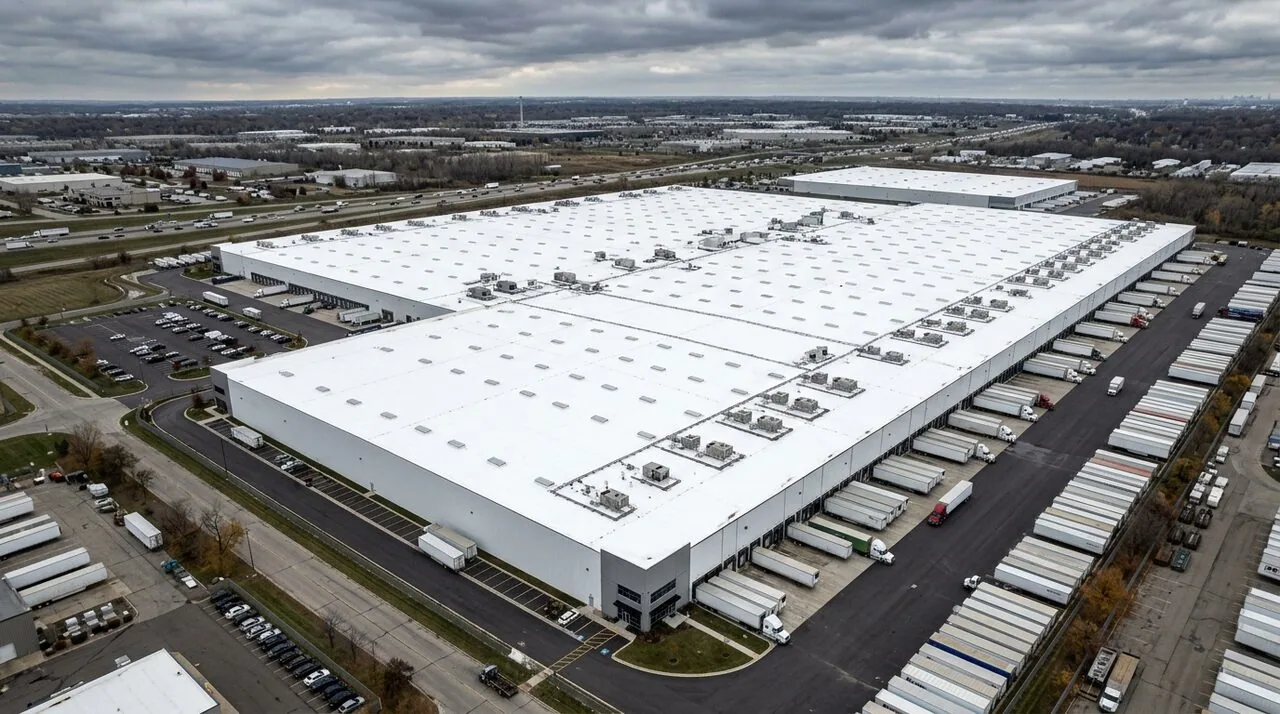
The roof work follows the actual warehouse assembly and operating arrangement. A local sheet repair differs from removing wet layers or replacing a broader field, and each choice affects how the building is protected during work. Where warehousing shares an operation with distribution facilities or flex industrial space, we examine the roof junctions and activities beneath the affected section before choosing the removal sequence.
Repair boundary: Finding material that can receive the new sheet
The visible split marks a weathering defect, but nearby insulation or other layers may also have been affected by water. We examine the surrounding membrane and investigate suspect construction where the result changes the repair extent. A local patch requires suitable retained material at its connection, not simply enough area to cover the opening. Deteriorated or wet layers can require removal until the replacement can join an appropriate base.
Rebuilding the damaged roofing section begins with that defined boundary. The selected repair must suit the existing membrane and attachment, including any detail where the field meets a wall, curb or adjoining roof. We explain what will remain and what needs reconstruction before closing the work. The completed junction should restore the weathering sheet and the support needed beneath it.
Stored materials: Connecting roof removal to interior protection
Stored goods beneath a roof opening can limit where material may be removed without additional protection or relocation. We establish the affected storage area with the facility director before choosing the work section. Product sensitivity, rack arrangement and available access can change how the interior is isolated. Roof removal should proceed with a suitable protection plan rather than expose goods while the full condition of the opening is still being established.
A water report may identify a particular aisle or stock position that needs protection while the entry is traced. We coordinate those interior actions with investigation of the failed water connection. Where handling activity must continue, the work boundary and any restricted area need clear separation. The protection should suit the actual contents and operation while allowing the roofing defect to be examined and corrected.
Loading routes: Keeping material handling clear of the work section
A warehouse's loading entrances and vehicle routes can occupy the same exterior area needed for lifting or roof debris removal. We establish the relevant access with the operator before positioning equipment or beginning tear-off. Deliveries, pedestrian movement and temporary storage may need an agreed arrangement during the affected section. The daily roof work needs a handling route that does not conflict with the building's active loading operation.
Inside the building, roof investigation may require access above racks, equipment or stored materials. The operator's information helps identify appropriate access and any required relocation. We connect that arrangement to the removal and close-in sequence so the work does not leave a roof opening waiting on unavailable interior access. A suitable section size reflects both the roofing construction and the protection that can be maintained beneath it.
Runoff route: Examining the field beside outlets and raised details
Water retained near a drain or equipment curb can repeatedly expose a nearby sheet defect while a warehouse remains otherwise in service. We examine outlet condition and the surrounding roof shape where water accumulation is reported. The new repair should preserve the drain approach rather than introduce a raised edge across runoff. A blocked opening, damaged drain connection and low field area call for different corrections.
Assessment of the discharge connection establishes which adjoining work belongs with the sheet repair. Where alteration of slope or drainage construction is required, we coordinate the relevant design input. Outlet access should remain available after reconstruction for cleaning and service. The repaired field needs to connect into the roof's intended water route as well as close the initial weathering defect.
Broader field: Comparing bounded repair with planned replacement
Repeated defects or unsuitable materials beyond the initial wet boundary can change the appropriate intervention. We assess the broader field where its condition affects whether local reconstruction provides a suitable remaining roof. Retained attachment, insulation and perimeter details all contribute to that decision. The comparison should show which construction can remain sound and which failed areas require more extensive work.
Replacement of the affected assembly needs its own sequence for temporary closure and occupied-building protection. We define sections that can be opened and completed appropriately, coordinating any structural, equipment or review tasks that precede roofing. A larger intervention should resolve the defects that made local retention unsuitable, while restoring the junctions at the boundaries of the new field.
Industrial setting: Planning around the requested warehouse operation
Fairfax annexed a light-industrial area east of Lefebure Road in 2020, and its development information includes the Travero warehouse project. At a requested warehouse roof in Fairfax, we establish the actual storage and handling activity beneath the affected construction. The operator's delivery routes, stock protection requirements and equipment access shape the work section. Roof investigation then defines where the new sheet can reconnect to suitable retained materials.
The Marion Enterprise Center is a multi-lot industrial park with utility infrastructure and access near US 151 and Iowa 13. For a requested building there, exterior handling and the particular roof assembly need examination before removal starts. A location within an industrial park can require coordination of the building's own loading access and nearby movement. We plan the roofing boundary at that premises so materials can be handled without compromising temporary protection over the warehouse.
After repair, we identify the reconstructed area and explain how rooftop service should protect the new connection. Damage from later activity or renewed water accumulation deserves assessment before a defect reaches underlying layers. The facility director can relate future reports to the actual repaired section and its adjoining outlets or components, rather than treating every interior water report as another unrelated patch.
Commercial Roofing Questions
What decides whether a split warehouse membrane needs more than a patch?
The underlying condition and suitable connection boundary decide how far rebuilding needs to extend. We examine adjoining sheets and suspect layers where moisture or deterioration affects retention. The repair must reconnect the weathering material to appropriate construction beneath it, not only cover the visible split.
How does stored stock affect the daily roof section?
Its position and sensitivity change the protection or relocation needed below removal. We establish those requirements with the operator before opening the roof. The section must allow suitable investigation and close-in while maintaining the agreed protection over goods and active handling areas.
Why inspect drainage beside a warehouse sheet repair?
Repeated water accumulation can expose the defect and alter what adjoining work is needed. We examine the outlet and surrounding geometry before rebuilding. The repaired surface should preserve runoff and join a suitable discharge connection rather than create another raised barrier beside the drain.
Can roof replacement be divided around loading activity?
Appropriate sections can be planned when temporary boundaries, material handling and the building's access requirements can be maintained. We establish the affected construction and operating restrictions before choosing that sequence. Each opened section needs a suitable protection and completion arrangement independent of the delivery schedule.
Related Pages
Request a roof assessment or call 555-555-5555.
Questions? Call Us
Free roof assessment