
Commercial PVC Roofing in Cedar Rapids, IA
PVC roofing placed against an incompatible underlying material can develop a material problem at the contact interface even while the top sheet remains the only part visible from the roof. Suspected deterioration at that junction calls for examination of the layers before a replacement patch is chosen. Commercial Roofing Cedar Rapids installs and repairs PVC roofs in Cedar Rapids, IA, with compatibility, welded connections and supporting construction considered together. The new weathering layer must fit what it touches as well as the exposure above it.
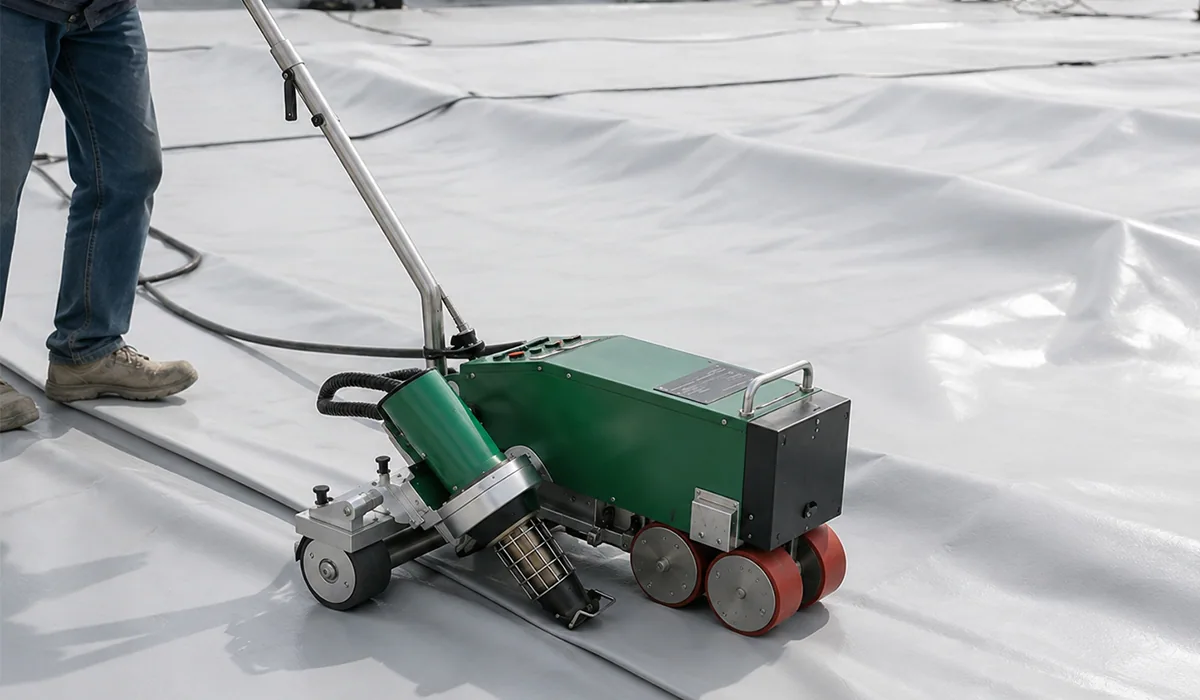
PVC is a thermoplastic membrane used in commercial single-ply roofing, with suitable seams formed through heat welding. Different systems and formulations have their own installation and repair requirements, so material identification precedes the proposal. We assess the receiving assembly and building operation before comparing PVC with a TPO system or a KEE-containing membrane arrangement. The choice should suit the actual junctions and exposures rather than a generic preference for one sheet type.
Contact interface: Choosing what can remain beneath the sheet
Retained asphaltic materials, old coatings and previous repairs need compatibility review before new PVC is placed over or beside them. An appropriate separation or receiving layer may be necessary under the selected system's requirements. We identify the existing construction and proposed material arrangement, examining suspect deterioration where it affects retention. The roof should not receive a new covering that repeats unsuitable contact merely because the existing top surface can be cleaned.
That review matters at transitions as well as the broad field. A repaired curb may join new PVC to another material, while an existing patch can contain a product whose identity is unclear. We examine the available construction information and physical condition before selecting the detail method. Where the retained material cannot provide a suitable connection, removal extends to an appropriate receiving boundary. A local PVC repair then reinstates compatible layers rather than adding another uncertain material combination.
Equipment exposure: Matching material to the operating roof
Equipment discharge, deposits and cleaning activity can affect material selection and the preparation needed for repair. PVC is used in applications with particular exposure requirements, but suitability still depends on the selected formulation, product guidance and the actual substance involved. We identify the roof's operating conditions instead of treating a chemical-resistance description as approval for every contact. Concentrated discharge or incompatible materials may need a different detail or control at the equipment connection.
The Amana Colonies retain food-production, textile and furniture businesses alongside visitor shops. At a requested commercial or production roof in the Amana Colonies, we discuss the actual operation, service traffic and any discharge before proposing PVC. The roof's material arrangement should fit the exposure identified at that building. Appropriate protection and access near equipment remain necessary even where the selected membrane suits the operating conditions, because compatibility does not prevent punctures or a defective flashing junction.
Lap formation: Establishing a suitable welded connection
A contaminated seam can prevent suitable fusion or complicate a repair, while damaged sheet at the lap may need removal before a new connection is possible. We examine the retained membrane and prepare the receiving area using methods appropriate to the system. Welding conditions and detail geometry are assessed at the actual junction, with suitable seam checks after work. A patch that looks well positioned still needs a functioning connection around its perimeter.
We distinguish repair of a separated seam from an opening caused by movement or support beneath it. Where stress has distorted the sheet, another weld may leave the reason for separation unchanged. The supporting condition, clearance and material path should be examined before the lap is rebuilt. Corners and changes in thickness receive their own detail attention so that the weathering connection remains continuous across the transition rather than only along its straight portions.
Lower layers: Restoring insulation and deck connections
Wet or unstable insulation can leave a new PVC sheet resting on material that cannot provide suitable support. We investigate concealed condition where it changes the repair or retention decision, using openings or other appropriate methods. A survey with confirmatory layer checks may help locate suspect areas when the assembly and weather suit the method. The resulting findings establish where unsuitable material needs removal before the membrane is closed.
Attachment or adhesion also needs the deck and intermediate layers to fit the proposed arrangement. We assess those connections and coordinate relevant structural or design review where support is uncertain. A recover requires examination of retained construction, covering count and available detail height in addition to moisture. Where reliable retention is unavailable, replacing the existing assembly offers a different route to suitable receiving layers and a defined new connection path.
Flashing sequence: Reaching the field from the component above it
A curb or pipe detail joins the PVC field to a component with its own support and movement. We examine top closures, corners and lower laps to identify the failed part and the receiving material available for reconstruction. Rebuilding the exposed face without correcting a defective termination above it can leave water entering behind the new flashing. The repair should restore the whole weather-exposed route while preserving clearance needed by the component.
Drain outlets and scuppers require the same connected examination. A raised approach, unsuitable bowl connection or water retained around equipment can prolong exposure at a lap. We coordinate outlet and drainage-detail work where those conditions affect the PVC installation. The field shape and flashing height need to work together, particularly when insulation is changed. The membrane should discharge water through a suitable connected route rather than cover an unresolved collection area.
Commercial activity: Scheduling preparation around occupied uses
Williamsburg's area includes Kinze farm-implement manufacturing and its agricultural-equipment exhibit facility near Interstate 80 Exit 216. For a requested industrial or visitor-serving property, installation needs its actual access and equipment restrictions understood before material removal. We discuss the roof condition, operating exposure and daily close-in with the facility contact. A production shutdown, intake restriction or public entrance can change how much work is sensible to open and rebuild during the available window.
The library in Oxford occupies a reused storefront that formerly served other uses, including a theater. For a requested building with reused interiors, available records and close examination help establish the roof construction rather than assuming it from the current occupancy. We identify the relevant material junctions and sensitive spaces beneath the work, then choose preparation and rebuilding that suit those findings. The finished PVC assembly should leave compatible connections, suitable drainage and practical access for maintenance after installation.
Commercial Roofing Questions
Can PVC be installed over retained asphaltic roofing?
The selected system's compatibility and receiving-layer requirements decide the arrangement. Separation may be required, and the retained material must also satisfy condition and project requirements for remaining in place. We examine the actual construction before proposing the new sheet rather than allowing direct contact to be selected by convenience.
Does PVC suit any rooftop grease or chemical exposure?
The substance, concentration and selected material's requirements need specific review. A general description of membrane resistance does not resolve every operating contact. We identify the exposure at the requested roof and coordinate suitable material or equipment-detail choices where discharge affects the assembly.
Why might a damaged PVC lap need removal beyond the seam?
Adjacent sheet deterioration, contamination or unstable support can prevent a suitable receiving connection. We examine those conditions and reach material capable of accepting the repair. The boundary follows the affected layers rather than the width of the visible separation alone.
What should be checked before replacing a roof with PVC?
Existing construction, moisture, attachment and the building's operating exposure all affect the proposal. We assess the layers and junctions that the new membrane will meet, including drains and equipment. The replacement should connect to suitable support and compatible details within the project's requirements.
Related Pages
Request a roof assessment or call 555-555-5555.
Questions? Call Us
Free roof assessment