
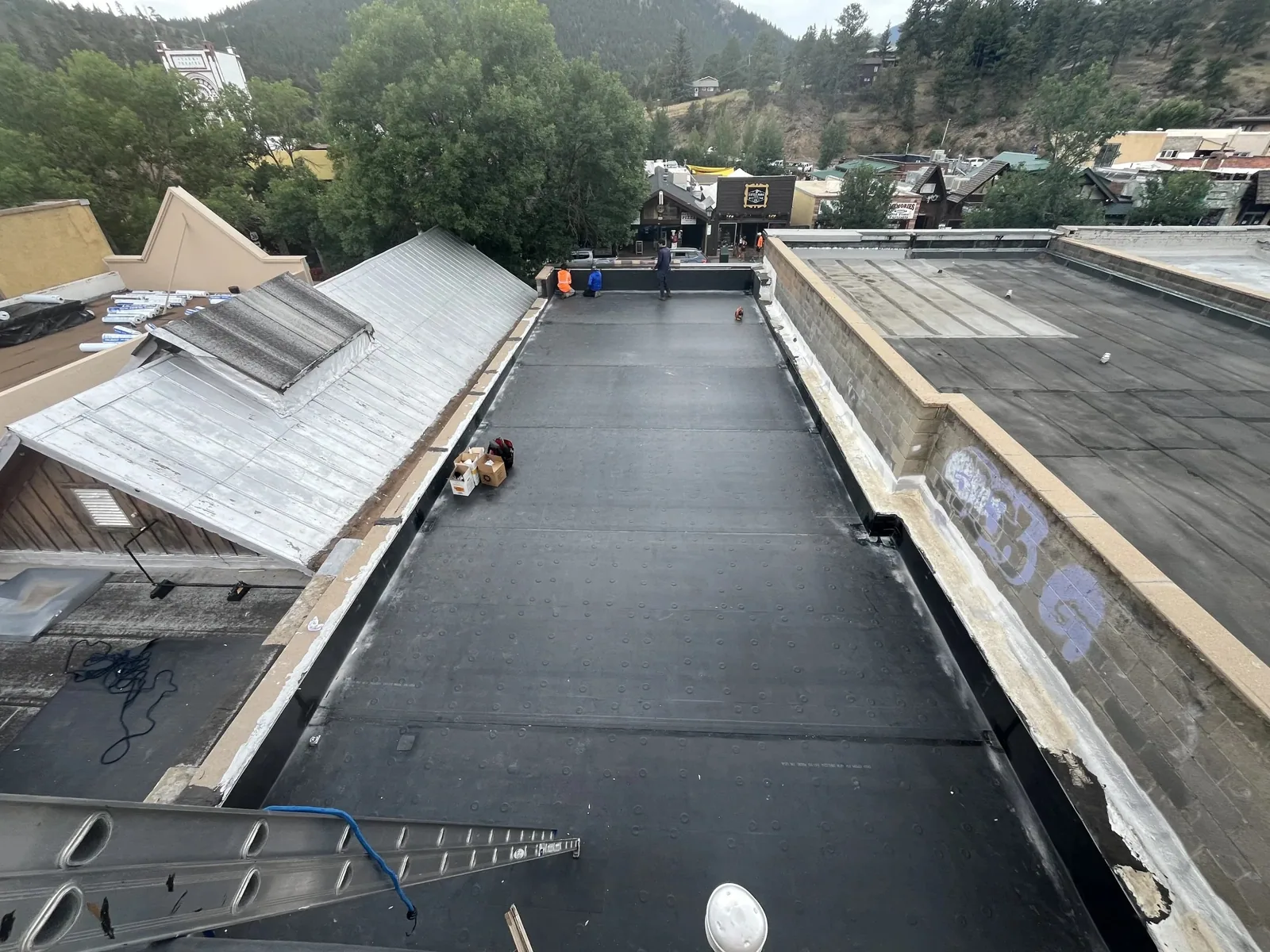
Commercial Roof Coating Restoration in Cedar Rapids, IA
A coating split over a membrane lap can expose a broken connection beneath the film, especially where movement has stressed the lap and the coating spanning it. Covering the split again leaves that movement and separation unresolved unless the underlying junction is examined and rebuilt. Commercial Roofing Cedar Rapids evaluates coating restoration in Cedar Rapids, IA, by examining the roof beneath the proposed film, the details it would cross and the preparation needed for a suitable bond. A coating is useful only within an assembly capable of receiving and supporting it.
Restoration may provide a workable intervention for a sound roof whose surface and details suit the selected system. It does not remove concealed wet insulation or restore a loose deck connection merely by covering them. We examine those conditions before choosing the work, then compare coating with repair of isolated defects or removal where the underlying assembly is unsuitable. The proposal follows the roof's condition rather than beginning with a product and trying to fit the building to it.
Adhesion failure: Preparing the material that will receive the film
Dirt, residual repair products and equipment discharge can affect how a coating adheres. We identify the existing roof material and surface condition, then assess compatible cleaning and preparation. Testing may be needed to establish whether the proposed system can achieve a suitable bond to the prepared substrate. Cleaning that changes the surface appearance is not necessarily enough; the relevant question is whether the remaining material can accept the coating under its installation requirements.
Cedar Rapids grain-processing stock includes ADM, Cargill, General Mills and Quaker Oats facilities. For a requested industrial roof, any actual deposits or discharge near process equipment need consideration before restoration. We discuss the operation and examine the surface instead of assuming an industrial location supplies one uniform exposure. Coating work above manufacturing activity may need local preparation, compatibility checks and protection of intakes, with the receiving condition determining how far cleaning or repair must extend.
Detail continuity: Rebuilding before coating
A split at a curb corner places movement and water exposure at a connection that may need reinforcement or reconstruction before field coating. We examine seams, penetrations, flashing and perimeter junctions to identify the appropriate detail work. Filling a visible crack is different from rejoining loose membrane or restoring support beneath a stressed corner. The selected coating system's detail methods need to suit the existing construction, with damaged roofing corrected before it is concealed by the film.
We coordinate penetration and curb repairs where those connections are defective. A top termination admitting water behind vertical flashing still needs its own correction, because coating the exposed face may not intercept that route. Loose metal at an edge also requires attention to attachment and movement. The restored system should connect through each water-exposed junction rather than leave a concealed broken connection beside a newly coated field.
Concealed condition: Deciding what must come out
A dry-looking membrane can cover wet insulation, particularly where leaks have been repaired repeatedly. We evaluate the available construction information and use moisture investigation with targeted checks where concealed condition affects the restoration decision. Wet or deteriorated layers may need selective removal before coating is practical. Broad saturation or unstable support can make restoration unsuitable even when a large part of the visible surface appears capable of receiving material.
The repaired boundary needs to fit the surrounding assembly and the proposed coating system. We reinstate appropriate support and weathering material before applying the restoration over it, checking compatibility at transitions between new and retained surfaces. Where those connections cannot be established reliably, replacement of the affected roof may be the better physical route. The removal limit follows the defective layers, while the coating scope follows material that has been made suitable to remain.
System selection: Matching exposure and drying requirements
Silicone and acrylic systems have different application and exposure requirements, so the choice needs the roof's drainage, surface and operating conditions. We consider the selected product's suitability for anticipated water exposure, the preparation it requires and the conditions necessary during application and cure. A silicone restoration system should be evaluated through those requirements rather than assumed to correct standing water or unstable roofing beneath it. Other coating arrangements need the same project-specific material review.
Cedar Rapids airport normals show a January daily maximum of 27.9 F and a July maximum of 82.8 F for 1991-2020. Actual roof temperature, moisture and forecast conditions govern application timing at the requested building. We plan preparation and coating within a workable weather window, including the material's curing needs before exposure. A delay between cleaning and application may require another surface check if contamination or weather has changed the receiving condition.
A low area beside equipment also needs drainage review before restoration. If debris is blocking runoff, clearing it addresses a different problem from correcting an raised drain approach or compressed insulation. We coordinate the relevant work so that coating is not used to avoid understanding the water route. The completed detail should preserve outlet access and suitable drainage, with its material requirements respected where water may remain temporarily after rain.
Coverage at rough or irregular details also needs attention during application. We check preparation and the selected system’s installation requirements where the film crosses corners or changes in material, because a thin or poorly bonded junction can remain vulnerable beside an otherwise complete field.
Application beside occupancy: Managing the exposed work area
Czech Village and New Bohemia contain storefront, entertainment and multifamily uses. At a requested property in that mixed-use district, coating preparation may affect entrances, intakes and occupied spaces even without a full tear-off. We discuss cleaning, spray or roller application and protection of adjacent surfaces for the actual system selected. The method should suit both the roof and the activity beside it, with overspray, runoff and material handling addressed before work begins.
Equipment servicing may need to pause where traffic would contaminate or damage newly applied material. We identify protected routes and the point at which a section can return to its intended use under the selected system's requirements. At completion, the owner receives the repaired areas, coating arrangement and maintenance needs, including how later repair work should remain compatible with the restored surface. The new film belongs to a continuing roof assembly whose drainage and details still need attention.
Commercial Roofing Questions
Can an existing coated roof be recoated without removing the old film?
The old coating's condition and compatibility decide whether it can remain. Loose film, contamination or an unsuitable material combination may require removal or another preparation method. We identify the existing arrangement and assess the receiving surface before proposing a new layer, including tests where needed to resolve adhesion.
Does coating eliminate the need to repair open seams?
A separated seam needs a suitable connection before restoration proceeds. The coating system may include reinforced detailing, but the existing sheet and supporting material must still be capable of receiving it. We examine the lap and rebuild the defective assembly where required rather than relying on film over an unsupported opening.
Why does a coating proposal include moisture checks?
Wet insulation can remain concealed below a surface that appears suitable for application. Its condition can affect support and the usefulness of retaining the assembly. We investigate where those findings change the work, then distinguish areas that can be restored from material requiring removal and reinstatement.
What could delay application after the roof is cleaned?
Surface moisture, temperature, forecast exposure and the product's curing requirements can prevent suitable application. New contamination from equipment activity may also require preparation to be repeated. We assess the receiving surface and weather together so that the next layer is applied under workable conditions rather than simply after cleaning is complete.
Related Pages
Request a roof assessment or call 555-555-5555.
Questions? Call Us
Free roof assessment