
Commercial Silicone Roof Coatings in Cedar Rapids, IA
An incompatible sealant left across a repaired roof junction can prevent the specified silicone detail treatment from connecting suitably to the roofing on either side. Preparation needs to remove that unsuitable material and reconstruct the junction before the protective application proceeds. Commercial Roofing Cedar Rapids assesses silicone roof coatings in Cedar Rapids, IA, by identifying the products and the connection exposed beneath previous repairs. The completed finish must join appropriate materials through the detail rather than leave an incompatible bead enclosed within it.
Silicone is one coating option within a specified restoration assembly, with preparation and application requirements that depend on the selected product and roof. We examine prior repairs, surface condition and underlying defects before comparing it with an acrylic coating arrangement. Where the existing system includes spray polyurethane foam, the foam's condition also affects restoration. A finish is chosen after the roof has been assessed as a suitable base for it.
Existing finish: Establishing the retained material and its bond
Previous coating records help identify what lies on the roof, but we also examine the material now present and investigate uncertain areas. A roof may include different coatings, sealants and local repairs whose compatibility varies. We establish the relevant product requirements and suitable testing before application. The preparation sequence needs to address the actual surface rather than assuming that every previous finish accepts the same primer or new coating.
Adhesion assessment needs to consider separation within the retained assembly as well as the proposed product's bond to its exposed surface. A successful connection to a loose old layer does not make that layer suitable to retain. We identify areas needing removal and examine the receiving material after preparation. The restoration boundary follows where the complete retained connection can support the specified coating work.
Where previous repair products cannot be identified, we establish the appropriate investigation or removal before relying on them as part of the new assembly. Uncertainty at a small transition can affect the broader coating connection, so that area needs resolution before surrounding work limits access.
Roof defects: Completing repairs before the protective application
An open seam, damaged flashing or wet underlying layer requires a suitable roofing correction before coating proceeds. We trace the reported defect and establish the necessary repair rather than relying on the broad application to close every opening. The selected system may include reinforcement at particular details, but that work still needs an appropriate roof connection beneath it. Coating and detail treatment should complete a sound reconstruction.
Repair of failed roof materials can involve removal or rebuilding beyond the surface that first drew attention. We identify affected areas and confirm their suitability for the later finish. A roof with extensive deterioration may need another intervention instead of restoration. The facility director should understand which repairs establish the base and which coating work then protects that suitable assembly.
Surface condition: Preparing without leaving another barrier
Dirt, loose material and residues can prevent the required connection between a coating and its base. We define cleaning and preparation for the identified roof and selected product, including examination after the work is completed. Removal methods need to suit the underlying material and building conditions. The surface should reach the required condition without damage that introduces another roofing defect beneath the new finish.
Drying and any specified primer or treatment form part of the preparation sequence. We assess whether water, contamination or unsuitable retained material remains before application. Planning the complete restoration connects this preparation with repairs and detail work. The condition at application needs to satisfy the selected system rather than treating a visually clean surface as proof that every required preparation step has been completed.
Water route: Checking the geometry beneath the new finish
A coating follows the surface it covers and does not by itself establish a corrected drainage arrangement. We examine low areas, outlet condition and the adjoining drain approach where retained water is reported. The selected silicone product's suitability for the exposure is assessed with its requirements, but that suitability does not remove the need to understand why runoff remains. An obstructed outlet and an unsuitable roof slope require different responses.
Review of drains and scuppers can identify work needed before the coating section is completed. Drain flanges and other transitions need a compatible detail that leaves the intended opening clear. Where geometry requires alteration, we coordinate the relevant design and rebuilding work. The finish should join a functioning water route rather than mask a drainage problem that continues below it.
Application sequence: Joining detail treatment to the field
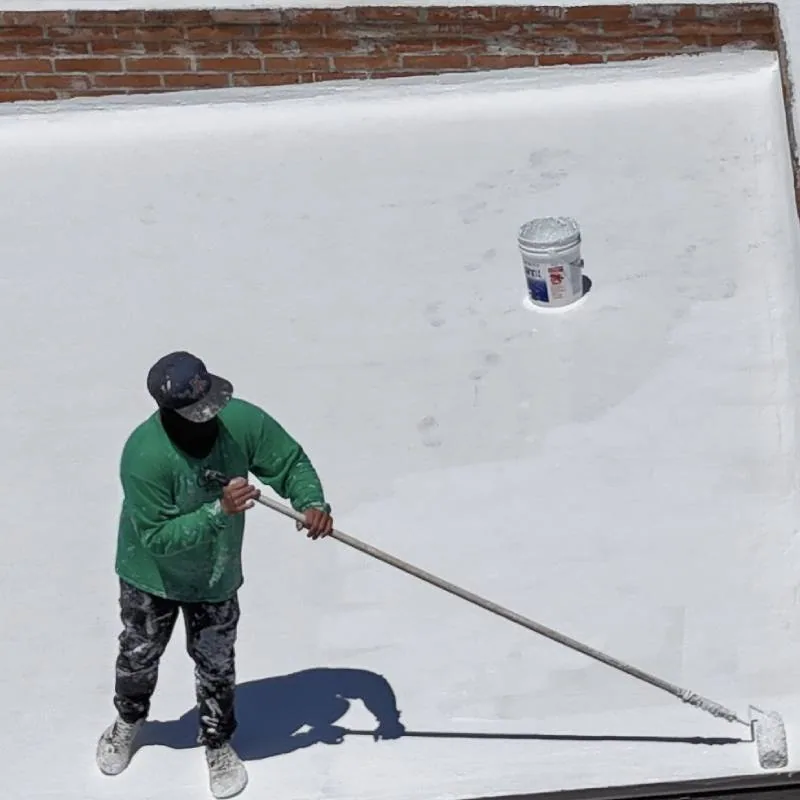
The specified coating system establishes preparation, application thickness and any reinforcement or detail treatment required. We organize those steps so that the completed field joins suitably to repairs, edges and penetrations. Product instructions and project conditions govern the work, including environmental requirements and curing. An application that looks continuous still needs examination against the actual system requirements before it is considered complete.
Access routes and nearby operations need protection and coordination while the surface is being prepared and coated. We identify restrictions for rooftop service and material handling, then establish when the finished areas can receive appropriate access. Different roof details may require different preparation or application methods within the selected system. Those interfaces receive attention as part of the construction rather than being left for a general field application to resolve.
Community buildings: Coordinating the finish with the operating roof
Oxford's public library uses a building that previously served as a storefront and movie theater. At a requested roof in Oxford, restoration may involve existing transitions or adjoining construction that need examination before application. We identify those conditions at the actual building and coordinate access with its use. The coating selection follows the roof materials and repairs found there, while the daily sequence accounts for entrances and occupied rooms.
Alburnett's municipal library arrangement includes partnership with the Center Point library and book pickup or drop-off services at City Hall. At a requested Alburnett property, relevant public access needs to remain coordinated during roof work. We establish surface preparation and application restrictions with the building operator before beginning. The final finish needs suitable weathering connections around the roof's own components, including any equipment that must remain serviceable.
After application, we explain the finished coating arrangement and any precautions appropriate for its surface and details. Later repairs should use materials and methods compatible with that assembly. Retaining the product information helps the facility director avoid an unsuitable future treatment that interrupts the adhesion or weathering connection established during restoration.
Commercial Roofing Questions
What decides whether silicone can be applied over an old acrylic finish?
Compatibility and the retained layer's condition decide the preparation and application route. We identify existing products and assess adhesion through the layers that will remain. A suitable new bond cannot compensate for an old coating that is separating from the underlying roof.
Does silicone coating remove the need to repair open roof seams?
The seam needs correction appropriate to the existing roof and selected restoration system. Coating detail treatment can form part of that work, but an unresolved separation or unsuitable underlying layer requires attention first. We establish the repaired connection before the protective field application.
Why investigate ponding when choosing a coating product?
The cause of retained water affects the roof work needed before application. Product suitability for an exposure does not establish that the drainage arrangement functions correctly. We examine outlets and surrounding geometry, then coordinate any correction alongside the chosen protective finish.
How should later maintenance approach a silicone-coated roof?
Future access and repairs should preserve the coating surface and use compatible methods at affected details. We explain the completed product arrangement and relevant service precautions at handback. New damage or separation should be examined before another material is placed over the finish.
Related Pages
Request a roof assessment or call 555-555-5555.

Questions? Call Us
Free roof assessment