Rooftop Equipment Curbs and Supports in Cedar Rapids, IA
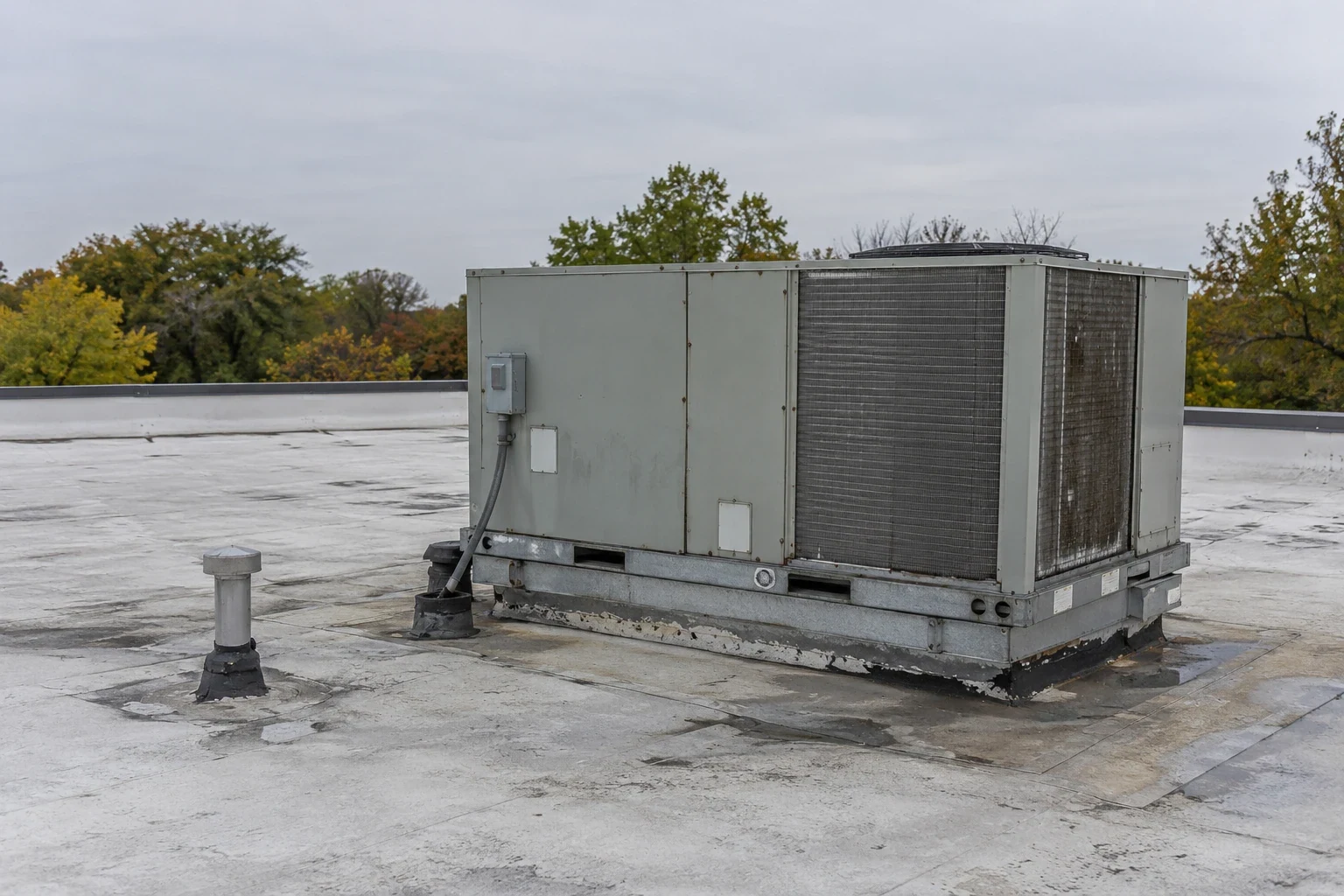
A pipe support that shifts into a drain approach can change both the equipment's bearing position and the route water follows beside it. Moving the support back without examining its base may leave the same movement available, while sealing nearby flashing does not correct the obstructed runoff. Commercial Roofing Cedar Rapids examines rooftop equipment curbs and supports in Cedar Rapids, IA, through their connection to the roof, the equipment and the structure below. The correction needs a suitable bearing arrangement and a functioning weathering transition.
We work on the roofing relationships around equipment curbs, unit interfaces and pipe supports, coordinating mechanical or structural review where the component's operation or load path requires it. The equipment and the membrane have different purposes, but a failure at their meeting point can affect both. A leak investigation at the junction establishes the entry where necessary, then the repair follows the support and flashing conditions rather than beginning with surface sealing.
Bearing position: Examining what carries the equipment
A support placed on soft roofing can concentrate pressure or move as the receiving layer deforms. We examine its base, the adjoining membrane and the visible load arrangement, identifying where concealed support or structural information is needed. A suitable pad or roofing protection can help accommodate an intended arrangement, but it cannot establish that an unknown deck or support is capable of carrying the load. Structural capacity and equipment requirements belong within the relevant design review.
The roof repair must respect the support arrangement established through that review. We identify how new roofing will pass beside or beneath the component, where protection is needed and how the base can remain accessible for inspection. An equipment replacement may change loading, dimensions or fastening, so the old detail should not be assumed suitable merely because it received the previous unit. The new relationship needs to be considered before roofing closes around it.
Movement clearance: Letting the component operate without tearing the roof
Pipes and equipment can move with temperature or operation, while their roofing junctions need to maintain a water barrier. We examine clearance at the flashing and support, looking for contact, distortion or a repair that has restricted the intended movement. A pipe held rigidly at an unsuitable point can transfer stress into the boot or adjacent equipment. The correction needs the component's intended operating arrangement understood before new flashing is installed.
We coordinate the mechanical examination where movement, vibration or support is contributing to the roofing defect. Reconstruction of penetration flashing then fits the actual pipe and roof material, with compatible detail methods and suitable clearance retained. Repeating the same tight connection may restore its appearance temporarily while leaving the stress that broke it. The useful rebuilding point is the junction where both movement and weathering can function together.
Curb height: Connecting the field to the equipment interface
A curb joins the roof field through vertical flashing and meets the unit or other component above it. Water may enter at the lower lap, a corner, the top termination or an equipment-side connection. We examine that sequence to establish which part needs work, including loose backing or unsuitable support behind the flashing. The roofing repair should restore the demonstrated failed junction while coordinating any separate unit connection that also requires correction.
An alteration that raises the roof field can reduce usable vertical flashing height. We measure the relationship before recovering roofing around existing curbs or adding tapered insulation, identifying where the curb or equipment arrangement needs modification. The new thickness should not obstruct service panels or force a weathering connection into inadequate space. Drainage and maintenance access remain part of that review because the raised field changes the area surrounding the equipment as well as its height.
Runoff beside supports: Keeping the water path open
Supports, rails and curbs can divide runoff or create collection pockets where their placement interrupts the field. We examine the route toward drains and scuppers, checking whether debris, an unsuitable bearing base or the roof shape is holding water. Relocating a support may require mechanical or structural coordination, while a drainage correction may require insulation or flashing work. The method follows the physical cause rather than choosing the easiest visible component to change.
Where the approach needs reshaping, drainage-detail rebuilding is coordinated with the component's bearing and movement requirements. A support should not rest on or obstruct a new runoff channel, and a cricket should not create an unsuitable height at the curb beside it. We consider those parts together before installation so that the new weathering layer and equipment arrangement do not re-create the same collection area in a different position.
Material beneath the base: Repairing compressed or wet roofing
A damaged membrane beneath equipment may be difficult to examine while the component remains in place. We discuss lifting or temporary support where necessary to establish the concealed condition and complete the repair safely. Wet or compressed insulation can need removal before the base is reinstated, with suitable receiving layers rebuilt beneath the membrane. Supporting-layer correction must therefore fit the equipment sequence rather than be treated as an unrelated field repair.
On a rubber membrane roof, compatible repair materials and protection around a support differ from some welded or asphaltic arrangements. We identify the system and earlier repair products before selecting the connection method. Equipment discharge or deposits can also affect preparation and material choice where they are present. The rebuilt area should accept the intended support without leaving a vulnerable lap directly beneath concentrated pressure or an inaccessible junction that cannot be maintained.
Production coordination: Opening the junction beside operating equipment
Precision machining is part of M&S Manufacturing's activity at its Monticello facility. At a requested industrial property in Monticello, a rooftop unit or pipe may support an operation that needs a defined interruption window for lifting or repair. We establish that actual function with the facility contact and coordinate the appropriate trade before opening the roofing junction. The repair sequence should restore the support and weather barrier within the operating constraints that apply.
North Liberty's institutional stock includes a University of Iowa Health Care hospital and medical-office building described in its 2025 opening announcement. For a requested medical property, equipment access and service continuity can make curb or support alterations particularly sensitive. We identify the affected unit, interior area and required shutdown coordination before removal. A roof connection should be rebuilt with those service needs understood, rather than choosing a convenient work window that conflicts with the component's required operation.
Commercial Roofing Questions
Can a shifting pipe support be fixed by adding a larger pad?
Its bearing and movement arrangement decide whether a different base is suitable. A pad may protect roofing without correcting unstable support or an unsuitable load path. We examine the component and receiving material, coordinating mechanical or structural review before changing the base where those questions remain unresolved.
Must the rooftop unit be lifted to repair its flashing?
Access to the failed connection controls the equipment sequence. Some accessible details can be repaired with the unit in position, while concealed material or an obstructed junction may require coordinated lifting or temporary support. We identify that need before opening roofing so the weathering repair can be completed properly.
Why does a new roof sometimes require curb modification?
Changed field thickness can reduce the vertical relationship needed for flashing and interfere with equipment service. We compare the proposed assembly with the existing curb and unit arrangement, then include necessary modification. The new roof and equipment junction must fit together rather than leave the alteration to be solved during close-in.
What should we provide after an equipment replacement?
The new unit information, support changes and any observations of movement or leakage help define the examination. Tell us which roofing details were disturbed and what operating restrictions apply. We can then assess the adjoining membrane, bearing and clearance before selecting the repair needed at the updated junction.
Related Pages
Request a roof assessment or call 555-555-5555.
Questions? Call Us
Free roof assessment