Commercial Roofing in Mount Vernon, IA
A roof-to-wall transition can fail where horizontal membrane turns up behind a termination, leaving water to travel between the layers. In Mount Vernon, IA, we start by tracing that junction and the interior report rather than choosing a patch from the stain alone. Commercial Roofing Cedar Rapids inspects the visible sheet, wall flashing, attachment and receiving surface, then marks what can remain and what must come out. Cornell College's historic campus and the city's public-school district are part of Mount Vernon's institutional context, while each requested building has its own assembly and operating schedule. We confirm those details before access, protection and close-in are set.
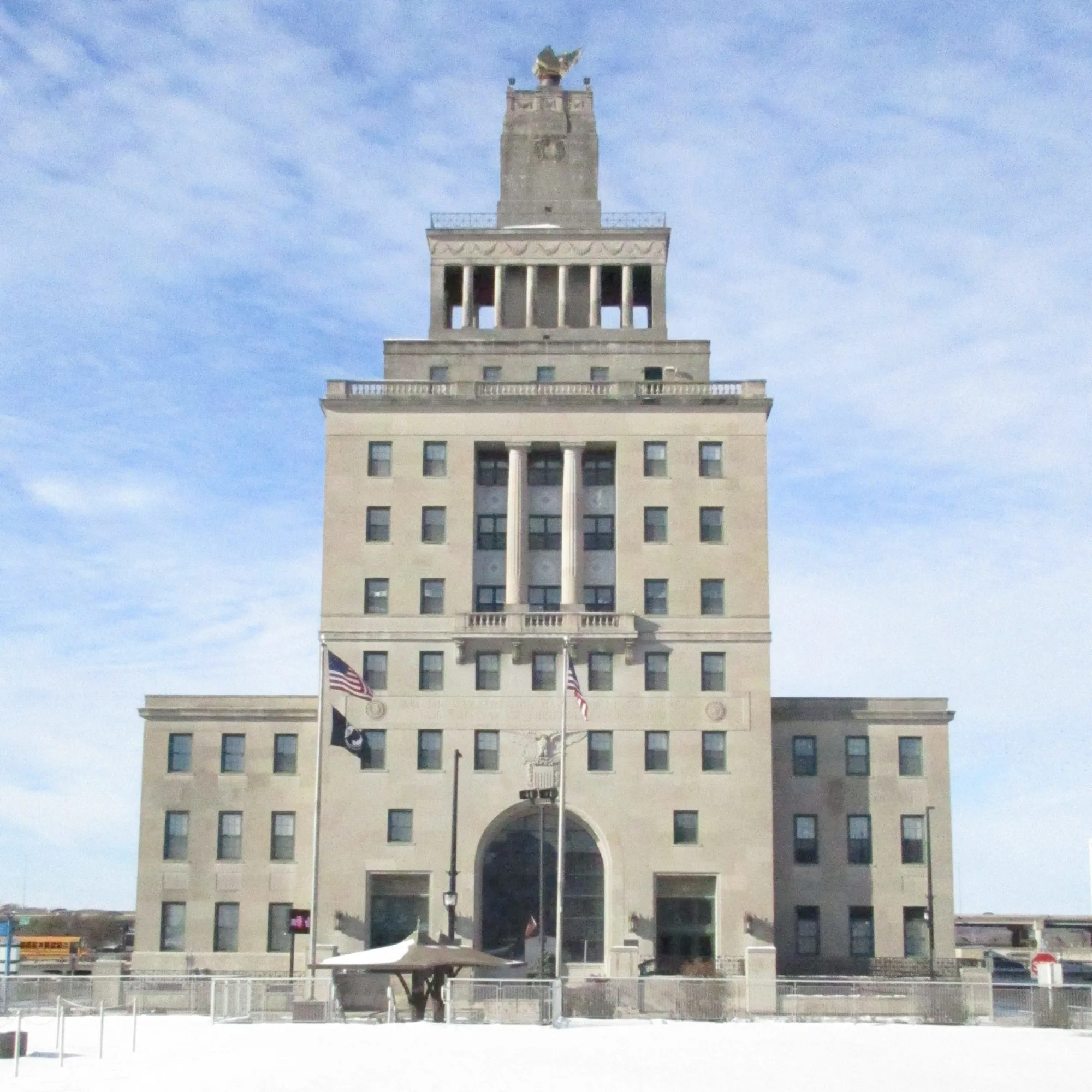
A former uptown middle-school building now serves as First Street Community Center. Its current community use makes schedule coordination relevant above active rooms; roof records and inspection establish the assembly and the limits of what is visible.
Wall turn: Trace the connection behind the finish
Water at a wall can enter at a termination, corner, coping joint or nearby penetration and then travel before reaching the interior. We check the membrane's upturn, counterflashing, receiver, fasteners and substrate, then compare those details with the reported location. A commercial roof inspection records the route and distinguishes a visible opening from a concealed wet boundary. If the detail cannot be confirmed from the surface, a controlled opening shows whether insulation and deck support remain firm.
Repair materials must connect to the existing system. A new strip cannot hold where the receiving sheet is brittle, contaminated or loose, and a surface seal does not correct a separated termination. We note the condition at each layer and define where removal can stop. If the opening exposes a broader defect, photographs and a measured extension let the owner review the change before added work begins.
Occupied rooms: Stage the roof work by zone
A community center or school use can involve scheduled rooms, public access and equipment that should not be interrupted without notice. We confirm the affected space, roof entrance, staging point and work hours with the building operator. The sequence sets a bounded work zone and a secure close-in at the end of each shift. A school roof assessment examines the assembly and access constraints at the actual property; it does not infer that Mount Vernon's institutional roofs share one construction.
If an opening reveals wet insulation or weak deck, we protect the area and pause at the approved limit. Photos and a concise finding let the owner decide on added work before removal continues.
First Street Community Center occupies a reused former middle-school building. Its present use informs access planning, while inspection establishes the roof condition.
Freeze exposure: Keep drainage and seams in the sequence
Cold-weather work depends on the roof surface and forecast. We check for frost and moisture before preparing a membrane bond, then size the daily opening so the crew can restore a secure boundary. Temporary cover protects the edge if surface conditions prevent the next step.
A drain basin or seam holding runoff can face freeze expansion at the next cold interval. We inspect the route to the outlet, clear debris where appropriate and look for displaced crickets or compressed insulation that hold water in place. A drain and scupper service addresses the outlet connection; it does not replace correction of a saturated layer or weak substrate. Each finding is recorded separately so a maintenance item does not obscure a waterproofing repair.
With a built-up roof, the work may involve multiple plies and the condition of the underlying base; an older surface alone does not determine whether it can remain. A built-up assembly review checks the actual layers and tie-in points before we choose a compatible repair.
Repair limit: Separate an isolated defect from broader work
The estimate states area, system, access and close-in method. We inspect beyond the visible failure to confirm the receiving support. If wet insulation, soft cover board or deteriorated deck continues under the surface, the boundary moves only after the owner reviews the exposed condition and authorizes the added area. A photo condition report connects what was exposed with the recommended correction and any remaining question.
Cost and timing change with tear-off, disposal, substrate replacement, material compatibility, equipment conflicts and how the building can be protected while work proceeds. A single wall termination may support local repair; repeated failures can justify a broader comparison. We map findings before scheduling work.
For another property in Lisbon or Cedar Rapids, we prepare a separate scope based on its own roof records and access conditions. A regional service area does not make assemblies interchangeable.
Renewal path: Match new work to retained material
Recovery, coating and replacement are different scopes with different prerequisites. Recovery needs a dry, stable base and enough edge height to carry another layer. A coating needs compatible material, surface preparation and secure terminations. Replacement may require tear-off, deck repairs, new insulation and altered drainage details. We compare those conditions with the owner's operating window and budget priorities, then identify what the selected work will correct and what remains outside it.
Historic designation or institutional use does not dictate a particular roof product. Existing layers, penetrations, wall details and drainage set the technical choice. If the roof is a membrane system, we confirm its type and test repair compatibility; if it is metal, we review attachment and movement. A replacement plan lists the sequence and close-in points so a facility can coordinate occupants, equipment and interior protection.
When a storm or interior leak creates an urgent opening, emergency response is available around the clock. Temporary measures can control entry while the permanent boundary is established, but the final scope still depends on inspection of the failed and adjoining layers.
Handback detail: Give the next inspection a clear start
Closeout photographs show the original defect, the exposed receiving edge and the restored membrane or flashing. The record lists material removed, substrate work, the final seam and any separate condition left for review. This helps the facility director compare future observations with what was actually opened instead of treating a completed patch as proof that the entire roof was assessed.
Share the roof history, interior report, access limits and schedule for the requested Mount Vernon property. We use those details to plan where to investigate and how to protect the spaces below. Commercial roofing service includes inspection, repair, restoration, replacement and preventive maintenance for low-slope and metal systems, with the work boundary tied to a sound receiving layer and a documented close-in.
A maintenance inspection schedule can track drains, edges and penetrations after repair, while follow-up remains specific to the assembly and observed conditions. The handback identifies the next inspection points and the records the owner should retain.
Commercial Roofing Questions
Does a historic campus require a specific roof system?
Historic context alone does not select a membrane or metal assembly. We inspect the existing layers, transitions, attachment and any property requirements before proposing compatible repair or renewal work.
How do you prevent a leak repair from disrupting a community program?
We confirm the affected room and operating schedule, define a roof work zone and agree on interior protection and the stopping point for each shift. The amount opened is limited to what can be closed securely in that window.
What will you do if a wall flashing is loose below the visible edge?
The crew pauses at the agreed limit, photographs the termination and receiving material, and explains whether support or additional membrane must be corrected. The owner approves a defined extension before removal continues.
Can the former school building's reuse tell you what is under its roof?
No. Its present community use helps set access and schedule coordination, but only records and an inspection can identify the current roof layers and condition.
When should I consider replacing instead of repairing a roof?
That review is useful when separate failures, moisture or weak transitions cover more than one bounded area. We map what remains sound and compare the cost, disruption and scope of repair, restoration and replacement.
Related Pages
Request a roof assessment or call 555-555-5555.
Questions? Call Us
Free roof assessment