
Commercial Roof Edge Metal, Coping and Gutters in Cedar Rapids, IA
A gutter support that has dropped can create a low section before the outlet, retaining runoff and stressing nearby collection joints. Restoring flow requires examination of the support, gutter shape and discharge relationship together, because resealing a leaking joint can leave the water held in the same sag. Commercial Roofing Cedar Rapids repairs edge metal, coping and gutters in Cedar Rapids, IA, by tracing the perimeter assembly through those adjoining parts. Replacing a visible piece of metal is useful only when its connection to the roof and wall can function.
Roof-edge work can involve displaced covers, loose securement, split flashing or a gutter that no longer directs water to its outlet. We identify the defective relationship before specifying removal, then coordinate membrane repair at the adjoining boundary where necessary. A suitable rebuilt edge should retain movement clearance, keep runoff directed correctly and provide a stable connection to the support beneath it. Those requirements establish the scope rather than the length of metal visible from the ground.
Coping junction: Following water beneath a separated splice
Coping protects the top of a parapet through its cover arrangement and adjoining weathering details. At a separated splice, we examine the joint configuration and the material below it, checking whether movement, loose support or failed sealing has created the opening. Different coping arrangements have different intended means of accommodating movement and water, so an appropriate repair respects the actual system. Adding sealant across a joint designed to move may not restore the intended relationship.
The wall-top substrate and securement also matter where the metal has shifted. We assess their accessible condition and investigate concealed deterioration when it affects the rebuilding. A stable cover cannot be reinstated reliably over unsuitable support, while a damaged underlay may require work beyond the metal itself. Restoration of the adjoining flashing follows that examination, with the repair edge placed where new material can connect to sound roofing or wall weathering construction.
Metal securement: Reaching the support that carries the edge
A lifted edge piece can remain attached at some points while stressing the next connection. We examine its securement, receiving substrate and the adjacent membrane termination rather than treating the displacement as an isolated cosmetic issue. The rebuilding may require replacement of damaged metal, correction of fastening or restoration of supporting material. Where deterioration raises a structural concern, the appropriate evaluation is needed before the roof-edge arrangement is closed over it.
Southwest Cedar Rapids buildings sustained severe damage during the derecho on August 10, 2020. For a requested perimeter assessment after wind exposure, we follow the observed movement through the metal and roof connection, locating any adjoining areas requiring stabilization. Wind-related perimeter reconstruction needs suitable design criteria and installation details for the new work. The roof-edge assembly carries its own connection requirements, with the supporting condition and intended configuration governing how it is rebuilt.
Collection path: Joining the edge to the gutter outlet
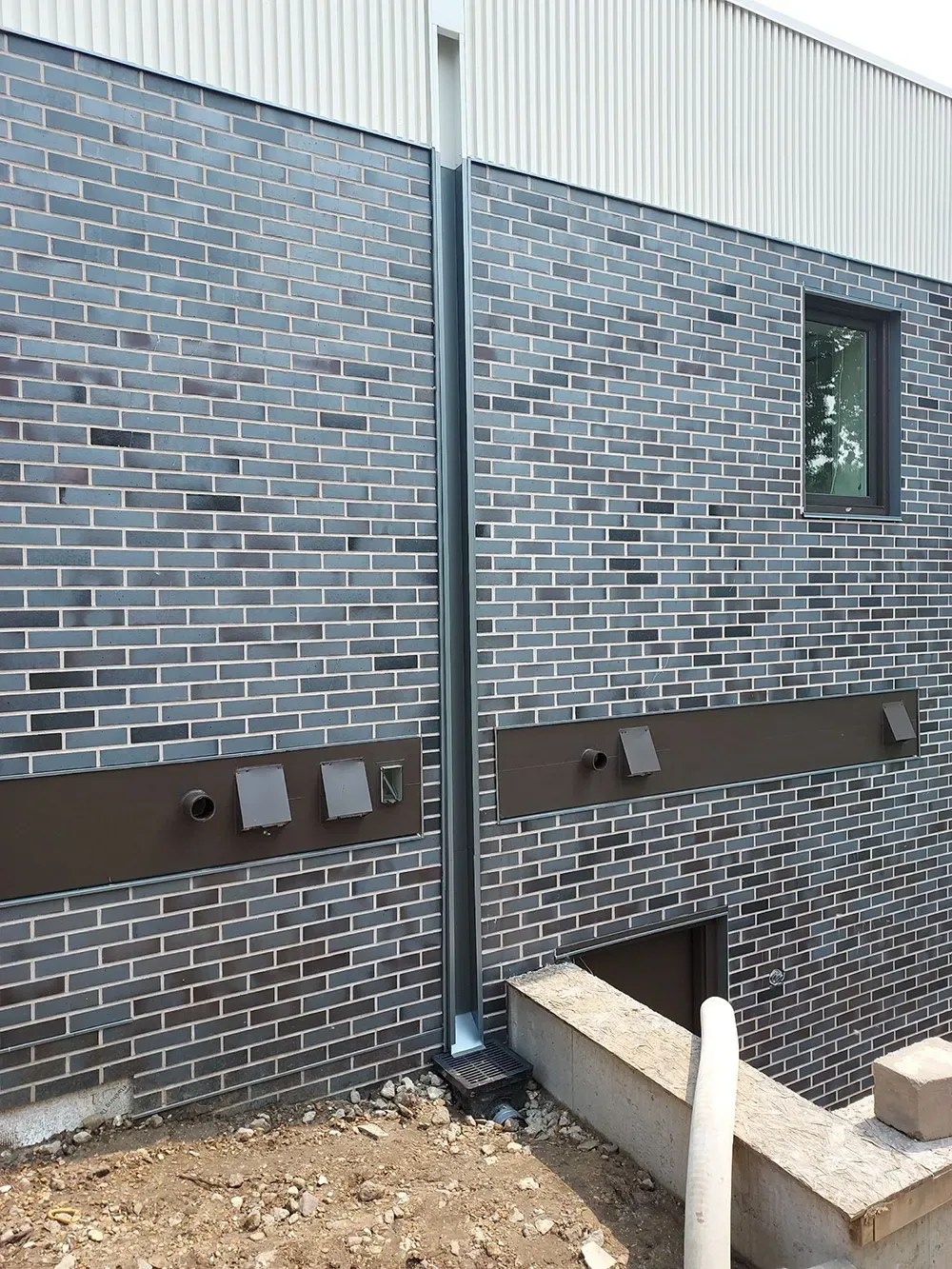
A gutter that has pulled away can change the discharge route at the roof edge and place water against a fascia or wall detail. We examine the gutter, supports, joints and outlet, then assess the roof-side connection that directs runoff into it. Clearing debris may restore flow where obstruction is the only issue, but displaced support or an unsuitable slope requires a different correction. The repair should join collection, securement and discharge rather than solve one part while leaving another interrupted.
Downspouts and their receiving discharge area need examination where water is backing up or leaving the intended route. A restricted outlet can keep water in the gutter, while a detached downspout can move the problem to an entrance or wall below. We coordinate the necessary exterior work and related scupper connections where the systems meet. Drainage capacity changes or broader building-water issues may require additional design input before the roofing and metal alterations are finalized.
Material movement: Keeping joints able to work
Metal expands and contracts with temperature, while the roofing and wall construction may move differently. Splices, terminations and transitions need the movement arrangements appropriate to the system rather than rigid repairs that force stress into the next piece. We examine how the existing detail was intended to connect, identify failed seals or displaced components and select compatible repair materials. A rebuilt joint should restore its function without narrowing clearance needed at an adjoining moving part.
A standing-seam roof perimeter needs consideration of its panel and flashing arrangement, which may differ from an edge detail at a single-ply assembly. We identify the roofing before specifying the metal connection so that fastening and movement remain suitable. Surface corrosion, incompatible metal contact or previous repair products can also influence what should remain. The condition and compatibility at the material junction establish where removal and preparation must stop.
Work above occupancy: Controlling removal at the boundary
Retail storefronts, multifamily housing and entertainment spaces occupy Czech Village and New Bohemia. At a requested building in the district, removing perimeter metal can affect entrances or occupied routes below the roof. We coordinate protection and access with the facility contact, including the area where loose components and removed material will be handled. The daily work limit needs to leave a secure weathering boundary at the roof edge.
Marion Enterprise Center is a multi-parcel industrial area at U.S. 151 and Iowa 13. For a requested building there, active delivery routes may restrict a lift position or material handling beside the perimeter. We plan those constraints with the required repair, keeping vehicle movement and people separated from the removal area. Work beside continuing operations also needs temporary close-in where the wall-top weathering construction or membrane termination will be exposed during rebuilding.
Completed edge: Preserving access for the next examination
The finished metal connection should remain inspectable where maintenance needs to examine joints, gutter outlets or adjoining membrane. We identify the repaired area and any further conditions observed outside it, explaining how the rebuilding connects to retained components. Gutter debris, displaced covers and changes at splices remain suitable items for periodic roof-edge attention. The maintenance task follows the actual arrangement rather than disturbing a stable joint simply to make its surface look freshly sealed.
We also check the relationship between new metal and the remaining water route. A repaired gutter should receive runoff from the edge as intended, while a rebuilt coping should connect with the wall-top and vertical weathering details. An unresolved obstruction or incompatible adjoining material may need separate work. The owner leaves with the reconstructed junction identified and the next necessary action clear, so the visible metal does not conceal a continuing problem beneath or beside it.
Commercial Roofing Questions
Can a separated coping joint be repaired with sealant alone?
The joint's configuration and underlying condition decide whether sealing is suitable. A movement joint, displaced cover or damaged weathering layer may need rebuilding rather than a surface bead. We examine the adjoining support and connection before selecting a repair that lets the coping function as intended.
Why would edge-metal work include the roof membrane?
The membrane termination may be damaged or detached beside the metal even when the cover is the most visible defect. We follow that connection into the adjoining sheet and support. Rebuilding the metal without correcting the interrupted weathering path can leave the perimeter vulnerable to water entry.
Should a sagging gutter be replaced or cleaned first?
A sag can involve support, slope or accumulated debris, and those conditions require different work. We examine the collection path and securement before choosing removal or reinstatement. Cleaning is useful where obstruction is the problem, while unstable support or an unsuitable discharge relationship needs correction.
What can change the schedule for a perimeter repair?
Access over entrances, active deliveries and the amount of exposed wall-top construction can limit each working section. Weather and the ability to secure temporary close-in also affect removal. We coordinate those constraints before opening the boundary so that the day's work can end at a protected connection.
Related Pages
Request a roof assessment or call 555-555-5555.
Questions? Call Us
Free roof assessment