
Shopping Center and Strip Retail Roofing in Cedar Rapids, IA
A downspout from a higher retail roof that discharges against a lower roof junction can concentrate water at a detail already damaged or poorly arranged for that exposure. Repair needs examination of the discharge route as well as the receiving roof connection. Commercial Roofing Cedar Rapids assesses shopping center roofing in Cedar Rapids, IA, by following water between those levels before selecting reconstruction. The corrected arrangement should carry runoff suitably while restoring the affected lower field and its adjoining detail.
Shopping centers and strip retail buildings can place several occupied premises beneath connected roof sections. We establish the actual construction and affected tenancy before opening a repair area. Adjoining restaurant premises or grocery operations may need different protection and equipment coordination from another store. The roof sequence follows both the physical water path and the occupied areas involved in its correction.
Roof-level connection: Examining where the upper outlet sends water
The outlet from a higher roof needs a suitable route across or beyond the receiving construction according to the building's drainage arrangement. We examine the downspout position, lower roof geometry and nearby junction before defining the correction. A damaged lower membrane may need repair, but that work should not ignore the concentrated discharge that reaches it. The two levels need assessment as a connected water path.
Review of the roof discharge arrangement identifies whether outlet alteration or another drainage task accompanies lower-roof reconstruction. Changes to the route can require appropriate design review, including the receiving roof's capacity and geometry. We establish the relevant arrangement before moving or extending a discharge component. The correction should resolve the actual path rather than transfer runoff to another vulnerable junction nearby.
Receiving surface: Rebuilding the damaged field and boundary
The lower roof's weathering material and detail require examination where upper runoff reaches the affected area. We identify the roof system, damaged connection and suitable surrounding material before selecting repair. Previous patches or deteriorated flashing can change the preparation and removal needed. The reconstruction must join the actual retained assembly appropriately after the discharge arrangement is corrected or established as suitable.
Repair of the lower roof junction may extend into insulation or other layers if water has affected them. We investigate suspect construction where the condition changes retention and close-in. A surface repair should not conceal material that cannot remain suitably beneath the new connection. The finished detail needs appropriate support, attachment and compatibility throughout the area rebuilt.
Occupied stores: Establishing protection beneath the connected roofs
A water path crossing roof levels can involve rooms beneath different premises, so the affected interior area needs clear identification. We coordinate the report and protection requirements with the property operator and relevant tenants before removal. Stock, counters or active customer areas below the opening may need relocation or isolation. The construction boundary should provide suitable protection while the actual entry and affected layers are investigated.
Tracing the reported roof entry helps establish the roofing task when an interior report does not resolve which junction admitted water. We examine the connected roof arrangement rather than assign the defect solely from the room beneath the first report. Access to each affected area is coordinated before work proceeds. The protection and removal sequence then follow the identified construction and tenancy involved.
Tenant services: Coordinating components beside the repair area
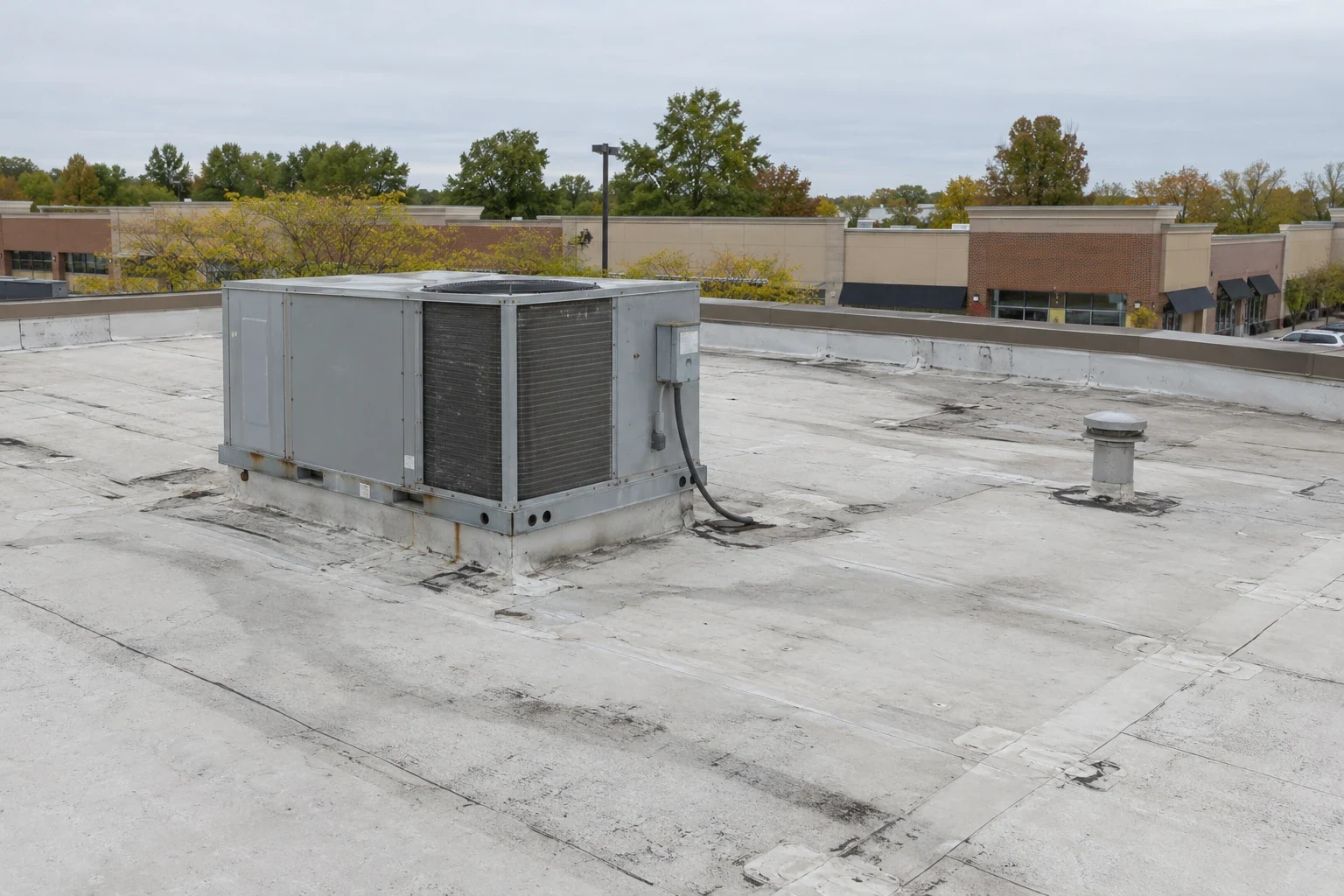
Equipment, pipes and other tenant services can restrict access to the damaged lower roof or its discharge route. We identify the actual components and service requirements before planning movement, support or alteration. A component task needed for roofing access should be completed in the appropriate sequence rather than leave a new connection waiting on later disturbance. The selected repair needs the clearance required for suitable preparation and closure.
Coordination of rooftop service connections establishes where another trade or design task meets the roofing work. We examine supports and adjacent runoff as well as the component's flashing. The finished arrangement should preserve service access and the intended discharge route. Each tenant-related interface is assessed according to its actual condition, without assuming that all services above a shared retail roof can be handled alike.
Retail access: Setting handling routes and a suitable weather boundary
Storefront entrances, delivery routes and parking movement can overlap with the space needed for roof materials or debris removal. We establish the affected exterior area before positioning lifting equipment and define suitable separation for construction. The daily section needs access that supports removal and rebuilding without compromising the protection above occupied premises. Material handling is coordinated with the actual building operation before the roof opening begins.
Temporary close-in also needs a suitable connection to the retained field and adjoining components. We define that boundary according to the roof construction and the work that can be completed appropriately. If wet material or another concealed defect changes the removal extent, the protection arrangement is reassessed with it. The occupied store should not rely on an incomplete roof-level transition while separate discharge or equipment work remains unresolved.
Commercial districts: Applying the water-path repair to the requested premises
Coralville's commercial setting includes Coral Ridge Mall and the retail development that followed it, along with the Iowa River Landing district. At a requested shopping center roof in Coralville, we establish the actual roof levels and occupied premises before defining the repair. Exterior access and tenant activity shape the construction arrangement while the discharge path determines which details need correction. The completed lower-roof junction must suit the water it receives from adjoining construction.
Czech Village and New Bohemia contain retail and entertainment uses alongside other occupancy in a broad district across the Cedar River. For a requested retail roof there, we examine the building's own level changes and service components before opening work. Tenant access and material handling are coordinated at that premises. The roof correction follows the physical connections found, including any outlet route that contributes to repeated water exposure at the damaged detail.
After repair, we explain the reconstructed field, changed discharge component and access needed for maintenance. The property operator can then coordinate later tenant service work without placing equipment or materials across the corrected runoff route. New water retention or damage at the receiving detail should prompt assessment before another surface patch is applied to a junction whose adjoining water path has changed.
Commercial Roofing Questions
What decides whether an upper-roof downspout needs alteration?
Its discharge path and the receiving roof arrangement decide whether the outlet contributes to the damaged junction's exposure. We examine both levels before selecting the correction. A change should carry runoff suitably through the building's intended drainage arrangement rather than send it toward another vulnerable detail.
Why investigate adjoining premises during a retail roof leak?
The roof-level connection and interior water path may involve more than the room showing the first report. We establish the relevant access with the operator and affected tenants. The repair and protection arrangement should follow the actual failed construction, not an assumption based only on tenancy boundaries.
How does tenant equipment affect lower-roof repair?
Its position and service requirements can restrict preparation space or access to the water route. We coordinate any component work before roofing close-in. The completed support and flashing arrangement should preserve the new connection and keep the corrected discharge path available.
Can a lower-roof patch resolve damage from concentrated upper runoff?
The affected roofing still needs a suitable repair, but the adjoining discharge arrangement requires assessment too. We identify whether its correction belongs with reconstruction. The new junction should meet the exposure intended by the completed drainage design rather than retain an unresolved contributing water path.
Related Pages
Request a roof assessment or call 555-555-5555.

Questions? Call Us
Free roof assessment