
Commercial Restaurant Roofing in Cedar Rapids, IA
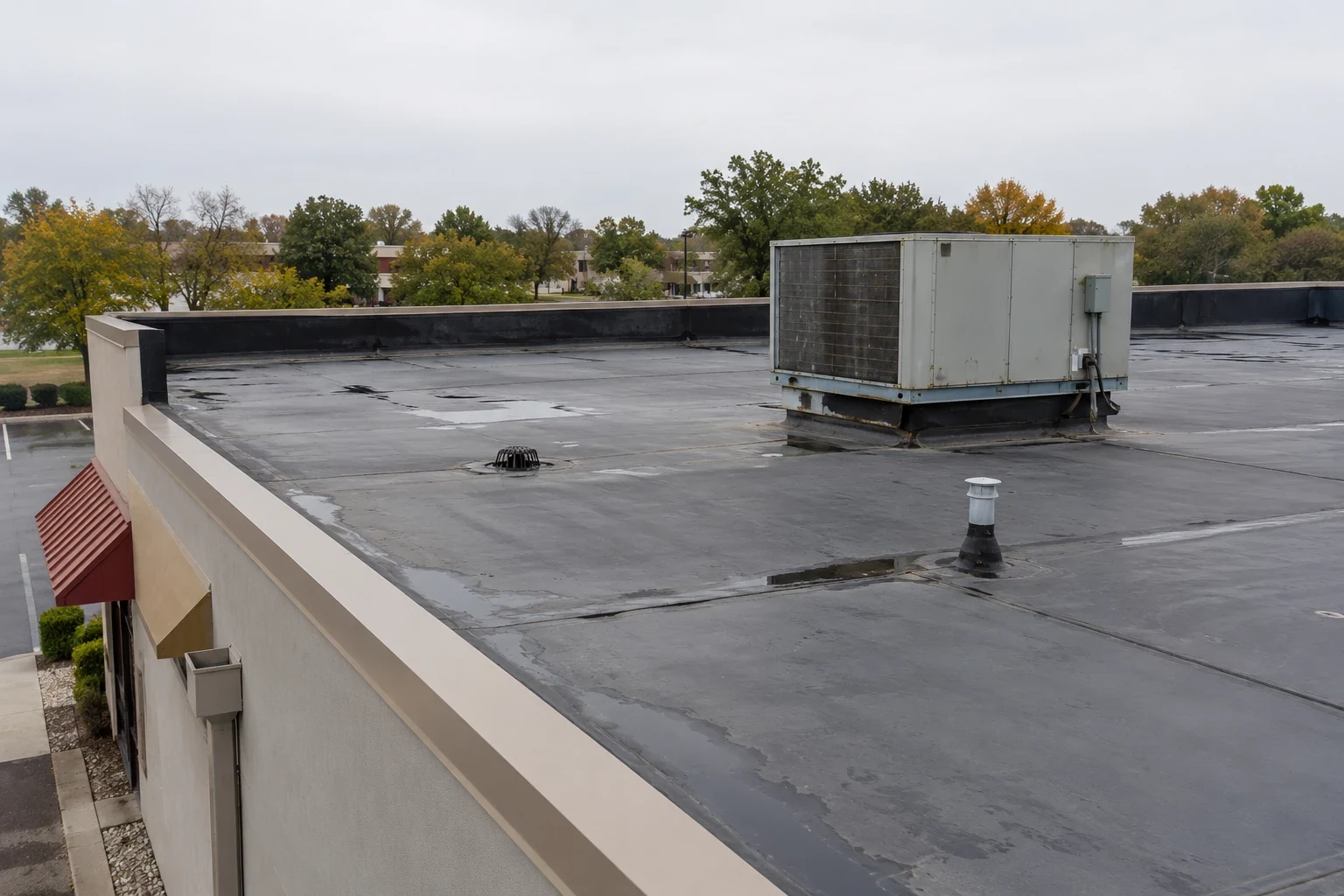
Counterflashing pulling away from a wall can expose the upper connection of a restaurant roof's flashing while the lower membrane still appears intact. The wall attachment and weather seal need examination before another surface patch is added below them. Commercial Roofing Cedar Rapids assesses restaurant roofing in Cedar Rapids, IA, by following that upper opening into the adjoining flashing and wall construction. The correction should restore the actual water-shedding junction while kitchen and customer areas remain appropriately protected during work.
Restaurant roofs can meet additions, adjoining premises and service components whose connections require separate assessment. We establish the actual building arrangement before selecting repair access or removal. An operation adjoining other retail premises or occupying part of a hotel building may need coordination across different occupied areas. The roof sequence follows the failed junction and the kitchen or public spaces affected beneath it.
Upper termination: Reconnecting counterflashing to suitable wall construction
Counterflashing protects a roof flashing's upper connection through an arrangement appropriate to the wall and selected detail. We examine loosened metal, its receiving connection and the weather seal where the reported defect involves that boundary. A detached piece may require more than refastening if the receiving material has deteriorated or the original arrangement is unsuitable. The wall-side correction needs to be established before the lower roofing connection is considered complete.
Assessment of roof flashing interfaces identifies the material and access needed around the affected junction. We examine the membrane beneath the metal and coordinate wall-related work where required. The finished detail should shed water through the intended overlap without enclosing an unresolved opening behind it. Corners and ends need suitable connections as part of that same weathering boundary.
Where an end of the counterflashing meets another wall detail, we examine that transition before closing the repaired length. Its weathering path needs to continue suitably through the adjoining construction. An intact central piece does not resolve a separate open connection at the corner beside it.
Concealed path: Examining the layers behind the exposed opening
Water passing behind loose counterflashing can affect materials that are not visible until suitable access is obtained. We investigate the adjoining wall and roof construction where the condition changes the repair. A sound-looking lower sheet does not establish whether the upper receiving area remains suitable. The removal boundary should allow the affected connection and any deteriorated material to be reconstructed appropriately.
Tracing the reported water entry helps establish the failed junction when the interior location does not resolve the route. We identify the roof materials and examine suspect insulation or other layers where moisture affects retention. The new flashing must join suitable construction after those corrections. An upper weather seal and a lower membrane lap need to form a coordinated detail rather than separate repairs leaving a concealed gap between them.
Kitchen service: Coordinating work above the operating area
A restaurant roof section can cover preparation equipment, storage or active kitchen circulation requiring protection before removal. The operator identifies which preparation or storage zone lies beneath the opening and what isolation or relocation that particular area requires. Rooftop service components may also require another trade's action before the junction can be reached. The roof opening should proceed with suitable interior protection and the necessary component access arranged together.
Coordination of rooftop kitchen-service interfaces establishes support or curb tasks that affect the roofing sequence. We assess actual component clearance, discharge and surrounding surface condition before preparation. A component correction needed for access should precede close-in where it would otherwise disturb new work. The repaired wall junction and any equipment detail should remain serviceable after reconstruction is completed.
Preparation area: Establishing a compatible connection beside service exposure
Residues or earlier repairs near kitchen equipment can affect preparation and the suitability of new roofing materials. We identify the actual exposure and retained products where they influence the selected repair. Cleaning or removal needs to suit the roof material and leave appropriate receiving construction. The method used at a clean field lap may not be suitable for a contaminated or crowded service junction.
The operator's equipment information helps establish any separate correction to a discharge or service arrangement contributing to the condition. We coordinate that work before completing a new connection that would remain exposed to the same unresolved problem. Compatible repair materials then join suitably prepared roofing and wall details. The physical preparation requirement follows the actual condition found at the requested building rather than a general assumption about every restaurant roof.
Dining access: Separating construction from customers and deliveries
Outdoor dining, delivery access and public doors can conflict with the proposed crane position or the route for removing old roofing. We establish the affected routes with the restaurant operator before positioning equipment and define suitable separation for construction. Interior activity beneath the opened section also needs coordination. The daily work boundary should permit the required removal and closure while protecting the actual public and kitchen areas involved.
Planning work above occupied restaurant rooms connects those requirements to a suitable temporary weather boundary. Meal periods or delivery windows can affect timing, but each opening still needs an appropriate protection and completion arrangement. We identify tasks that must precede closure, including wall or component corrections. The roof should not remain dependent on an incomplete junction while a separate service action awaits a more convenient operating period.
Local premises: Applying the wall repair to the requested restaurant
Shellsburg includes a downtown pizza business using a renovated historic bank building. At a requested restaurant roof in Shellsburg, the actual wall and roof junction need examination before reconstruction. Access and operating restrictions are coordinated at that premises, with the operator identifying affected preparation and customer areas. The repair follows suitable receiving construction at the counterflashing and lower membrane rather than retain an unresolved upper opening.
The Amana Colonies include food businesses among their textile, furniture and visitor-oriented activity. For a requested restaurant property there, we establish the actual building use and roof assembly before defining the work section. The relevant equipment and occupied areas shape access while the physical wall connection guides repair. The completed junction should shed water suitably and preserve the service clearance needed beside it.
Maintenance of repaired roof and wall details can observe renewed separation or damage after construction. We explain the reconstructed upper connection and any component area requiring care during servicing. Future water reports should identify the affected room and visible changes at the detail, so investigation can reach the relevant connection before another layer is applied beneath an unresolved wall-side defect.
Commercial Roofing Questions
What decides whether loose counterflashing needs more than refastening?
The receiving wall condition and intended weathering arrangement decide the correction required. We examine the attachment and seal alongside the roofing beneath it. Deteriorated receiving material or an unsuitable connection can require reconstruction before the metal is returned and the lower detail is closed.
Why inspect behind metal when the lower roof flashing looks intact?
An upper opening can admit water into concealed construction without an obvious lower-sheet defect. We investigate the relevant junction where its condition changes repair. The new connection should restore the wall-side weathering path and appropriate surrounding layers rather than cover only the exposed membrane below it.
How does kitchen equipment affect a wall-flashing repair?
Its position and service requirements can restrict access or change surface preparation beside the junction. We coordinate the actual component arrangement with the operator before work. Necessary equipment actions should precede roofing close-in where they would otherwise obstruct or disturb the repaired connection.
Can the restaurant remain partly in use during reconstruction?
The affected rooms, access routes and suitable protection arrangement need assessment before selecting the section. We coordinate those restrictions with the operator and establish an appropriate weather boundary. Construction can then follow the actual assembly and permitted occupancy arrangement rather than rely only on meal-period timing.
Related Pages
Request a roof assessment or call 555-555-5555.

Questions? Call Us
Free roof assessment