
Commercial Roofing in Coralville, IA
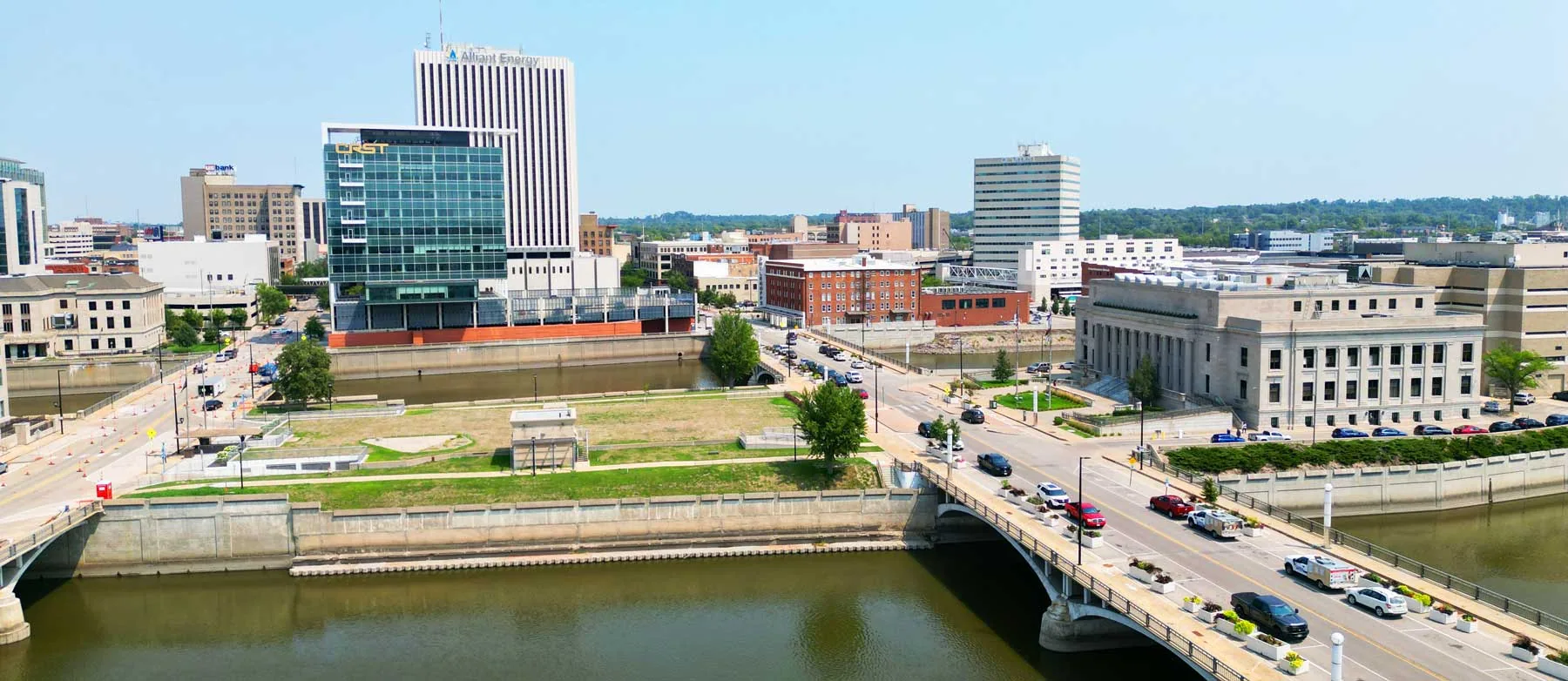
A failed lap beside a retail roof transition can send water under a surface that still looks attached from the lot. In Coralville, IA, the repair follows that connection through flashing, insulation and the receiving field before a crew chooses a boundary. Coralville’s commercial geography matters to that sequence. I-80 crosses Coralville, U.S. 6 runs through its southern area, and the I-380/U.S. 218 corridor follows its western edge. Those routes orient the work area, while the roof walk establishes the actual access and staging plan. We identify the assembly, connect the interior report to visible details and price only the work supported by the findings. If a concealed layer changes the scope, the removal limit stays open for an owner decision rather than blending into the base repair.
Trace the failed connection
Coral Ridge Mall opened in 1998 and helped bring large-format retail to Coralville. Nearby commercial properties still require an inspection of their own membrane, built-up or metal assembly. We begin with accessible records, the reported leak location and the building’s visible transitions. A roof walk checks field seams, drain approaches, curb flashings, parapet edges and prior patches. A low groove in the deck or a joint between insulation boards can carry water away from the original opening, so the stain does not set the cut line. Our commercial roof inspection records the route and distinguishes a visible defect from a concealed condition that still needs an opening.
The useful inspection record follows that path in sequence: reported location, visible membrane, receiving surface, and any opening needed to confirm the concealed layer. We mark the inspected boundary so an inaccessible section is not treated as tested.
Follow the drain approach
A drain bowl can pass water while the membrane connection around it has begun to separate. We inspect the clamping ring, flashing height, nearby seams and the path into the drain, then look for ponding, debris and movement that could interrupt flow. If the roof is a single-ply assembly, heat-welded or adhered laps need different preparation than a built-up surface or metal panel. A TPO roof detail must reconnect to compatible, clean material; covering dirt or an aged transition does not restore a sound lap. The repair plan identifies whether a localized detail will work or whether the receiving surface needs broader preparation.
A drain review includes the basin, clamping connection, slope toward the outlet and the condition of nearby membrane. Debris removal may restore flow, but it does not correct loose flashing or wet insulation. We price maintenance and waterproofing separately.
Set a removal limit
During removal, the crew records each exposed layer and notes what remains firmly supported. A small opening can reveal wet insulation, a separated cover board or a dry base that will accept a new connection. The finding determines the next step: keep removal inside the priced boundary, or pause and show the owner why the affected area extends farther. A photo condition report ties each observation to a roof location and the recommended correction. That record matters if several sections are under review, since a concealed condition in one area does not establish the same condition in another.
The opening log records the area, exposed layers and material removed or retained. Photos before covering show whether the lap has a dependable receiving edge. If the observed limit changes, we provide the additional quantity and detail for approval before extending labor or material beyond the agreed work.
Compare repair and renewal
A bounded repair is appropriate when the failed connection is isolated and sound material surrounds it. Repeated leaks, widespread wet insulation or brittle transitions can shift the comparison toward restoration or replacement. We identify the assembly first, because a coating, recover layer or new membrane must suit the substrate and existing attachments. A commercial roof repair can restore a discrete seam or flashing detail; a larger replacement scope addresses a broader assembly when roof conditions call for it. Cost and schedule change with tear-off quantity, deck repairs, material compatibility, access and how quickly each opened area can be closed.
A coating is not a substitute for correcting a moving seam or unsupported flashing. We check adhesion, surface preparation, edge terminations and drain transitions before considering a restoration layer. Replacement can provide a new continuous assembly, but the estimate must also account for tear-off, disposal, deck repair and protection of spaces below. The deciding point is whether the chosen scope reconnects the failed path and leaves sound material at every edge.
Plan the close-in
Cold surfaces and short working windows affect winter planning; we check the roof surface and forecast before setting the opening sequence. Cold surfaces, damp substrate and short working windows can affect adhesion and seam preparation. We stage material so the exposed area can be restored in the available period, protect edges before a pause and keep drains clear. A phased occupied-building reroof can separate active entrances or work zones when the property remains open, while the final boundary follows what the crew can securely close.
Snow or frost can make a surface unsafe or unsuitable for adhesion, while a sudden change in precipitation can shorten an opening window. The field plan sets the quantity that can be removed and returned to a protected condition before work pauses. We identify who can approve a revised boundary, which area remains weather-tight and what must be checked at restart. The close-in sequence is part of the repair scope, not an afterthought.
Keep the decision with the roof
I-80, U.S. 6 and the western I-380/U.S. 218 corridor help crews orient arrivals in Coralville. Each property’s loading needs and work window set its staging sequence. A North Liberty or Fairfax inspection starts with that building’s own roof assembly and operating limits. A North Liberty roof review or a Fairfax commercial roof scope follows the same inspection-led method without assuming the same assembly. We leave the repaired junction, removal extent and acceptance check in the closeout so the next inspection can start from what was actually found.
At handback, the record should show the repair location, the layers exposed, the materials installed and the acceptance check at the seam or flashing. We list separate conditions for later review so a closed leak repair is not mistaken for a full roof assessment.
Commercial Roofing Questions
What should a Coralville owner send before the inspection?
Start with the affected room, recent repair notes, roof plans and the access limits for the property. Those items help us trace the report to the right section, then we verify the assembly and transitions during the walk.
How can a roof leak travel beyond its visible stain?
A ceiling stain can be several joists away from a roof defect. We test the nearest seam, curb and drain approach against the reported room, then cut only where an exposed layer would alter the repair boundary.
When does a repair boundary need to grow?
The exposed material decides that question. If wet insulation or a failed receiving edge extends past the priced limit, the crew records the finding and requests direction before adding removal or cost.
Can roof work be separated from customer access?
Yes, the work zones and closure times can be arranged around active entrances and deliveries. We confirm the actual route, protection below and daily close-in point with the property contact before staging.
What changes the timing of a Coralville replacement?
Tear-off depth, deck repairs, material availability, access and the weather window all affect the sequence. The proposal identifies those dependencies and marks any concealed condition that needs approval before work extends.
Related Pages
Request a roof assessment or call 555-555-5555.
Questions? Call Us
Free roof assessment