
Commercial Storm-Damage Roof Repair in Cedar Rapids, IA
An impact can indent or fracture a supporting cover board beneath the membrane, leaving an area that needs investigation even where the sheet has no obvious tear. A repair confined to the visible mark may retain damaged support, so we examine the impact area and adjoining layers before choosing the removal limit. Commercial Roofing Cedar Rapids assesses storm-damaged commercial roofs in Cedar Rapids, IA, by following each observed failure into the adjoining connections. We establish immediate protection first, then define the rebuilding required at the sheet, support and perimeter.
Wind, hail and snow exposure can affect different parts of a roof, sometimes during the same event. The assessment needs the reported timing, safe access and a close examination of the actual material response. A visibly damaged detail may call for temporary stabilization before a full repair can proceed. We separate that immediate work from the permanent restoration so that the facility director understands which connection has been protected and which layers still require investigation.
Displacement path: Following the connection that let go
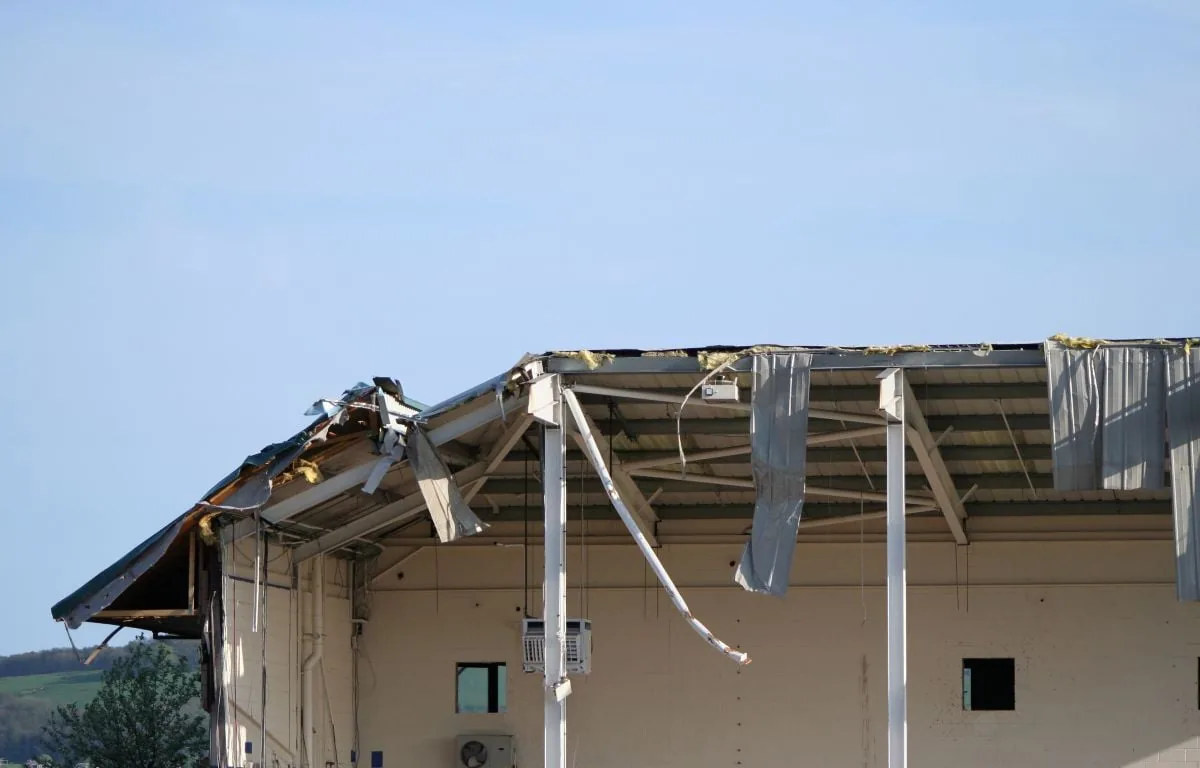
A sheet pulled beside an edge can indicate failure at the membrane connection, the supporting attachment or the metal boundary. We examine those parts in sequence, including the adjacent area that may be carrying force after a component has loosened. Some damage is visible as a tear or detached section, while less obvious movement can require closer examination at the fastening or lap. The repair needs to reach the parts that no longer function together rather than stop at the most conspicuous displaced material.
Southwest Cedar Rapids sustained damage to apartments and businesses during the derecho of August 10, 2020, when local winds were estimated around 140 mph. At Atkins, an unofficial measurement recorded 126 mph during that event. For a requested building in Atkins, we inspect reported wind damage through displaced material, attachment and the adjoining membrane before choosing rebuilding. Repairing the interrupted attachment path requires the current assembly's design and installation requirements for the new work.
Impact examination: Separating a mark from a material break
An impact can dent metal, damage a covering or stress the material beneath the point of contact. The significance changes with the roof system and the form of the damage. We examine punctures, fractures and suspicious areas closely, using suitable investigation where the visible surface does not resolve the condition. A depression in one material and a split in another do not call for identical repairs, so the assessment identifies the affected layer rather than describing all marks as the same failure.
On April 4, 2023, hail reports 0.9 mile northwest of Cedar Rapids included one-inch hail and a later 1.25-inch observation. Following reported hail exposure at a requested roof, we assess the surface and vulnerable details for impact-related openings or other material damage. Restoring damaged material after hail may require a bounded compatible repair or wider removal where the covering has multiple unsuitable areas. Examination of the actual sheet and support establishes that difference before a scope is selected.
Storm water: Investigating the layers after exposure
A torn sheet can admit water rapidly into insulation, while a smaller seam separation may produce a less obvious wet area. After protection is in place, we investigate the adjoining layers to establish whether water has spread beyond the visible opening. Mapping moisture indications with confirmatory checks can help where conditions and construction suit the method. The purpose is to determine which material can remain at the rebuilding boundary and which has become unsuitable beneath it.
Snow and meltwater can create a different exposure sequence. A blocked drain or retained accumulation may place water against a detail for longer than ordinary runoff would. We examine the discharge route and any movement or damage near the affected connection, coordinating structural review where loading or support concerns require it. Opening the membrane for repair should follow the investigation needed to understand the wet area, with the drain approach and overflow route restored where they contributed to the exposure.
Observed condition: Keeping the rebuilding decision traceable
Photographs before stabilization show the location and form of accessible damage, while later images can show concealed layers exposed during removal. We connect those observations to the roof layout and work performed so the owner can understand how the repair scope developed. Where a claim is involved, documentation for the insurance review distinguishes roof findings, protective work and the proposed permanent intervention. Insurance coverage decisions remain separate from the physical repair recommendation.
An inspection can also identify deteriorated details that need attention alongside event-related concerns. We describe their observed form and consequence rather than allowing one storm report to replace the material examination. The director needs a usable work sequence: secure loose components, protect openings, investigate adjoining damage and rebuild the connections that failed. That sequence can include separate scopes where one area needs immediate repair and another requires additional information before removal can be defined.
Permanent restoration: Connecting new work to sound adjoining roofing
A removed damaged area leaves a boundary that must receive the replacement material. We assess the remaining sheet, insulation and attachment at that edge, extending removal where unstable or wet layers prevent a suitable connection. The selected permanent repair uses materials and methods compatible with the existing system, with junctions rebuilt in the order their physical connections require. A surface covering cannot replace the support or fastening that a displaced component has lost.
Where the damage or underlying condition is extensive, the proposal may involve replacement rather than scattered repairs. We explain the difference through the material that would remain, the available attachment and the number of details needing reconstruction. Temporary protection stays distinct from that final assembly. Each opened area also needs a controlled close-in plan so that the rebuilding itself does not leave the occupied building exposed to the next rainfall.
Building continuity: Repairing beside affected activity
Marion Enterprise Center's industrial parcels lie beside U.S. 151 and Iowa 13. At a requested building there, storm debris, lifting equipment and active deliveries can compete for the same access route. We coordinate protection and removal with the facility contact, identifying which areas must remain open and where operations need temporary separation. The damaged connection is then rebuilt within an access arrangement that protects the people and goods beside it.
Czech Village and New Bohemia contain storefronts, entertainment uses and multifamily housing. Storm repair above a mixed-use property may affect more than one occupant, especially where a perimeter or equipment junction serves adjoining spaces. We identify interior exposure and access restrictions before opening the damaged assembly. The permanent scope should restore the broken detail while retaining suitable drainage and equipment access, with any unresolved conditions identified for the next appropriate intervention.
Commercial Roofing Questions
Should a visibly loose perimeter be secured before the full inspection?
Continuing movement can threaten adjoining material and people below, so stabilization may be necessary before detailed examination. We assess safe access and the available attachment, then protect the affected area without treating that urgent measure as the finished restoration. Further investigation follows when conditions permit.
Can hail damage require work below the membrane?
The affected material and water exposure decide how far the repair extends. An impact opening may admit moisture into insulation, while a surface mark may need examination before damage is established. We inspect the sheet and adjoining support, then define the removal needed to reach a suitable rebuilding boundary.
Why might additional damage be found during removal?
Concealed wet material, displaced fastening or weakened support can become visible only after the covering is opened. We relate those findings to the earlier assessment and explain why the repair boundary must change. The replacement connection needs sound adjoining material rather than an arbitrary limit based on the first visible tear.
Can production continue while storm repairs proceed?
Interior exposure and the required access control which activity can remain beside the work. Water near electrical equipment, exposed interiors or lifting over occupied routes may require separation or shutdown. We discuss those constraints and phase suitable repair areas without placing operations beneath an uncontrolled opening.
Related Pages
Request a roof assessment or call 555-555-5555.

Questions? Call Us
Free roof assessment