
Versico Commercial Roofing in Cedar Rapids, IA
Movement beside a curb can stretch a TPO lap until the weld releases at one corner while the field remains attached. A patch will not hold if its receiver is unsupported or the sheet keeps moving. Commercial Roofing Cedar Rapids repairs Versico systems in Cedar Rapids, IA, by identifying the membrane, attachment and failed connection before removal. The repair must restore both curb and field, with support setting the boundary.
Versico offers VersiWeld TPO, VersiFlex PVC, VersiGard EPDM and VersiFleece. Each has distinct seam and flashing requirements. We verify the assembly before preparing a replacement section, since a brand name does not identify later work. Water-damaged insulation or a loose deck may require a larger opening before close-in.
Installed system: Matching Versico sheet to the roof assembly
TPO, PVC and EPDM can look similar from the roof. We check markings, seams, attachment plates and records to identify the Versico material. VersiWeld is TPO and VersiFlex is PVC, both heat-welded; VersiGard EPDM uses different seam and flashing materials. VersiFleece adds a fleece-backed construction, so substrate and detail matter.
The product family guides selection, but the actual roof determines the work. A VersiWeld connection needs clean, weldable sheet and suitable overlap. EPDM repair follows another preparation process. We inspect patches, coatings and residue that could affect a tie-in before ordering material.
Sika Sarnafil PVC and Carlisle SynTec systems have distinct components. Any material transition is documented so one brand's accessory is not assumed to fit another system.
Open lap: Finding how far separation travels
A seam opening at a curb can run beyond its first visible corner. We inspect the lap and adjacent welds for wrinkles, poor fusion or old repair material. Thermoplastic seams need preparation and consistent heat. Dirty, weathered or damaged sheet may require extension to material able to receive a new weld.
Water may reach cover board or insulation before an interior symptom appears. We compare the opening with leak history and remove layers that have lost support. Seam-failure work restores the field connection. Moisture investigation can focus an opening when surface evidence is inconclusive.
We check accessible weld edges with a system-suitable method. Soft insulation or a moving curb must be corrected before sheet closes over it.
If the seam crosses a prior repair, we identify where the older material ends and how the new sheet will lap into it. A patch that covers a previous patch can create a thicker crossing or trapped edge. The connection is laid out before cutting so that the repair remains accessible for welding and inspection.
Curb flashing: Restoring the vertical turn and upper termination
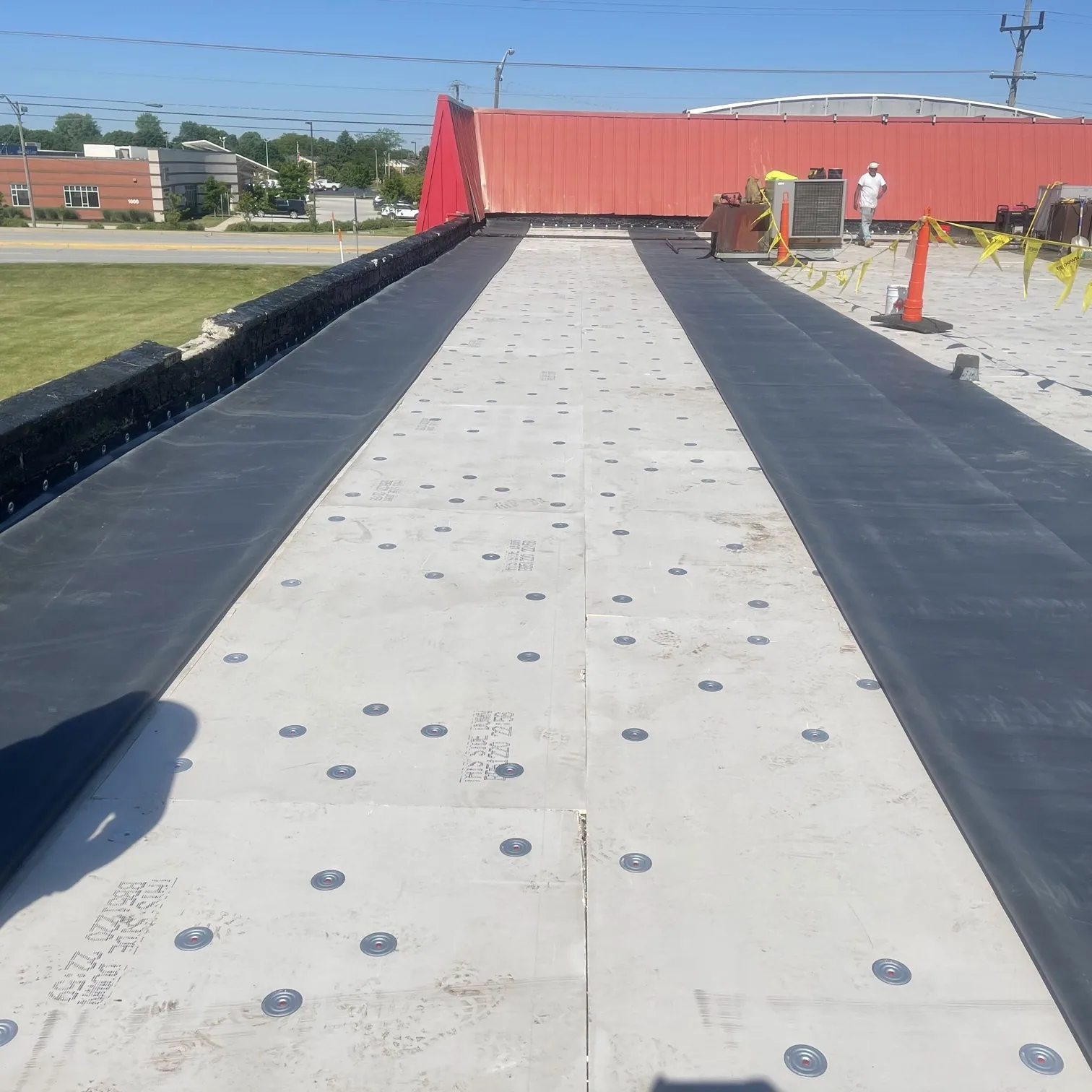
The membrane turns up a curb and ends at a receiver. Water can pass behind vertical flashing while its face looks intact. We inspect the base lap, corners, curb movement and upper termination. The Versico detail must reach sound backing; a weld ending short of the corner leaves the turn unresolved.
Equipment can limit access, so we check clearance before opening the curb. If a unit needs protection or movement, we coordinate with maintenance. Curb repairs restore the field lap and vertical connection. Removal extends where the receiver or backing is loose.
The finished roof needs a compatible lap, supported flashing and upper closure. We preserve service clearance and drainage. If metal receiver replacement is needed, it is completed while the membrane junction remains accessible.
Cedar Rapids exposure: Reviewing the actual roof after winter weather
NOAA's 1991 to 2020 normal for the Cedar Rapids airport station counts 144.1 days annually when the minimum reaches 32 F or lower. That regional statistic is not a measurement on the roof. These records are not a roof reading. After freeze-thaw exposure, we inspect the requested membrane and curb where a lap separated or water entered. Attachment and lower support determine whether a local Versico repair can hold.
Hiawatha economic development highlights Interstate 380. For a building there, we coordinate deliveries with actual loading and equipment routes. The road does not establish roof type. We protect occupied areas and plan the opening so the Versico seam can be closed during a workable period.
Marion Enterprise Center has industrial parcels with utility infrastructure. At a requested property, we inspect the specific roof and operating limits. Photos show whether the final repair includes one corner or a broader section.
Repair or replacement: Choosing the work from support and compatibility
A localized repair works where retained sheet is clean, attached and able to receive a new seam. Repeated separation, wet insulation or movement can shift scope toward replacement. We inspect field, curb, edge and drainage before setting the removal line and identifying which layers can remain.
A recover needs moisture checks, compatible materials, secure attachment and enough height for flashing. We do not cover an unstable base. Commercial replacement can rebuild support and detail height when retention is unsuitable. If a recover is feasible, its transition to flashing and edge metal is resolved before installation.
Timing depends on access, weather, preparation and occupancy. We protect interiors and close each opening only after the seam and curb are checked.
Material selection also considers what the roof needs at its drains, curbs and perimeter. A thermoplastic field may still need distinct flashing details at equipment, and a fleece-backed product requires a suitable substrate. We compare those interfaces with the maintenance history and the proposed removal boundary so the assembly remains repairable after the project.
Close-in and handback: Keeping the repair inspectable
Before opening, we stage compatible Versico material, insulation and flashing. The exposed section is protected and rebuilt so support comes before field welding and curb close-in. Temporary cover manages weather, then permanent connections are completed. We coordinate equipment service and tenant routes with the facility director.
At handback, we review seam, curb, termination and drainage. Photos show removed layers, retained material and any issue outside the repair. Roof service in Hiawatha follows the building's access and operating conditions.
The maintenance record notes material, repaired area and products used. A later patch must connect to the Versico system without covering new movement or drainage trouble. That record helps future inspection, but physical review remains necessary when the roof changes.
We also note where the new work meets existing field membrane and what inspection point can be reached without removing another component. This gives the facility director a clear place to begin if a future leak report returns near the curb. Maintenance can then compare the symptom with the documented repair instead of reopening the full area without first checking its known junctions.
Commercial Roofing Questions
Can a VersiWeld lap be repaired without replacing the whole roof?
A bounded repair can work when the surrounding TPO is sound, clean and able to accept a new weld. We check the full seam, curb and support below, then set the limit where retained material can receive a compatible connection.
How does VersiFleece change a repair decision?
Its fleece-backed construction changes the receiving surface and detail requirements. We identify the installed product and system before selecting materials, then check substrate condition and attachment where those factors affect the repair.
Does a curb leak mean the field membrane has failed?
Water can enter at a vertical termination and travel below the field before it appears inside. We inspect the curb base, corners, upper closure and nearby seam so the repair follows the actual entry path and any affected layers.
What makes a recover unsuitable over a Versico roof?
Moisture, poor attachment, incompatible material or insufficient height at curbs and walls can prevent a sound overlay. We assess those conditions before covering the existing assembly and compare removal where the base cannot support retention.
Related Pages
Request a roof assessment or call 555-555-5555.
Questions? Call Us
Free roof assessment