
Holcim Elevate Commercial Roofing in Cedar Rapids, IA
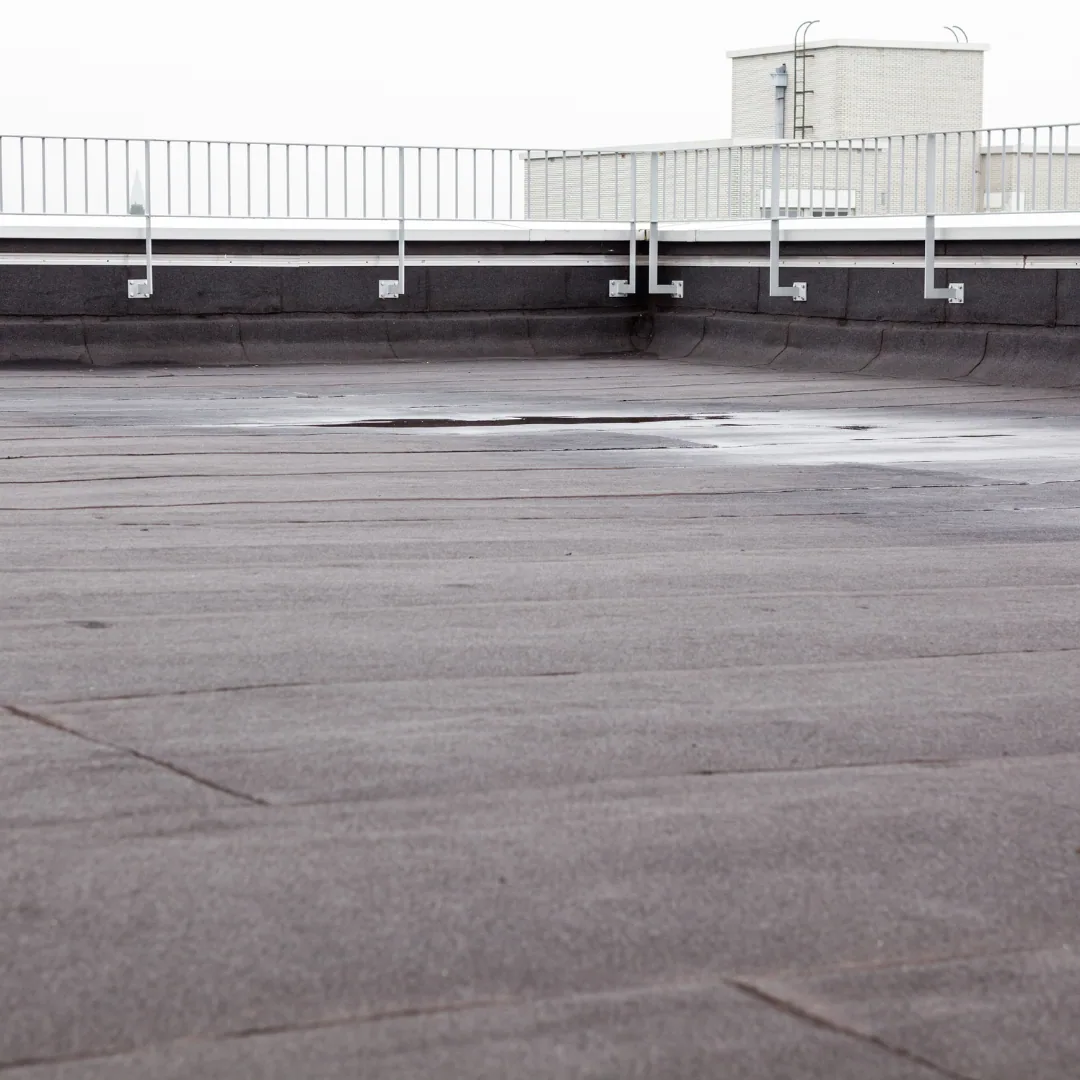
A loose metal edge above a membrane termination lets wind and water work on two connections at once. Tightening the cover does not restore a sheet that has pulled from its receiver or lost support. Commercial Roofing Cedar Rapids repairs Holcim Elevate roofs in Cedar Rapids, IA, by examining the membrane, attachment and backing before setting the boundary. The edge must connect the field to a secure termination, with observed condition deciding what can remain.
Holcim Elevate offers EPDM, TPO, PVC, asphalt and metal systems, insulation and accessories. Older records may use Firestone Building Products names, so we identify the material in place before selecting a correction. A perimeter metal repair can be separate from membrane replacement, but both connections need suitable support.
System identity: Reading older records against the roof in place
Older records may use Firestone names while the current roof carries Holcim Elevate products. We compare records with markings, sheet construction, seams and attachment. UltraPly TPO, RubberGard EPDM and other families use different welding and flashing methods. An overlay or patch may leave more than one material at the edge, so the exposed roof must be identified before replacement.
UltraPly TPO is heat-weldable; RubberGard is EPDM. The system and substrate determine the connection. TPO repair welds prepared thermoplastic material, while EPDM work uses compatible seam materials. At corners or wall transitions, a narrow strip can fail if the receiver is unsuitable.
We test a limited area when a coating, residue or retrofit affects compatibility. The selected system needs a clean, secure receiving surface. That check avoids an unintended transition between unlike materials. Carlisle SynTec membranes and Johns Manville systems also need their own identification before repair. We compare the proposed layer stack with the existing deck and insulation, since an approved membrane family alone does not establish a complete roof assembly or attachment pattern.
Edge attachment: Following uplift from cover to deck
A perimeter failure can begin at the cleat, fastener line, membrane termination or deck connection. We inspect each layer to find where movement occurred and whether the edge is secure beyond the visible section. A bent cover alone may not explain why the sheet shifted. Replacement metal needs compatible geometry and attachment, while the membrane must reach its receiver without a gap.
An August 2020 National Weather Service account estimates peak gusts near 140 mph in southwest Cedar Rapids and documents damage to buildings in that area. This historical event description is not a design value or a finding about a current roof. We examine the actual edge, corners and attachment pattern before defining work. Wind-related repair follows the failed connection and supported material.
A metal retrofit or added insulation can change edge height. We expose enough construction to see the receiver, fasteners and adjoining layers, then rebuild from deck outward.
Receiving layers: Keeping the termination on stable support
Soft insulation or detached cover board behind the edge can let new metal move with the same weakness. We examine backing, deck and any water path. Dry, firmly attached material may stay; failed support is removed until the replacement can fasten or adhere as designed.
The industrial property at Marion Enterprise Center includes parcels at different development stages and utility infrastructure. That context does not define an individual roof. We inspect its perimeter, deck and attachment before selecting a tie-in, while equipment layout and operating access shape the repair sequence.
A recover can change metal coverage and flashing height. We check the proposed build-up first. If a secure receiver cannot be made over retained layers, perimeter removal is needed before new material is ordered.
Repair boundary: Choosing a local correction or wider replacement
A bounded edge repair works when membrane, substrate and attachment remain suitable beyond the failed section. Movement across several elevations or wet insulation can justify a wider scope. We compare perimeter length, corners, deck attachment, drains and curbs. Removal follows supported construction, not just visible metal damage.
Holcim Elevate offers TPO, EPDM, PVC and other commercial systems. We check the proposed material against attachment, exposure and adjoining components. Commercial replacement can rebuild field and edge together when separate patches would leave incompatible heights or weak receiving layers.
Cost and timing depend on metal removal, deck access, occupied-area protection and lower-layer replacement. We identify these drivers before scope approval. Any required manufacturer review or design detail is coordinated for the documented system; an unconfirmed warranty term is not assumed.
Cedar Rapids operations: Planning the edge work around building use
The Czech Village and New Bohemia district brings older storefronts, cultural venues and homes into a shared urban area. For a commercial roof repair there, we confirm entrance protection and delivery access with the operator before removing metal or membrane. These operating conditions guide staging; the roof inspection determines what can stay.
Marion industrial parcels have utility infrastructure and may be at different development stages. Equipment clearance and service access affect how the edge opens. We identify nearby units or conduits and sequence flashing and metal work without blocking essential routes. Where an entrance sits below the repair, debris control and temporary protection are planned before the metal is detached, then adjusted to the opening size and expected close-in.
Photos of the cleat, fasteners, receiver and deck show why the repair covers one elevation or more. At handback, we review the termination and any separate wall or drainage issue. Occupied-building coordination ties access and close-in to the repair plan.
Restoring sequence: Joining metal, membrane and drainage
Once backing is suitable, we rebuild insulation or cover board, restore the membrane termination and attach edge metal to sound construction. Corners and joints receive assembly-compatible components. Work proceeds in sections so the exposed area can be protected and closed under product requirements.
Metal alone does not restore an open lap beneath it. We check the membrane-to-metal connection, upper termination and nearby curb or drain. Runoff must remain clear after replacement. A separate leak or ponding issue gets its own scope. If retained metal is serviceable, its receiver and attachment still need to suit the new membrane height; leaving a sound panel can be reasonable only when the tie-in and movement allowance remain workable.
At completion, the facility representative reviews photos and any remaining maintenance item. The record identifies what came out, what stayed and how new material meets the field. It supports later inspection without implying a factory review or undocumented warranty extension. We confirm the repaired edge drains freely and remains accessible for maintenance.
Commercial Roofing Questions
Do older Firestone records still help identify a Holcim Elevate roof?
Older product names can help, but later repairs may have changed the assembly. We compare records with the membrane, seams, attachment and edge details on the roof before selecting a replacement material or closure method.
What needs to be inspected when roof-edge metal comes loose?
The cover, cleat, fastener line, membrane receiver and backing all affect whether the edge can hold. We expose enough construction to identify the failed connection, then replace damaged support and reconnect the field to suitable metal.
Can new edge metal be installed over a recover assembly?
Added height changes the available termination and metal coverage. We check the planned build-up, wall geometry and membrane receiver first. If the new sheet cannot reach a secure detail over retained layers, removal may be required at the perimeter.
How do you distinguish storm history from current roof damage?
Historical wind reports describe a storm and location, not a particular building's roof. We inspect the actual edge and membrane, document present separation or impact and set repair scope from the observed assembly and project requirements.
Related Pages
Request a roof assessment or call 555-555-5555.
Questions? Call Us
Free roof assessment