
Duro-Last Commercial Roofing in Cedar Rapids, IA
A factory-fabricated curb panel can fit its original layout and still open where a field seam meets a changed or moving curb. We inspect the seam, receiving sheet and backing rather than replace a corner by dimensions alone. Commercial Roofing Cedar Rapids repairs Duro-Last assemblies in Cedar Rapids, IA, by tracing the failed junction through PVC and support. The roof in place decides what can remain and where a field connection must start.
Duro-Last makes PVC roofing sheets and accessories for building-specific layouts. Fabrication can reduce some field seaming, but installed connections still need inspection. We identify panel layout, seam condition, attachment and prior alterations before preparing material. Sound sheet may accept a bounded repair; wet insulation or a changed curb can require more removal.
Panel layout: Comparing the roof in place with the repair boundary
Custom sheets and accessories are designed from roof dimensions and detail information. Equipment changes or curb relocation can leave today's geometry different from the original layout. We compare records with installed panels, seams and curb dimensions before ordering. A factory-fitted piece cannot correct a moved receiver or changed opening.
Duro-Last PVC panels join through heat-welded field seams. We locate where fabricated material ends and establish a clean receiving edge. PVC repair needs support and welded continuity. Soprema systems and Versico membranes have separate requirements if the roof uses more than one product family.
Drain, penetration and edge accessories may be fabricated for a layout, but fit depends on the curb, pipe or metal in place. We inspect dimensions and connections before closure. A changed detail needs a component fitted to current geometry.
Field seams: Checking weld quality beyond the custom sheet
Factory preparation does not remove the need to examine field seams. A lap can be interrupted by contamination, uneven heat or movement below. We inspect its length, corners and crossovers for separation or material that will not accept a weld. A narrow strip over a weak edge leaves the connection unresolved.
Water may reach insulation or cover board before appearing inside. We compare the seam with interior symptoms and moisture findings, then open where it changes removal. Hail-related inspection checks impact damage separately from seam failure; a visible mark alone does not identify the failed layer.
Retained Duro-Last sheet is cleaned and prepared to the product detail. New PVC is welded across the boundary and accessible edges are checked. Wet or loose backing is removed first because a surface weld cannot stabilize it.
Curb and penetration details: Restoring each prefabricated junction
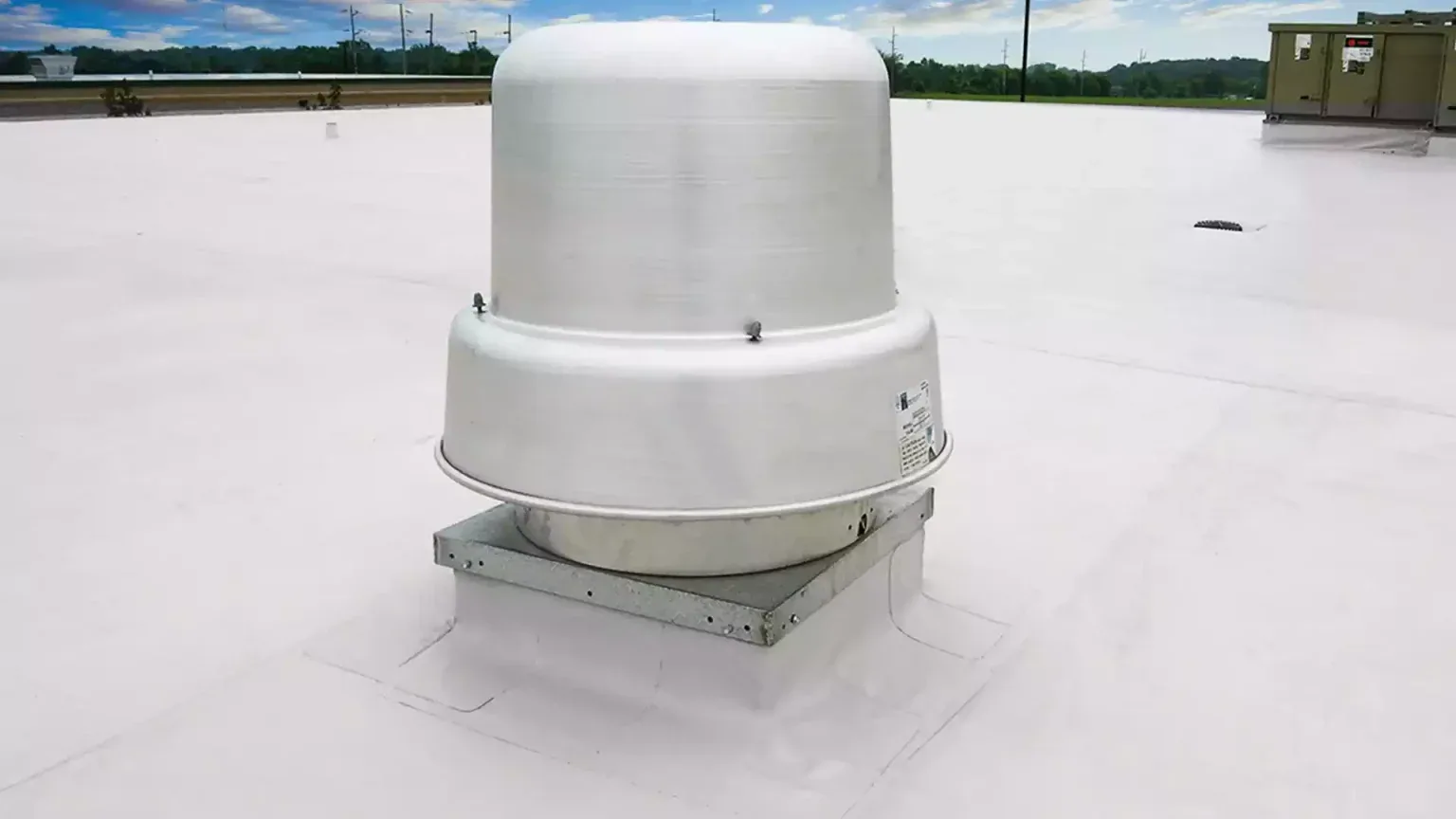
A curb turns field membrane up a vertical face and closes at a termination. Pipes and equipment supports create other transitions with movement and water exposure. We inspect the base, corner, flashing height and receiver before choosing an accessory or field repair. Custom fabrication can suit a repeatable detail, but a changed curb or unstable backing still needs correction.
Rails and conduits can limit seam preparation. We coordinate access before opening the sheet. Curb and penetration flashing rebuilds the vertical turn, with upper termination and lower lap reviewed together. A shifted support is secured before fitting new material.
Drain accessories need a stable flange and clear discharge. A custom collar cannot correct a restricted outlet or low insulation approach. We inspect the outlet, prepare the flange and connect PVC after the substrate is suitable.
At each curb, we trace the membrane from the field into the corner and up the face. We look for a loose termination, split weld or a fastener that has pulled through the receiving sheet. Measurements include the face, corner returns and the distance to the nearest sound seam, not just the equipment footprint.
Where several curbs share a work area, we label each opening and photograph its orientation before removal. That keeps a new fabricated piece matched to the right equipment and records which nearby seams remain sound. If a detail cannot be reached safely from the planned work area, we document that boundary and arrange access before promising a closed repair. The crew then checks the finished connection with the opening still visible, rather than treating a covered seam as proof of continuity.
Cedar Rapids properties: Coordinating fitted work with actual use
Cedar Rapids Building Services publishes local code references, including a 2024 Building Code amendment and the 2024 International Building Code. Their applicability depends on project scope and current review. We confirm requirements with the appropriate building official when a roof alteration calls for it; a product specification alone does not establish permit approval.
Cedar Rapids economic development describes rail connections serving regional business through short-line, regional and Class I carriers. That freight context does not establish that a site has a workable loading area at a job. We coordinate membrane delivery, equipment access and staging with the property team, then confirm curb dimensions and panel layout before finalizing a replacement detail.
For a roof alteration in Cedar Rapids, applicable code review is confirmed for the actual work scope and current amendments. We also record the panel orientation and each field change, so a later repair starts from the installed layout rather than assumptions based on a product family.
Retention or removal: Establishing what custom material can replace
A panel repair suits surrounding PVC that remains clean, attached and able to receive a weld. Wider removal may be needed if water reached insulation, the deck is loose or seams have separated. We set the boundary at sound support; one prefabricated piece cannot fix a layer failure beyond its edge.
A recover adds height at curbs, drains and walls, and requires moisture and attachment checks. New work may need different transition parts. Commercial roof replacement can rebuild insulation and details where the base cannot remain. The scope records material retained, removal and the new field connection.
Dimensions are confirmed after the removal boundary is known, including field changes missing from older records. That prevents a made-to-measure panel from arriving before the curb or receiver is ready.
Close-in and records: Keeping the panel connection serviceable
Before opening, we stage membrane, accessories, insulation and protection for the planned section. Unsuitable layers are removed, support restored and new detail connected to prepared sheet. Temporary cover protects the opening; the permanent seam and termination are checked before close-in.
The facility representative reviews photos of panel layout, backing and finished weld. We identify the removal boundary, retained Duro-Last sheet and any separate curb or drainage issue. A roof condition report preserves findings. For a property in Marion Enterprise Center, access and operations remain part of closeout.
A field alteration can change where future panels fit, so dimensions and connection points are recorded. That gives the next repair the current roof layout rather than relying only on original fabrication plans.
Commercial Roofing Questions
Does custom fabrication mean every seam is completed at the factory?
Factory-fitted pieces can reduce some field work, but panels still join on the roof and transitions still need inspection. We check the installed field seams, curb details and attachment before deciding what the repair needs.
Can a Duro-Last curb panel be reused after equipment moves?
The changed opening and remaining sheet have to be measured and inspected. If the original panel no longer fits the curb or the surrounding PVC cannot receive a new weld, a replacement detail is prepared for the current roof geometry.
What can cause water beneath a factory-fabricated membrane?
A field seam, curb termination, drain flange or puncture can interrupt the water boundary. We inspect each connection and the support below it, then remove wet or unstable layers before restoring the membrane to sound material.
When is a larger Duro-Last replacement scope needed?
Widespread seam separation, wet insulation or unstable deck can make an isolated panel repair unreliable. We inspect beyond the first opening and compare the layers that can remain with the support and transition work a replacement would require.
Related Pages
Request a roof assessment or call 555-555-5555.
Questions? Call Us
Free roof assessment