
Roof Capital Planning in Cedar Rapids, IA
Retained overlay roofing can bridge a former curb opening without suitable infill beneath it, leaving the visible surface unable to establish whether that part of the assembly has adequate support. A renewal decision based only on the exposed sheet would miss the construction that changes removal and rebuilding. Commercial Roofing Cedar Rapids provides roof capital planning in Cedar Rapids, IA, by investigating the receiving assembly before selecting a broader roof intervention. The plan must account for the support correction and the connections needed around it.
A local defect and a broader replacement need different scopes, but both depend on suitable construction. We examine the unsupported area, relevant adjoining layers and available alteration information to establish what can remain. That condition then guides whether a bounded reconstruction is appropriate or whether the roof requires more extensive removal before its next weathering assembly is installed.
Former opening: Establish what supports the retained roofing
Removing equipment can leave an opening whose closure includes several separate tasks. The deck infill, underlying roof layers and top-sheet connection each need a suitable arrangement. We examine accessible construction and coordinate relevant evaluation where the support cannot be established through the surface condition. A layer that appears attached around the perimeter does not resolve an unsupported area within that boundary.
We identify the receiving construction and explain any component or design handoff needed before roofing reconstruction. The replacement assembly must connect across suitable support, with the required layer sequence and attachment resolved. Roof layer rebuilding addresses insulation and cover material after the receiving deck arrangement is suitable. Those tasks belong in the proposed work before a broader renewal scope assumes the area can simply be retained.
Affected extent: Distinguish a bounded correction from broader removal
The unsupported former opening may be isolated, or adjoining examination may identify wet, detached or unsuitable layers that change the reconstruction boundary. We investigate suspect construction where the findings affect retention. The proposed repair needs enough sound receiving material to close onto the retained roof, including the working area needed for its compatible connection. A small visible defect can therefore require examination beyond its apparent outline.
A broader roof intervention needs the same receiving assessment across the relevant assembly. We identify the conditions supporting replacement or another treatment rather than selecting the scope from roof appearance alone. Condition reporting connects each finding with its physical location and necessary action. The facility director can then distinguish a demonstrated local reconstruction from an unresolved condition that still requires investigation before the larger scope is set.
Retained assembly: Establish whether a recover is a suitable option
A roof recover retains existing construction beneath the new weathering system, so its suitability depends on the layers proposed for retention. We examine support, attachment, wetness and the available information needed for applicable assembly review. An unsupported alteration or unsuitable retained layer requires correction before it can become part of a new receiving arrangement. Another sheet does not supply the missing deck infill beneath a former opening.
Roof recover evaluation establishes the physical and project requirements relevant to that option. Where broader removal is needed, commercial roof replacement allows the affected layers and details to be reconstructed in the selected sequence. We explain the scope through the conditions found, including the receiving boundary and adjoining components that change the work.
Work timing: Coordinate removal with protection and component readiness
A supported renewal plan needs a practical sequence for the construction being changed. Deck infill or an adjoining equipment task may have to occur before the replacement roof layers are installed. We identify those dependencies while the assembly can still be examined, establishing the access and closing periods needed for the relevant work. Delaying that coordination until removal begins can leave the roof open while the required receiver remains unresolved.
The facility's occupied areas also affect how much material can be removed and rebuilt at one time. We establish protection needs, service routes and operating restrictions before the work period is selected. The sequence must allow unsuitable layers to be removed rather than retained merely because their reconstruction was omitted from the planned opening. Occupied-building roof work connects the roof removal and permanent closure with the actual interior arrangement.
Requested commercial stock: Investigate the existing assembly at the actual building
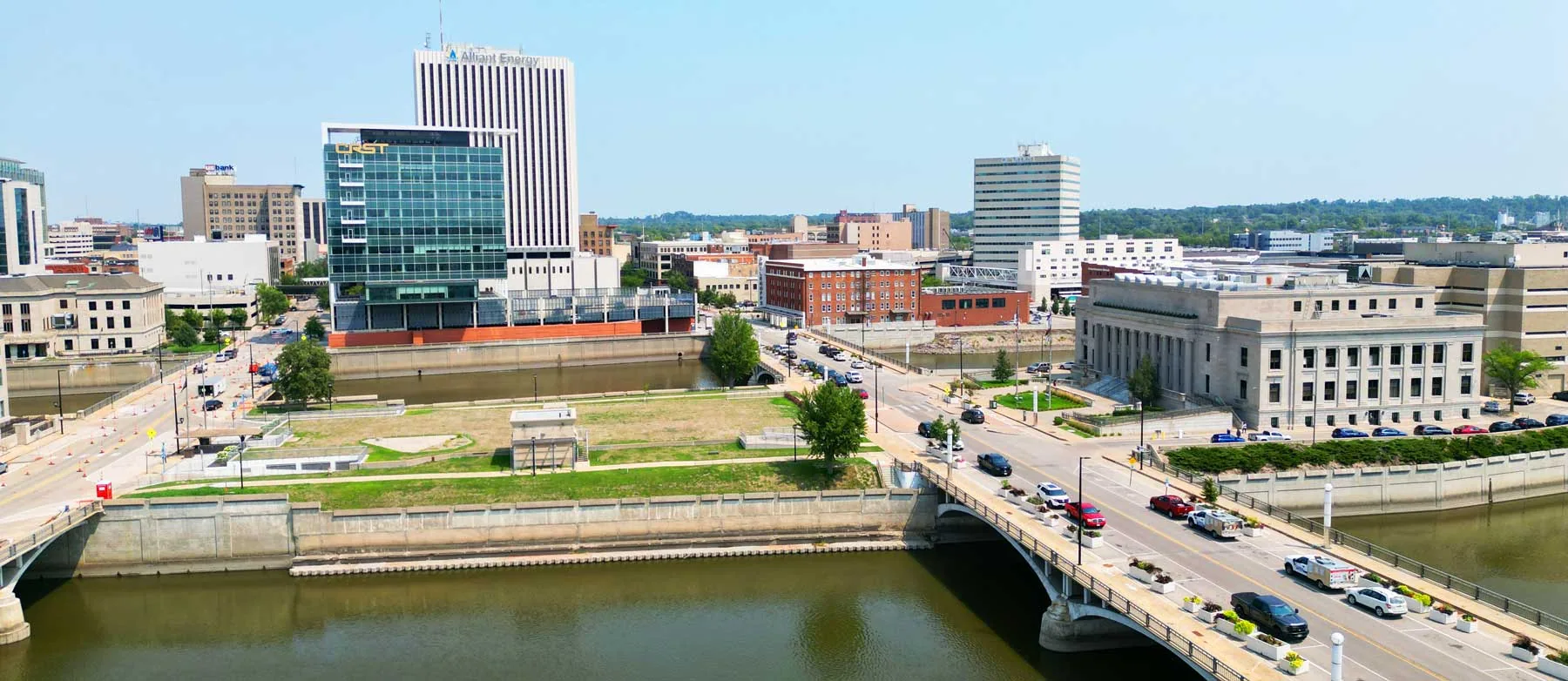
Central City has a recognized Commercial Historic District downtown. At a requested commercial building there, available alteration records can help identify former equipment positions or roof sections that changed over time. We still examine the actual receiving construction before proposing retention. Available alteration history can identify possible former openings. We investigate their support and the access needed for reconstruction before selecting retained layers.
Alburnett contains the school district's headquarters and Pre-K through 12 school. For a requested education property in the city, we coordinate the roof investigation with the affected occupied use and access restrictions. The renewal scope follows the assembly found and the component work needed beneath it. Roof work in Alburnett requires a defined closing sequence when the receiving construction or adjoining detail must be altered before permanent roofing is installed.
Project requirements: Resolve altered construction before finalizing the scope
An infill correction or changed roof assembly may require review of support, attachment and the applicable project criteria. We establish the jurisdiction and responsible review authority before those requirements become concealed beneath new roofing. The scope needs to include the relevant receiver and detailing work, allowing the proposed system to meet the actual building arrangement instead of assuming every retained component is suitable.
Roof due-diligence surveys can help establish assembly information when available records leave an alteration unresolved. We identify what further examination changes the proposed work and connect that task to the scope decision. A planning assumption should become a suitable receiving detail before construction relies on it, particularly at a former opening whose support is not visible from above.
Reconstructed state: Connect the completed work to the renewal decision
After the chosen intervention, we explain the affected layers removed, the receiving construction corrected and the retained boundaries reconnected. Photographs during exposure can show why the scope changed from an apparent surface treatment to a support or assembly reconstruction. The facility director receives the completed roof arrangement and any maintenance considerations needed beside it. Later planning can then start with that actual rebuilt condition rather than repeat the earlier assumption about the former opening.
The completed drainage path and flashing interfaces also require examination where the replacement changes height. Those final connections join the receiving support to the weathering assembly, keeping the renewal decision tied to the construction delivered.
The retained receiver and any replaced infill should also be identifiable in the completed assembly information.
Commercial Roofing Questions
What determines whether an unsupported alteration changes a replacement scope?
The determining condition is the receiving construction and extent of unsuitable adjoining material. A bounded correction differs from an assembly requiring broader removal. We establish the support and repair boundary before choosing the intervention.
Can a recover provide support over a former curb opening?
The underlying opening needs its appropriate infill and receiving arrangement established before new roofing relies on it. A recover retains construction, so missing support or unsuitable layers require correction as part of that assembly assessment.
How are equipment and deck tasks coordinated with roof renewal?
Those tasks need a suitable sequence before replacement layers conceal their receivers. We establish the component handoffs, access and protection period so the roof can reconnect to completed construction rather than an unresolved alteration.
Why examine concealed layers before setting the work period?
Their condition can change removal, support correction and closing requirements. We investigate relevant uncertainty while the planned sequence can still accommodate it, allowing the selected work period to suit the actual reconstruction.
Related Pages
Request a roof assessment or call 555-555-5555.
Questions? Call Us
Free roof assessment