
Roof Asset Management in Cedar Rapids, IA
A loose service-protection pad can conceal an open lap while routine equipment access continues across the area. Recording the pad's position without examining the seam leaves the affected roofing connection unresolved. Commercial Roofing Cedar Rapids provides roof asset management in Cedar Rapids, IA, by connecting condition tracking to the physical action each assembly needs. We establish the accessible defect, examine relevant adjoining layers and identify the reconstruction or maintenance task that will change that condition.
The building's roof information should distinguish an observed opening from a repair completed through suitable material. We explain the affected detail and the receiving boundary, then connect later examination to the actual work performed. A facility director can use that relationship to coordinate roof attention across properties without treating a retained condition record as a substitute for restoring the broken connection.
Building assembly: Establish the material that each condition belongs to
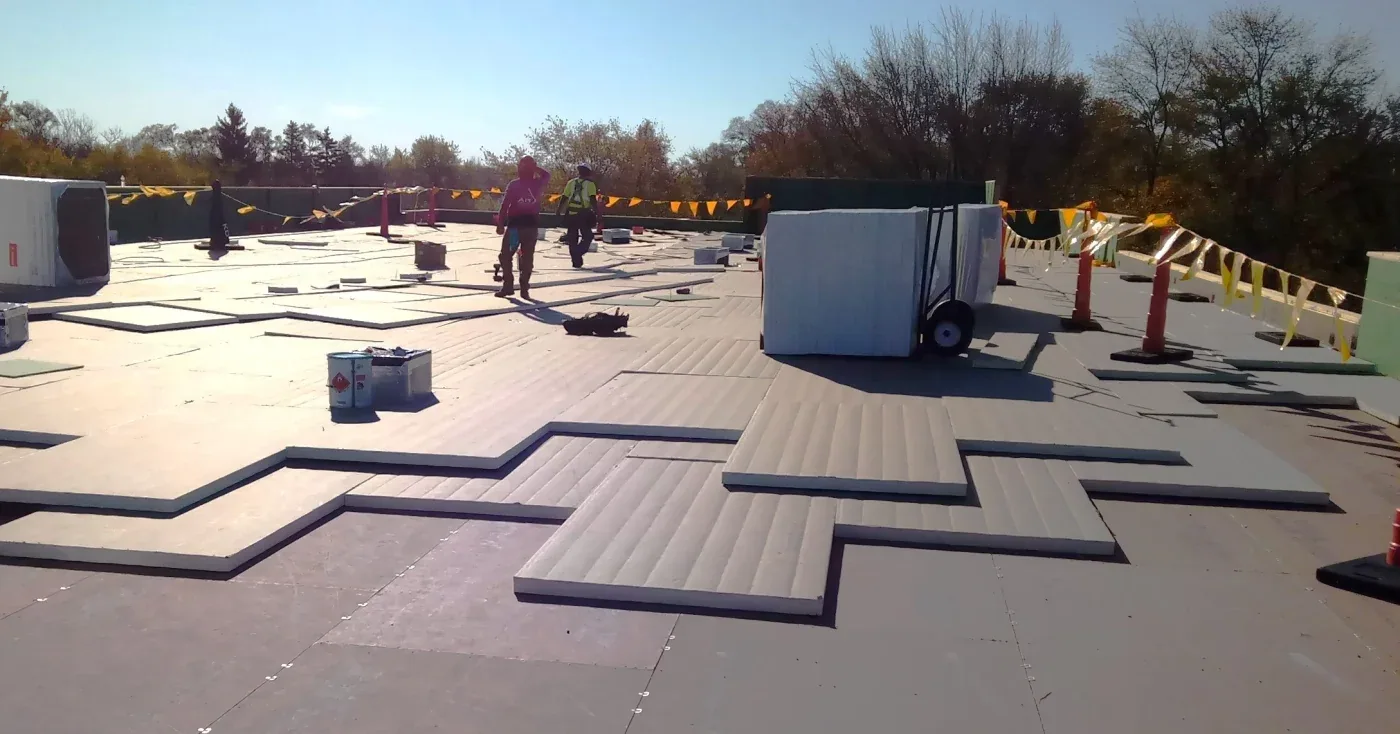
A roof inventory needs enough assembly information to identify the repair method and receiving construction at each area. We examine the installed sheet or metal system, adjoining flashing and available alteration history. A roof with several sections can contain different materials and layer arrangements, so one building-level description may not establish the connection required at a particular defect.
We tie the location and photographs to that actual assembly. The information should identify where a lap opens, which component it meets and what further examination changes removal. Physical roof inspection provides the findings needed to distinguish an isolated suitable repair boundary from a condition reaching underlying support or another adjoining detail. That distinction directs the next roof task rather than leaving every finding under a broad condition label.
Covered detail: Establish access before selecting the intervention
A movable protection pad or stored service item can limit the surface visible during inspection. We identify the relevant access restriction and coordinate examination with the responsible personnel when the concealed condition changes the proposed work. The investigation should reveal the seam and adjoining sheet without damaging sound material or interfering with a fixed equipment connection.
If the lap is open, its surrounding preparation and underlying condition determine the reconstruction. We examine suspect wetness or separation where that finding changes retention, then define the area that can receive the closing connection. Written roof condition findings describe the observed defect and necessary action. The follow-up still needs to establish whether that connection was rebuilt through suitable material, not merely whether the visible pad was moved.
Required action: Separate maintenance from assembly reconstruction
Removing loose debris or correcting a displaced protective item can restore the maintenance arrangement, while an open seam requires its appropriate repair. We explain those different tasks through the observed roof condition. A maintenance action should not be recorded as completing reconstruction when the weathering lap remains open beneath it. The facility's work sequence needs to address both the contact arrangement and the affected assembly.
The action description identifies the relevant receiver and any component handoff. Wet layers may require removal before a lap is closed, and damaged support may need evaluation before new material can be attached. Failed seam reconstruction restores the roofing connection where the condition requires it. The completed task can then be compared with the earlier finding at that specific location.
Operating change: Revisit the roof where service activity alters contact
A new equipment task or changed service route can move protection, introduce additional foot traffic or place materials beside a repaired junction. We establish those changes with the facility team and examine the roof where the new arrangement affects support, drainage or sheet contact. Roof condition tracking remains useful only when it follows the current operating relationship rather than an earlier access pattern that no longer applies.
We identify the reconstructed detail and the maintenance arrangement needed beside it. Suitable protection should preserve the water route and meet the roof system's requirements, with loose objects removed from damaging bearing positions. Preventive roof maintenance checks those relevant conditions and identifies new defects for action. A changed operation can therefore trigger examination of a particular connection instead of an undirected repetition of the earlier survey.
Requested industrial holdings: Keep each building's roof condition identifiable
Marion Enterprise Center has multiple developed or preliminarily platted industrial lots and infrastructure including water, electric and sewer services. For a requested property in the park, we establish the building and roof section involved before associating findings with a portfolio record. Nearby properties can have different assemblies, alterations and operating constraints. Each proposed intervention needs the condition and receiver at the actual requested roof.
Mechanicsville's business directory identifies a community bank, a nursing-and-rehabilitation facility and commercial services along U.S. Highway 30. At requested holdings with different occupied uses there, inspection access and repair protection need to follow each building's actual function. We coordinate the relevant interior restriction and reconstruct the affected detail accordingly. Roof work in Mechanicsville remains connected to its own assembly rather than inheriting an intervention chosen for another property.
Work sequence: Resolve the condition that changes future retention
A condition needing immediate closure can coexist with a broader area that requires additional investigation before its long-term treatment is selected. We identify the exposed opening and explain which next examination would change the retained boundary or assembly scope. That sequence allows the facility director to coordinate protection and repair while preserving access to unresolved construction.
Roof capital planning uses the relevant findings when the condition extends beyond a limited reconstruction. We explain what can reconnect locally and what needs broader removal, including any alteration or support task affecting that choice. A roof record should connect each proposed action to the material condition that justifies it, giving later work a physical starting point rather than a general renewal label.
Follow-up examination: Compare the completed connection with the earlier defect
After reconstruction, we review the closing detail and identify the material replaced or retained. Photographs of exposed layers can explain why the boundary changed during removal. The facility director receives a description of the finished junction and any maintenance arrangement needed beside it. Later inspection then examines that actual connection for renewed separation, disturbed protection or another changed condition.
Where a task remains outstanding, its effect on the completed roof needs clear coordination. A pending equipment alteration can disturb repaired flashing, and a changed drainage arrangement can expose another seam to retained water. We identify those relationships so the roof action remains connected to the building work around it. Tracking the completed state helps direct the next examination to the detail that can change retention or reconstruction.
The follow-up location also identifies adjoining details that could disturb the repair during subsequent equipment service.
Commercial Roofing Questions
What determines whether a recorded defect needs repair or maintenance?
The determining condition is the physical connection affected. Debris removal or protection adjustment addresses a maintenance issue, while an open lap, damaged support or wet layer may require assembly reconstruction before the defect is resolved.
How should different roof sections be tracked within one building?
Each finding needs its actual location, material and adjoining detail identified. We connect the observation to that section's receiving construction and proposed action, so a repair method is not transferred from a different assembly without assessment.
When does an operating change require another roof examination?
New equipment access, moved protection or changed drainage can alter contact with a roof connection. We examine the affected area where that change can damage the weathering assembly or alter the next suitable intervention.
Why review the repair after the condition record is updated?
The completed connection needs to be distinguished from the earlier defect and any outstanding task. We identify the reconstructed boundary and maintenance arrangement, allowing follow-up to examine the actual finished assembly.
Related Pages
Request a roof assessment or call 555-555-5555.
Questions? Call Us
Free roof assessment